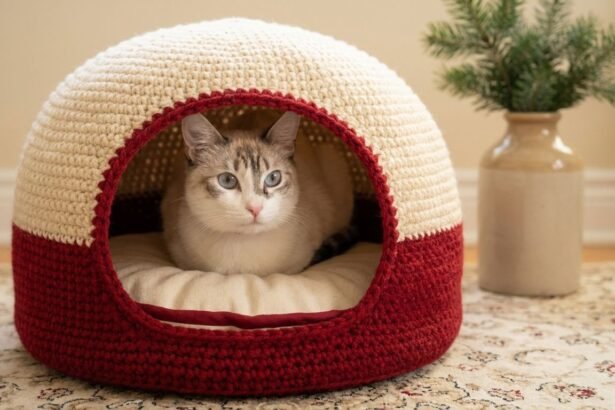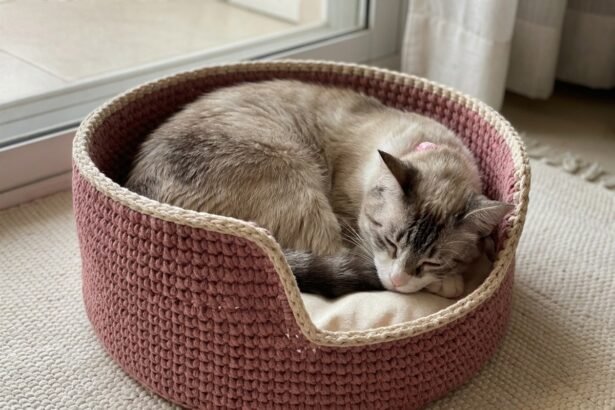

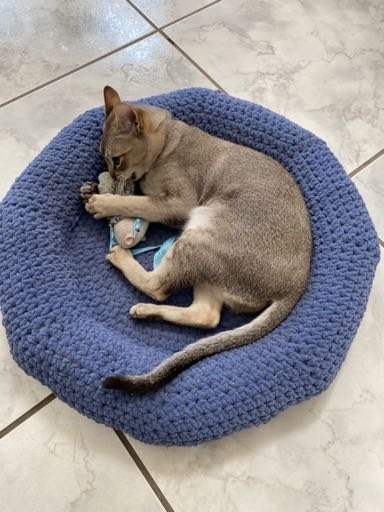
The blue bed has a thick rounded edge and just enough contrast to show the circle of stitches beneath the cat. The red version makes that shape even clearer: a flat centre surrounded by a stuffed ring. This crochet donut pet bed pattern by Ouma Ralie uses one continuous piece of fabric, folded and joined to make the rim.
There are four size schedules, from Small to Extra Large. The useful decision comes before the stuffed edge: how much resting space does your pet need? Start with that measurement, then choose the closest inner-circle target below.
Before you choose: These are four sizes of one bed design. The source rates it intermediate and uses US terms. Each printable guide is a credited PetsCrochet adaptation with original step photos; this edition has not been physically made, fit-tested or wash-tested.
Compare the inner-circle sizes
The measurements refer to the circle where the rim joins the base. They are not the bed’s overall footprint. After stuffing, check the clear space inside the rim as well.
| Size | Source inner circle | 300 g skeins | Body rounds |
|---|---|---|---|
| Small | 25 cm / 9-10 in | 2 | 17 |
| Medium | 50 cm / 19-20 in | 3 | 22 |
| Large | 75 cm / 29-30 in | 4-5 | 27 |
| Extra Large | 100 cm / 39-40 in | 6-7 | 32 |
Source-reported approximate sizes and Bernat Blanket purchasing allowances. The amount used will depend on your yarn, tension and finishing.
1. Small donut bed: 25 cm inner-circle target
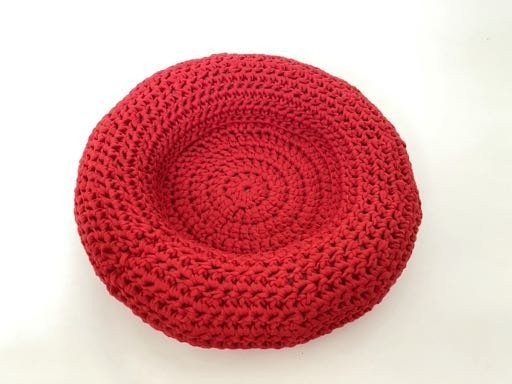
Small gives you a 25 cm inner-circle target and the shortest of the four schedules. It is a useful option to assess for a pet with a small resting footprint, but the word “Small” alone is not a fit check. Compare that circle with your pet before continuing into the rim.
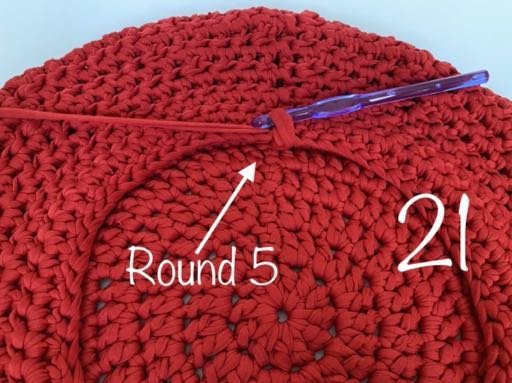
This version marks round 5 at 60 stitches. After the rim is made, its final 60-stitch edge comes back to that same round. The numbered source photos demonstrate this smaller construction, which makes them particularly easy to follow alongside the Small guide.
Small · complete standalone schedule, filling instructions and all 33 numbered step photos.
2. Medium donut bed: 50 cm inner-circle target
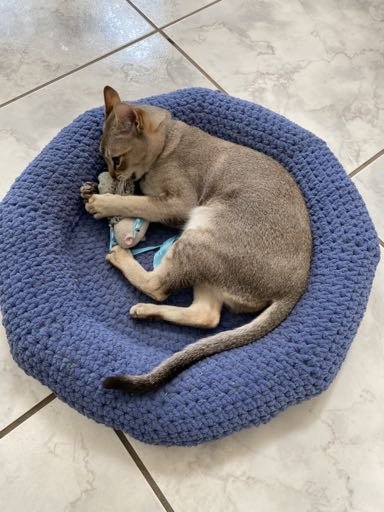
Medium increases the inner-circle target to 50 cm. That is twice the stated diameter of Small, so it is a substantial step in floor space. Measure a comfortable resting position instead of assuming it is the automatic choice for every cat.
The marked round is 10, with 120 stitches. The source allows three 300 g skeins of Bernat Blanket, but does not give a separate filling weight for this size. Fill gradually and judge the assembled rim rather than working toward a fixed gram target.
Medium · complete standalone schedule, filling instructions and all 33 numbered step photos.
3. Large donut bed: 75 cm inner-circle target
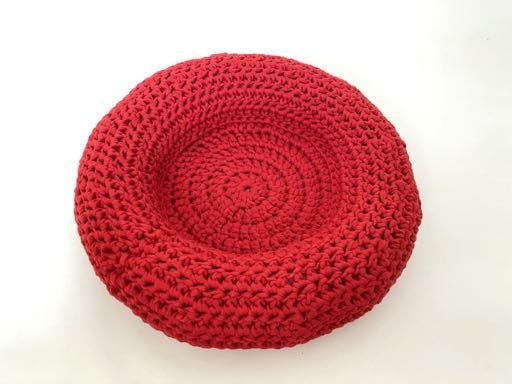
Large keeps the same rounded construction around a 75 cm inner-circle target. Before starting, lay out that diameter where the bed will sit. There still needs to be room for the stuffed edge beyond the centre and for your pet to enter and leave.
The centre reaches round 15 and 180 stitches. The guide then carries you through the larger rim and its matching seam, with a source allowance of four to five 300 g skeins. Keep the base flat as it grows and check the circle before adding the rim rounds.
Large · complete standalone schedule, filling instructions and all 33 numbered step photos.
4. Extra Large donut bed: 100 cm inner-circle target
Extra Large has the largest source inner-circle target, about 100 cm. The whole bed will occupy more space than that, but the source does not define an exact outer diameter. This is the version where checking your floor space and the weight of your materials early will save the most guesswork.
The marked circle ends at round 20 with 240 stitches. The rim expands to 276 stitches before turning inward. The guide corrects a printed count error in the three even rim rounds; the stitch-by-stitch instructions still follow the source construction.
Extra Large · complete standalone schedule, filling instructions and all 33 numbered step photos.
Three yarn approaches in the source
Blanket yarn for the blue example
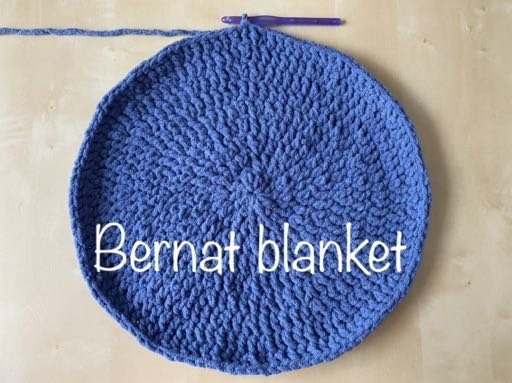
The main material is Bernat Blanket, a super-bulky polyester yarn used with an 8 mm hook. The five-round test should measure about 25 cm across if you want to approach the source sizes. That test is more useful here than the yarn label’s single-crochet gauge, because the bed is worked in double crochet.
T-shirt yarn for a firmer-looking fabric
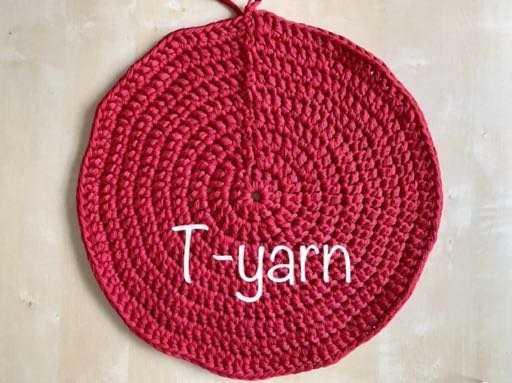
T-shirt yarn can vary in thickness, especially when it comes from fabric offcuts. Try the first three rounds with your chosen hook and see whether you can work the stitches comfortably and keep the fabric dense. Then check the five-round diameter. The source does not give one hook size or yarn allowance that covers every T-shirt yarn.
Three strands of scraps held together
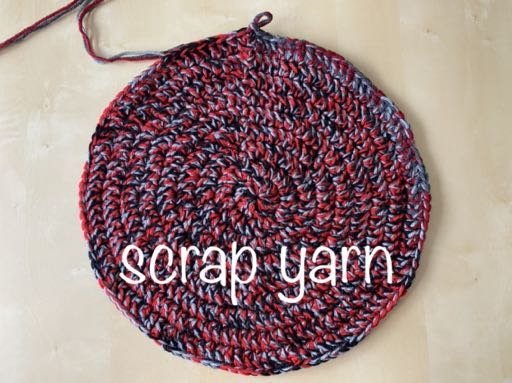
The source also offers three strands of medium-weight yarn held together with an 8 mm hook. It is a way to combine smaller leftovers into a thicker fabric, with the colours changing as each strand changes. Keep the combined thickness reasonably consistent and secure every join. The Bernat skein counts do not tell you how much mixed scrap yarn you will use.
How the stuffed rim comes together
The bed starts as a flat circle. Once the centre reaches your chosen size, three more increase rounds extend the base beneath the rim. Even rounds build the outside wall, decreases bring the fabric inward, and the final even rounds reach the marked circle for joining.
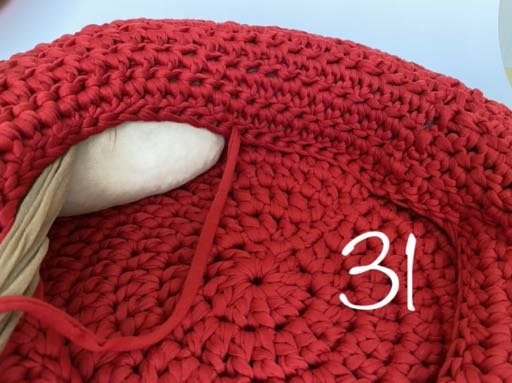
The source contains the filling inside a stocking liner and closes the seam gradually around it. That keeps the filling together while you work, but it does not create a removable cushion. Make sure the liner, its knots and all yarn tails are completely enclosed before your pet uses the bed.
Make the fit and care checks part of the project
Measure your pet in a relaxed resting position and compare that footprint with the circle you have made. After stuffing, measure again inside the rim. Check that your pet can turn, settle and step out freely; the size name and the photograph cannot establish that for an individual animal.
Choose a quiet resting spot and allow your pet to approach the finished bed at their own pace. Cats Protection recommends considering comfort, placement and the cat’s preferences when choosing a bed. Read its cat-bed guidance.
Before first use, remove every marker and inspect the seam. Watch the initial use and check for loose loops, exposed liner or escaped filling afterwards. If your pet chews or pulls the fabric apart, remove the bed for repair. Swallowed yarn can cause serious harm; VCA explains why string and yarn are a concern.
Plan cleaning around all three materials: crochet yarn, filling and liner. A washable yarn label does not establish that the whole stuffed bed will wash and dry well. Start with the material care instructions and a colourfastness test, and make sure the rim dries completely before returning it to use.
Questions before you choose a size
Is this an easy crochet pet bed?
The original title calls it “Easy”, but the PDF rates the project intermediate. It includes joined double-crochet rounds, increases, decreases and a filled seam. The repeated rounds are straightforward to track once the starting chain and increase placement make sense.
Does the centre contain stuffing too?
The source fills the ring around the edge. The centre is a crocheted fabric circle, not a separately padded cushion. No additional foam insert or removable base is included in these instructions.
Can I make a size between the four options?
Yes. The guides explain how to choose a marked centre round, add the twelve rim rounds and return to a matching stitch count for the seam. Measure the circle you actually crochet; a calculated estimate alone cannot predict the finished resting space.
Is it machine washable?
That has not been verified for this edition. Follow the yarn, liner and filling care labels together and test the assembled bed. The filling is enclosed behind the seam, so removing it would mean opening that seam.
Will a donut shape calm my pet?
This is a crochet construction, with no testing here to support calming, anxiety-relief or orthopedic claims. Choose it for the shape and a fit you can check, and let your pet decide whether they like resting in it.
Start with the five-round circle. It gives you a useful fabric and size check before the project grows. Choose the guide above, mark your inner-circle round and keep the matching seam count handy as you work.
Original pattern and PDF photography: Ouma Ralie, 2 February 2021. Article and editorial adaptation: PetsCrochet. Original designer listing.