
A good cat cave should feel tucked away, not trapped. That is the idea behind this crochet cat cave pattern collection: twelve cozy shapes with broad, stable floors, removable cushion options and doorways that can be sized around the cat who will actually use them.
Skyla is the cat in every photograph, which makes the collection feel personal rather than like a random product catalog. As she grows, I pay more attention to her curled footprint, shoulder width and turn-around space than to a generic “small” or “medium” label. That same habit will make your version safer and more comfortable too.
Before you begin: These are photo-matched, prototype-ready patterns. The images are design references, not proof that a finished sample has been physically tested. Crochet one cave, wash it as the yarn allows, check that the base stays flat and supervise your cat’s first visits.
12 crochet cat cave patterns at a glance
| # | Design | Main construction | Good choice for |
|---|---|---|---|
| 1 | Greige Stable-Base Cave | Rounded-rectangle double base | Cats that prefer an upright entrance and a cave that can tuck into a quiet corner. |
| 2 | Wide-Arch Oatmeal Cave | Double oval base | Cats that like enclosure but hesitate at small openings. |
| 3 | Natural Cotton Spiral Cave | Spiral oval base | Minimal homes and makers who want the stitch structure to be part of the design. |
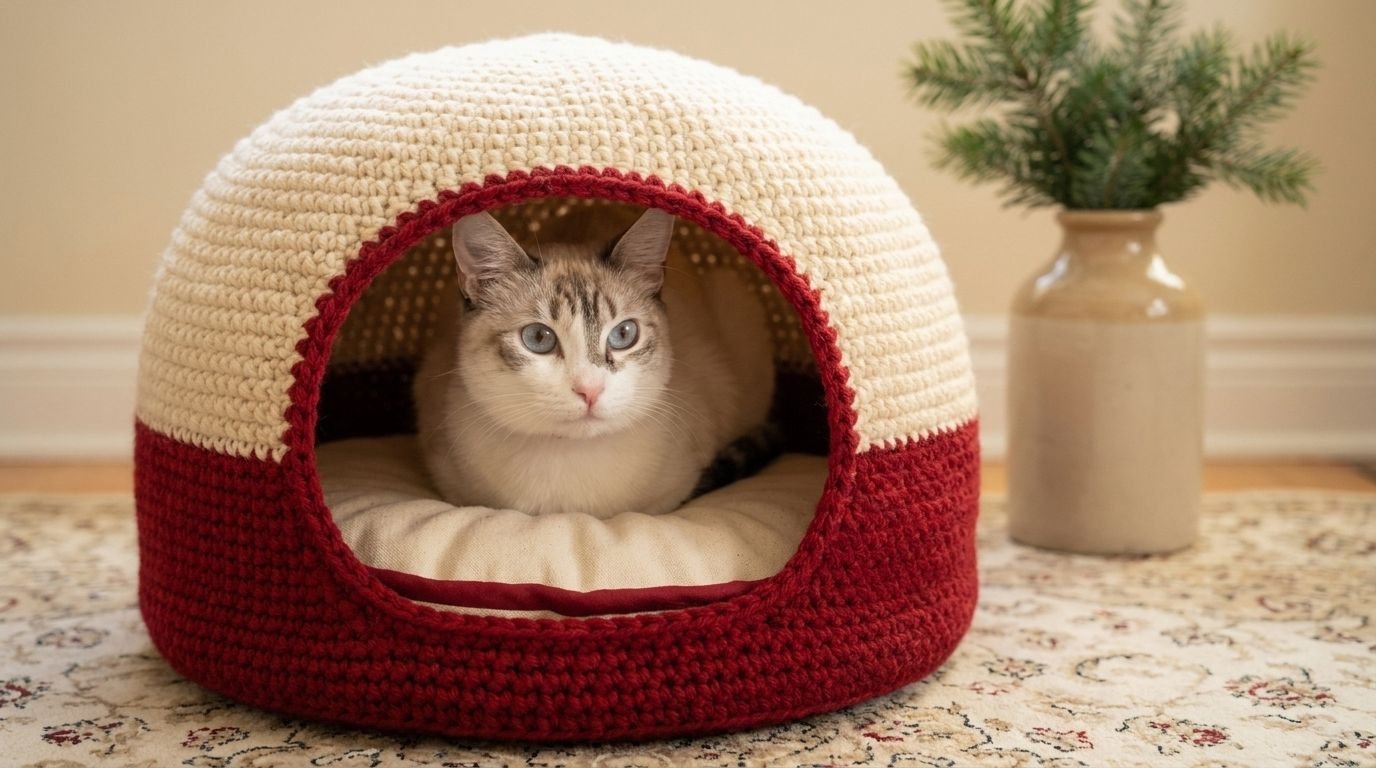
| 4 | Cranberry Color-Block Cave | Double circular-oval base | A seasonal or high-contrast room where the lower half may show everyday marks first. |
| 5 | Aqua Summer Cotton Cave | Wide oval base | Cats that want a shady hideaway with a more open front in warmer rooms. |
| 6 | Oatmeal Tweed Cat Igloo | Extra-wide double oval base | Larger cats or cats that stretch before curling up. |
| 7 | Mustard Geometric Cat Pod | Twelve dense pentagon-style panels | Makers who prefer portable motifs over shaping a large dome in one piece. |
| 8 | Charcoal Tunnel Cat Cave | Rounded-rectangle base | Cats that like a darker hide and owners who need the cave to sit along a wall. |
| 9 | Dusty-Rose Hooded Cat Bed | Double oval basket base | Cats that want overhead cover without committing to a small doorway. |
| 10 | Terracotta Hybrid Cat Cave | Double crochet basket base | Makers comfortable combining crochet with simple sewing and wanting a lightweight removable canopy. |
| 11 | Sage Corner Cat Cave | Rounded-rectangle double base | Small rooms where the cave needs to sit neatly against a wall without looking compressed. |
| 12 | Classic Oatmeal Dome | Double oval base | A timeless first cave when you want one neutral design and a clearly defined doorway. |
Measure your cat before choosing a cave
Wait until your cat settles into a natural curl, then measure the widest part of that resting shape. Add approximately 8-12 cm of ease to the width and depth so the cat can turn. Measure shoulder width separately and add 5-8 cm for the doorway. The opening must also clear upright ears and any functioning breakaway-collar hardware without brushing or snagging.
- Floor: wide enough to turn once and lie down without pushing the walls outward.
- Entrance: larger than the shoulders, ears and collar hardware.
- Height: enough sitting clearance without creating a tall, collapse-prone roof.
- Cushion: removable and 1-2 cm smaller than the interior floor so it lifts out easily.
1. Skyla’s Greige Stable-Base Cat Cave
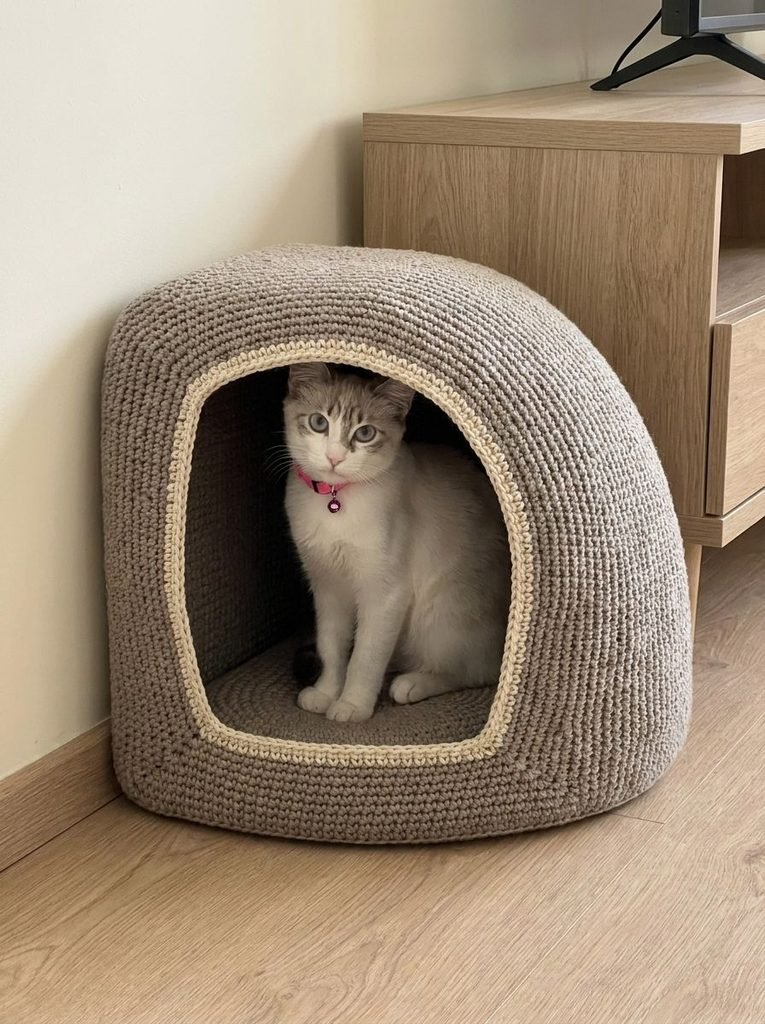
A softly squared greige dome, dense horizontal crochet texture, cream entrance edging and a broad floor that sits flat. What I like here is that the shape has a clear reason for existing: cats that prefer an upright entrance and a cave that can tuck into a quiet corner.
How this cat cave is built
Rounded-rectangle double base; dense circular walls; squared opening shaped in rows; gradual crown decreases. The matching PDF turns those visible features into a measurement-based route rather than pretending the photograph supplies a tested stitch count.
Washability and fit
Use a removable cushion or folded washable pad. Wash the crochet shell only as the yarn label allows and dry it fully in shape. The floor must remain flat when Skyla turns, and the opening should not brush her ears or catch a collar bell. Recheck as she grows.
Photo safety note: Skyla is shown wearing a collar with a bell. If a cat wears a collar in a cave, it must be a functioning breakaway collar, and the doorway must give the bell and hardware generous snag-free clearance.
Photo-matched, prototype-ready draft. Crochet, wash and fit-test a physical sample before publishing it as tested.
2. Wide-Arch Oatmeal Cave With Sage Cushion
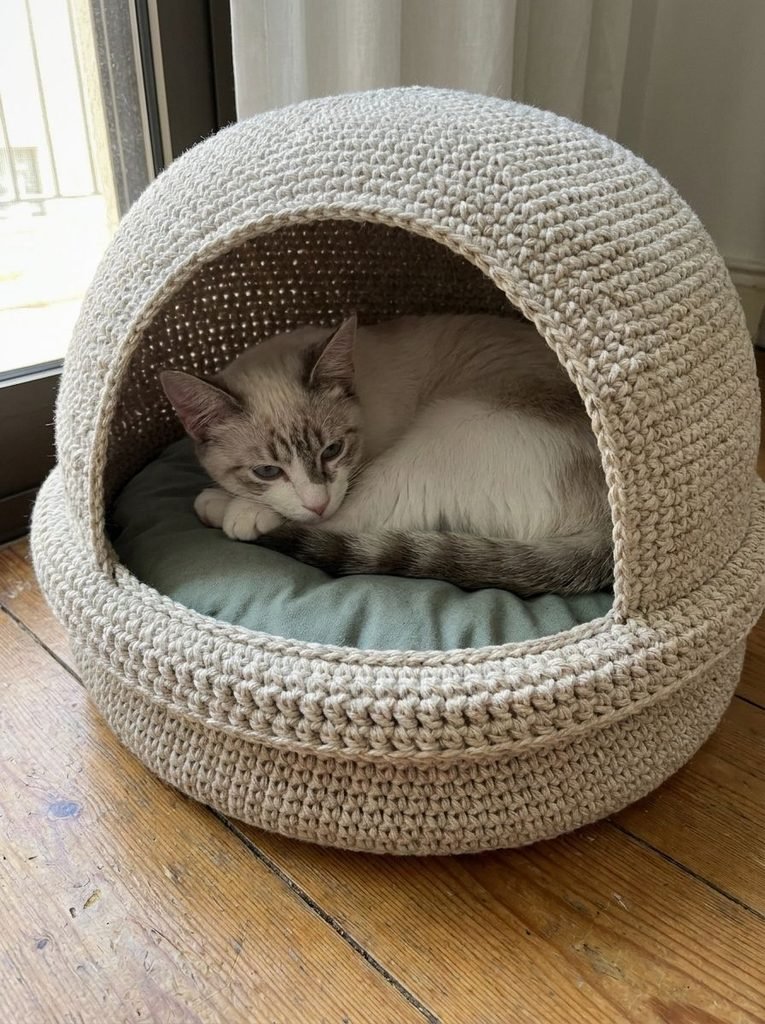
A calm oatmeal dome with a generous arch and a sage cushion that can be lifted out for washing. What I like here is that the shape has a clear reason for existing: cats that like enclosure but hesitate at small openings.
How this cat cave is built
Double oval base; high side walls; wide arched opening; low dome crown. The matching PDF turns those visible features into a measurement-based route rather than pretending the photograph supplies a tested stitch count.
Washability and fit
The sage cushion is the everyday washable layer; the shell can be cleaned less often and reshaped carefully. Skyla should be able to enter, turn once and curl without pressing the cushion into the opening.
Photo-matched, prototype-ready draft. Crochet, wash and fit-test a physical sample before publishing it as tested.
3. Natural Cotton-Rope Spiral Cave
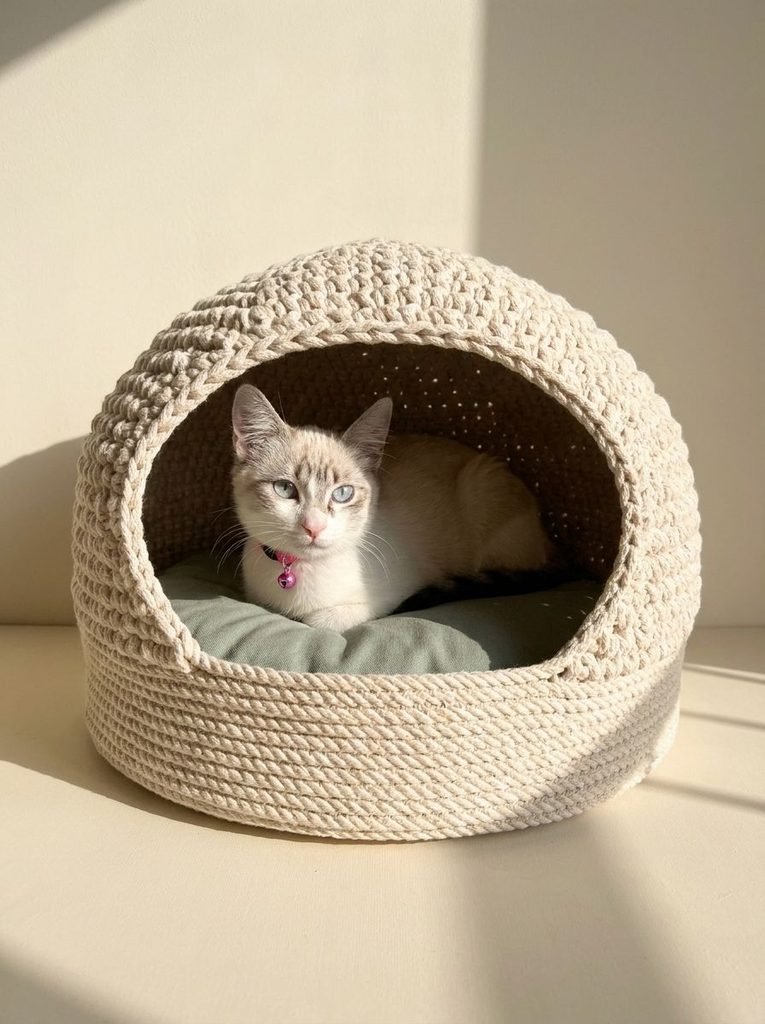
A natural rope-look shell, visible spiral rounds, sage cushion and a centered rounded doorway. What I like here is that the shape has a clear reason for existing: minimal homes and makers who want the stitch structure to be part of the design.
How this cat cave is built
Spiral oval base; continuous dense rounds; rounded doorway; concentric crown decreases. The matching PDF turns those visible features into a measurement-based route rather than pretending the photograph supplies a tested stitch count.
Washability and fit
Choose machine-washable cotton cord only if the label permits it; otherwise use a washable cushion and spot-cleaned shell. Run a hand over the cord before use. It must feel smooth enough for Skyla’s coat and paws, with no rough cut ends inside.
Photo safety note: Skyla is shown wearing a collar with a bell. If a cat wears a collar in a cave, it must be a functioning breakaway collar, and the doorway must give the bell and hardware generous snag-free clearance.
Photo-matched, prototype-ready draft. Crochet, wash and fit-test a physical sample before publishing it as tested.
4. Cranberry-and-Cream Color-Block Cave
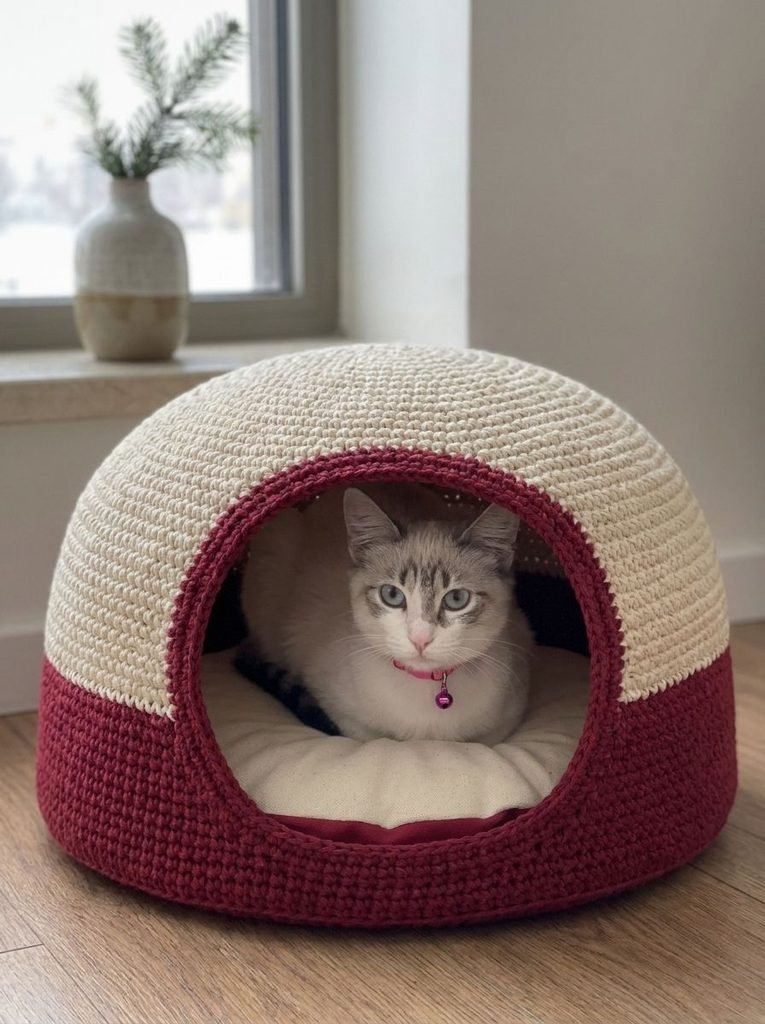
A cranberry lower shell, cream upper dome, cranberry doorway rim and cream cushion. What I like here is that the shape has a clear reason for existing: a seasonal or high-contrast room where the lower half may show everyday marks first.
How this cat cave is built
Double circular-oval base; lower color block; rounded entrance; upper color change before crown shaping. The matching PDF turns those visible features into a measurement-based route rather than pretending the photograph supplies a tested stitch count.
Washability and fit
The cream cushion lifts out; choose colorfast yarns and test the cranberry yarn before washing it beside cream. Check that the contrast rim stays flat and cannot curl inward against Skyla’s face or collar.
Photo safety note: Skyla is shown wearing a collar with a bell. If a cat wears a collar in a cave, it must be a functioning breakaway collar, and the doorway must give the bell and hardware generous snag-free clearance.
Photo-matched, prototype-ready draft. Crochet, wash and fit-test a physical sample before publishing it as tested.
5. Aqua Summer Cotton Cave
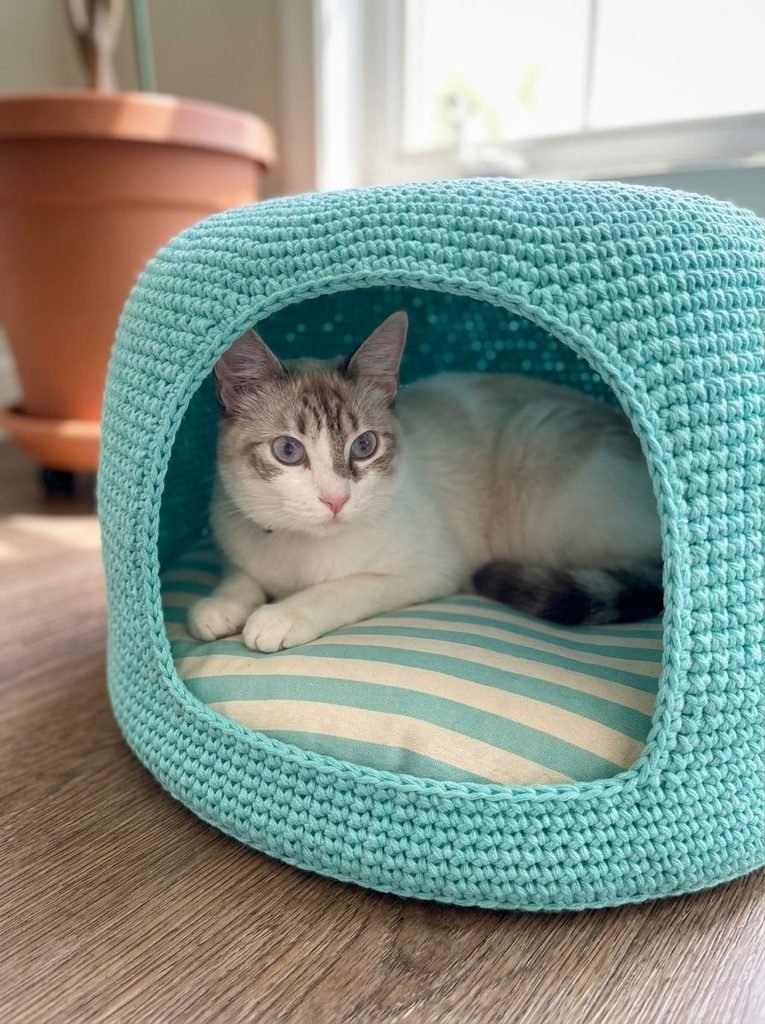
A light aqua shell, low wide entrance and striped aqua-and-cream removable cushion. What I like here is that the shape has a clear reason for existing: cats that want a shady hideaway with a more open front in warmer rooms.
How this cat cave is built
Wide oval base; low tunnel wall; broad rectangular arch; shallow crown. The matching PDF turns those visible features into a measurement-based route rather than pretending the photograph supplies a tested stitch count.
Washability and fit
A cotton shell and removable striped cover can be practical, but this is not a cooling device and must stay dry. Skyla should be able to rest with her head near the opening without the roof touching her ears.
Photo-matched, prototype-ready draft. Crochet, wash and fit-test a physical sample before publishing it as tested.
6. Oatmeal Tweed Large-Cat Igloo
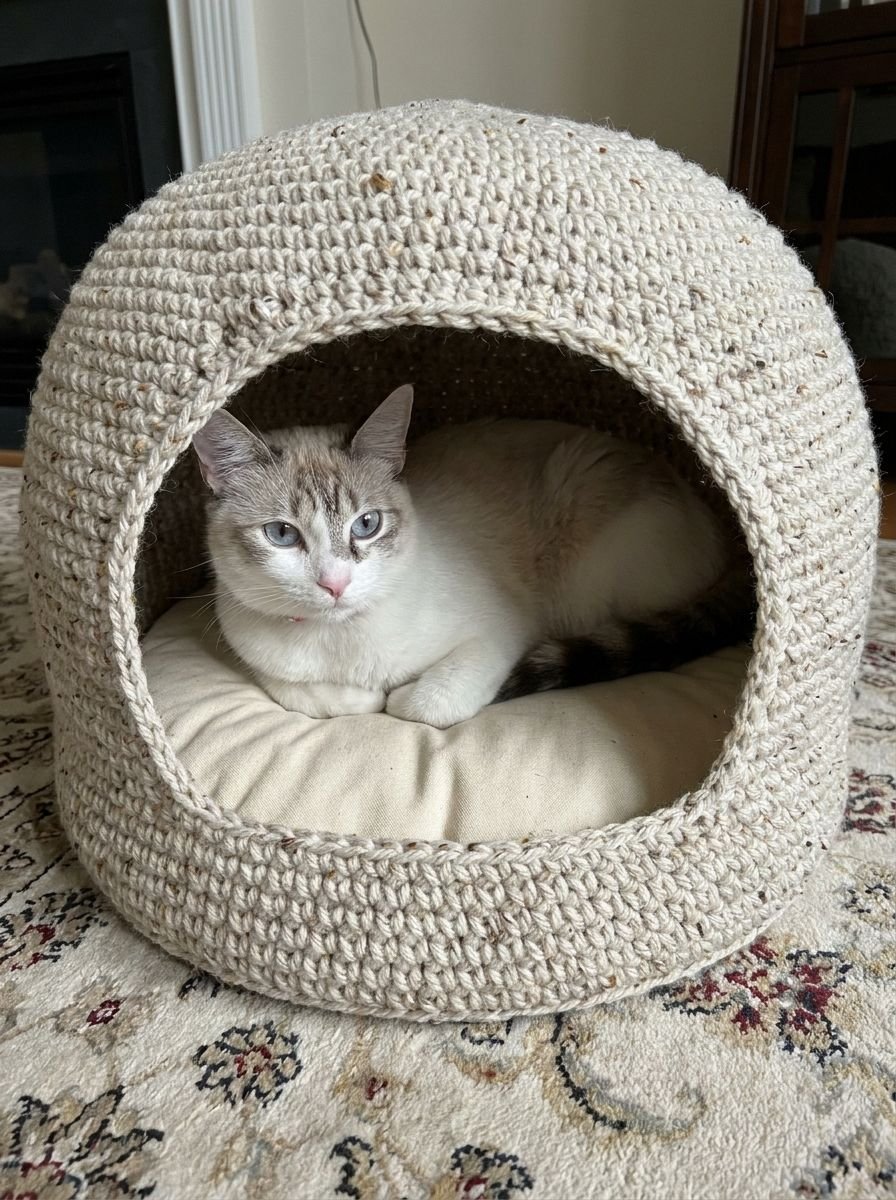
A roomy oatmeal tweed dome with a deep floor, round arch and cream cushion. What I like here is that the shape has a clear reason for existing: larger cats or cats that stretch before curling up.
How this cat cave is built
Extra-wide double oval base; tall even walls; round arch; gradual dome. The matching PDF turns those visible features into a measurement-based route rather than pretending the photograph supplies a tested stitch count.
Washability and fit
Keep the roomy shell stable with dense stitches and make the cream cushion the frequently washable component. Do not call this a large size until the intended cat can enter, turn and lie down without pushing the wall outward.
Photo-matched, prototype-ready draft. Crochet, wash and fit-test a physical sample before publishing it as tested.
7. Mustard Geometric Panel Cat Pod
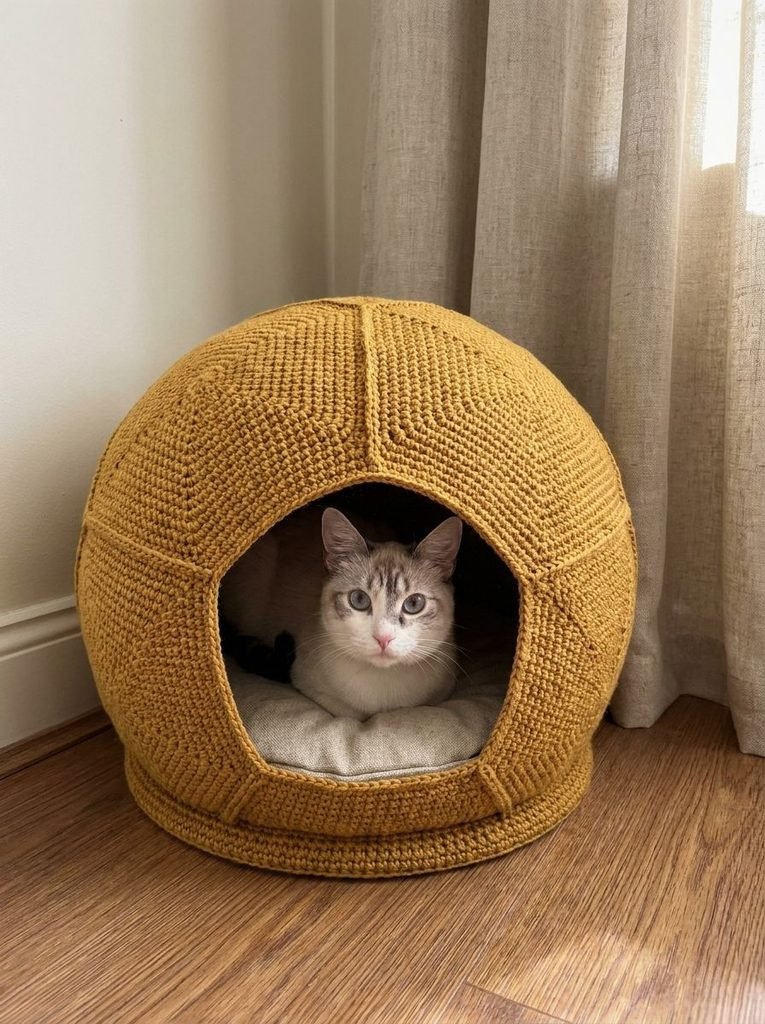
A mustard faceted pod made from clearly joined crochet panels, with a round opening and cream cushion. What I like here is that the shape has a clear reason for existing: makers who prefer portable motifs over shaping a large dome in one piece.
How this cat cave is built
Twelve dense pentagon-style panels; open-front panel arrangement; joined base layer; removable cushion. The matching PDF turns those visible features into a measurement-based route rather than pretending the photograph supplies a tested stitch count.
Washability and fit
Panels make repairs approachable, while the cushion remains removable. Use flat seams that cannot catch claws. The faceted walls should surround Skyla without narrowing at shoulder level. The pod must return to shape after a gentle hand press.
Photo-matched, prototype-ready draft. Crochet, wash and fit-test a physical sample before publishing it as tested.
8. Charcoal Tunnel-Style Cat Cave
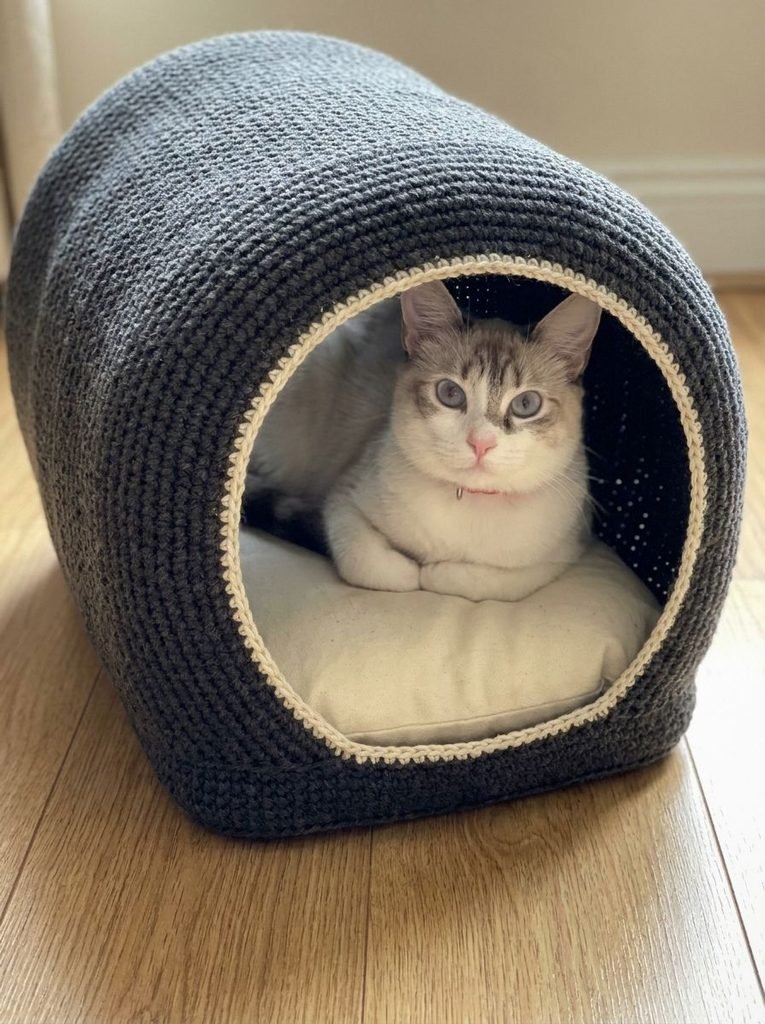
A charcoal rounded tunnel with cream entrance edging and a light removable cushion. What I like here is that the shape has a clear reason for existing: cats that like a darker hide and owners who need the cave to sit along a wall.
How this cat cave is built
Rounded-rectangle base; straight tunnel sides; semicircular roof; cream opening border. The matching PDF turns those visible features into a measurement-based route rather than pretending the photograph supplies a tested stitch count.
Washability and fit
The cream trim helps reveal loose stitches during inspection; the cushion lifts out for regular washing. Skyla should be able to reverse or turn inside. A long tunnel that forces a cat to back out is not a good fit.
Photo-matched, prototype-ready draft. Crochet, wash and fit-test a physical sample before publishing it as tested.
9. Dusty-Rose Open-Front Hooded Bed
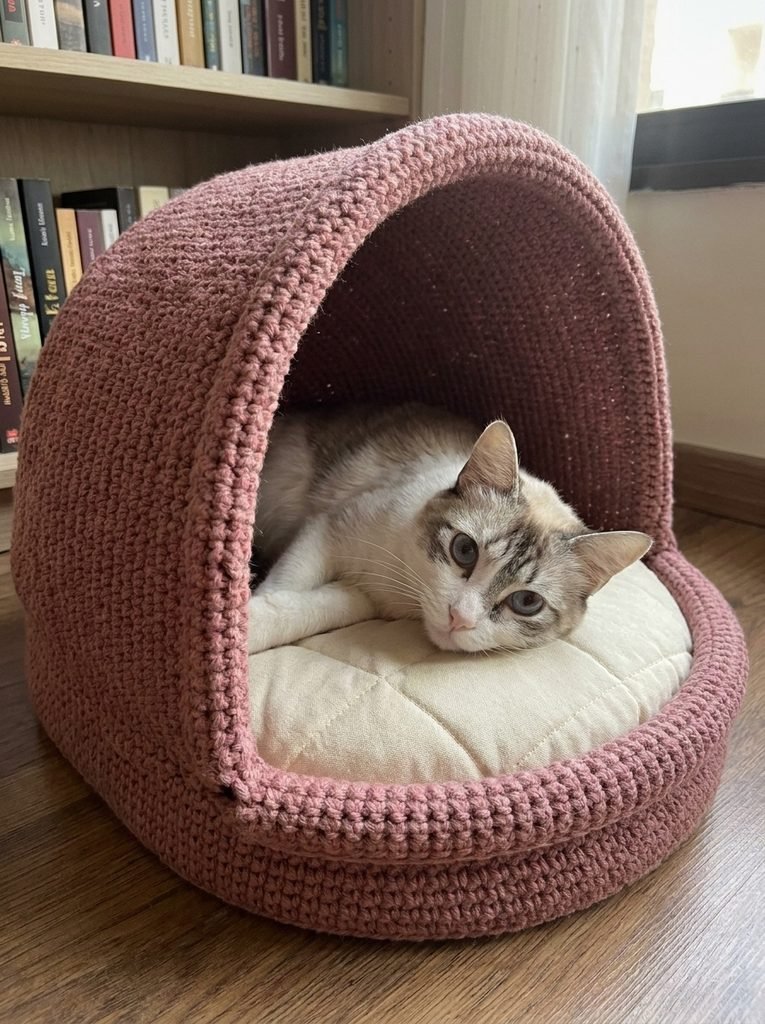
A dusty-rose nest with a low base, open front, broad hood and quilted cream cushion. What I like here is that the shape has a clear reason for existing: cats that want overhead cover without committing to a small doorway.
How this cat cave is built
Double oval basket base; low front wall; shaped hood panel attached across back and sides. The matching PDF turns those visible features into a measurement-based route rather than pretending the photograph supplies a tested stitch count.
Washability and fit
The open front makes the cushion easy to remove and lets the shell dry more quickly than a closed dome. The hood may sit above Skyla’s back, but it should not force her head down or narrow the entry path.
Photo-matched, prototype-ready draft. Crochet, wash and fit-test a physical sample before publishing it as tested.
10. Hybrid Terracotta Crochet-Base Cave
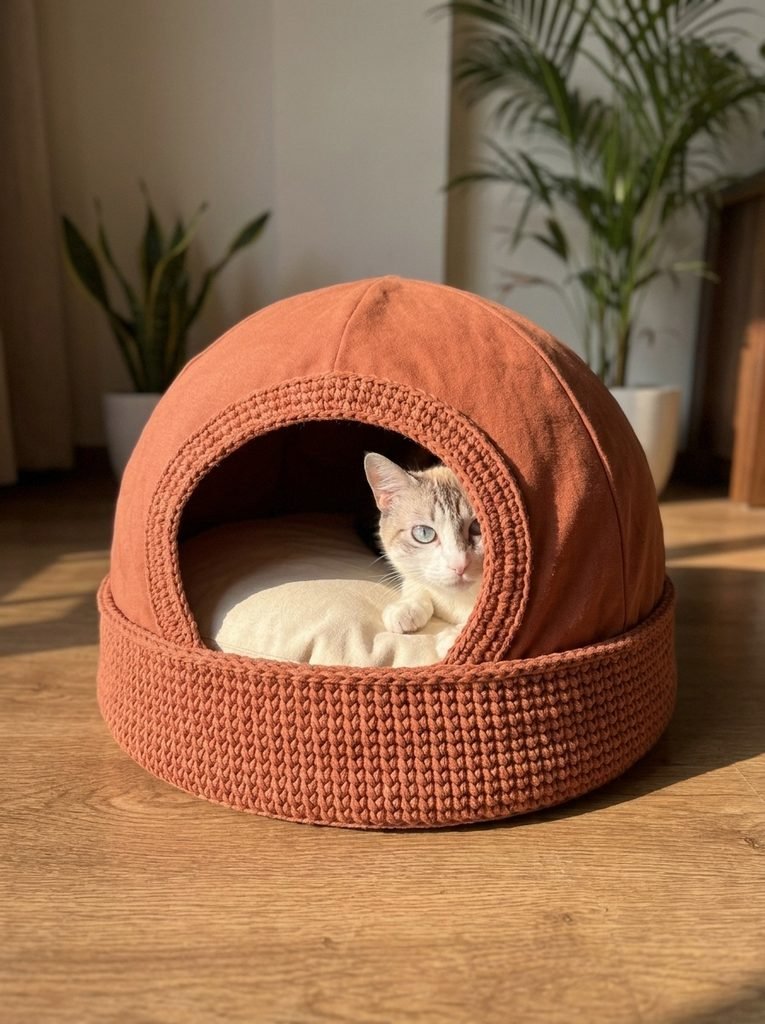
A terracotta crochet basket base and doorway rim paired with a cream removable cushion and a sewn terracotta fabric dome. What I like here is that the shape has a clear reason for existing: makers comfortable combining crochet with simple sewing and wanting a lightweight removable canopy.
How this cat cave is built
Double crochet basket base; detachable fabric hood; crochet doorway binding; removable cushion. The matching PDF turns those visible features into a measurement-based route rather than pretending the photograph supplies a tested stitch count.
Washability and fit
The crochet basket, cushion cover and fabric dome separate so each material can be washed by its own care label. The fabric dome must stand clear of Skyla’s head and detach without leaving loops that can catch paws.
Honest construction note: The photographed upper dome is sewn fabric. This is a hybrid crochet-and-sewing project, not an all-crochet cave.
Photo-matched, prototype-ready draft. Crochet, wash and fit-test a physical sample before publishing it as tested.
11. Sage Ribbed Flat-Back Corner Cave
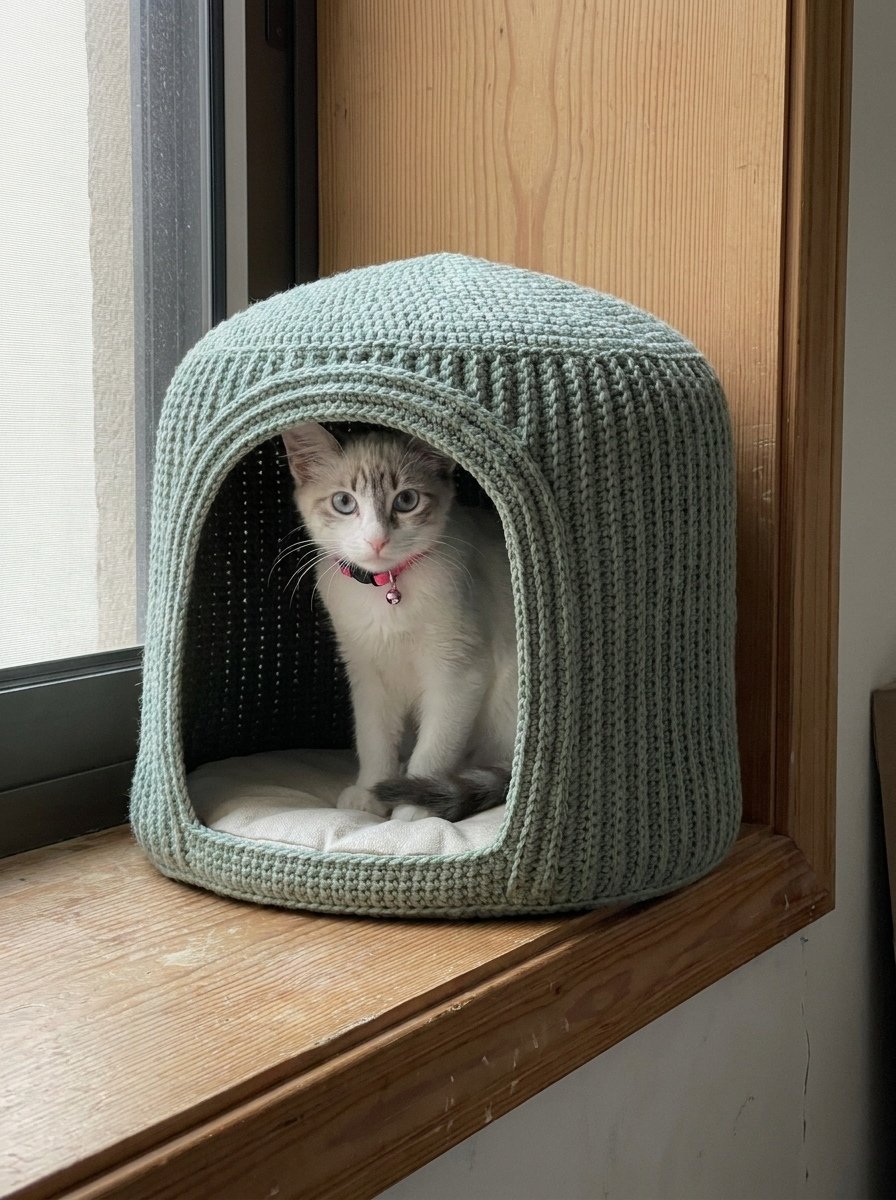
A sage ribbed shell with a flat back, tall rounded front opening and cream cushion. What I like here is that the shape has a clear reason for existing: small rooms where the cave needs to sit neatly against a wall without looking compressed.
How this cat cave is built
Rounded-rectangle double base; flat back panel; curved side and roof panel in ribbed rows. The matching PDF turns those visible features into a measurement-based route rather than pretending the photograph supplies a tested stitch count.
Washability and fit
A separate cushion handles routine washing; the flat-back shell is reshaped upright after cleaning. The tall opening should clear Skyla’s ears and breakaway-collar hardware, and the back must not tip when she steps onto the front edge.
Photo safety note: Skyla is shown wearing a collar with a bell. If a cat wears a collar in a cave, it must be a functioning breakaway collar, and the doorway must give the bell and hardware generous snag-free clearance.
Photo-matched, prototype-ready draft. Crochet, wash and fit-test a physical sample before publishing it as tested.
12. Classic Oatmeal Rolled-Rim Dome
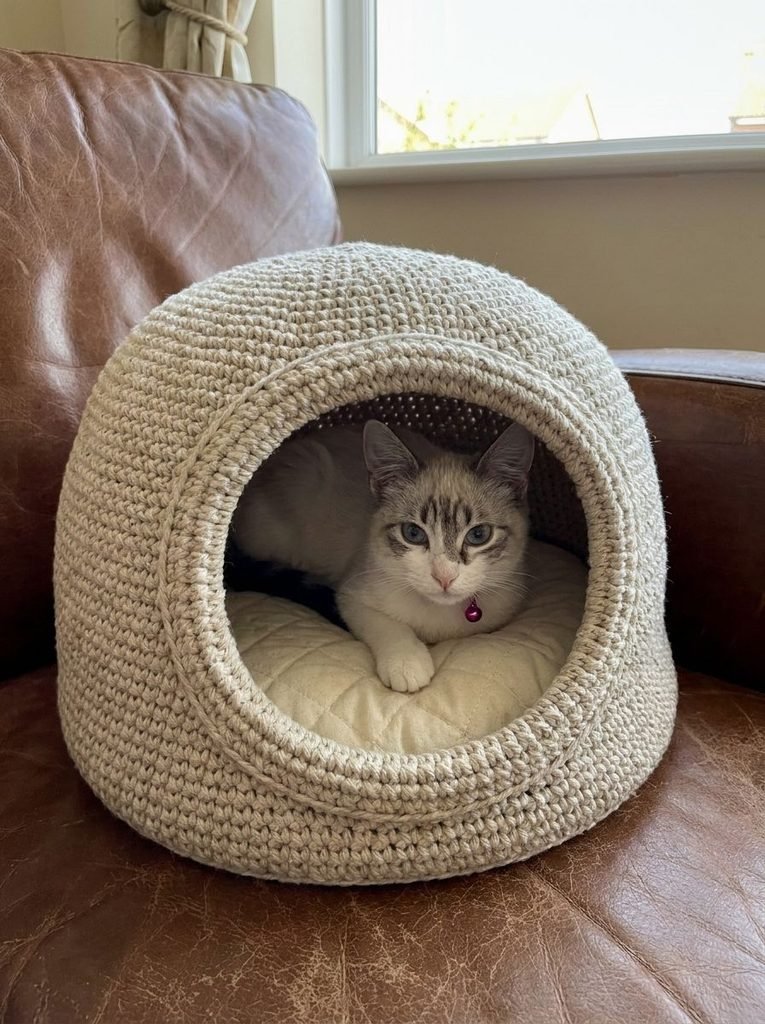
A classic oatmeal dome with a substantial rolled entrance rim and cream quilted cushion. What I like here is that the shape has a clear reason for existing: a timeless first cave when you want one neutral design and a clearly defined doorway.
How this cat cave is built
Double oval base; circular dome; rounded doorway; separate padded-look crochet rim without hidden cord. The matching PDF turns those visible features into a measurement-based route rather than pretending the photograph supplies a tested stitch count.
Washability and fit
The cushion is removable, while the rolled rim can be inspected and reshaped separately after the shell is washed. The rolled rim should frame Skyla without touching her whiskers on both sides or catching the bell shown in the photograph.
Photo safety note: Skyla is shown wearing a collar with a bell. If a cat wears a collar in a cave, it must be a functioning breakaway collar, and the doorway must give the bell and hardware generous snag-free clearance.
Photo-matched, prototype-ready draft. Crochet, wash and fit-test a physical sample before publishing it as tested.
How to keep a crochet cat cave stable and washable
Use a dense double floor
Most patterns in this collection join two tightly crocheted floor panels. That extra layer gives the cave a more settled base without hiding wire, plastic rods or a hard insert inside the yarn. If the floor still rolls after washing, correct the gauge or add a flat edging round instead of adding sharp hardware.
Let the cushion do the everyday washing
A zippered or envelope-style cover is easier to clean than the full shell. Make it slightly smaller than the interior floor, choose washable filling, and dry both layers completely before reassembly. A damp enclosed bed is not ready for a cat.
Make the opening support itself
Dense yarn, a lower roof and balanced shaping should keep the entrance open. Do not add hidden wire. If the doorway collapses after a gentle press or after washing, revise the construction before the cave reaches the cat.
Cat-cave safety checklist
- Supervise the first sessions and let the cat enter voluntarily.
- Use smooth yarn with no large holes, loose loops, shedding fibers or exposed knots.
- Weave every tail deeply into dense fabric and inspect joins after washing.
- Remove the cave if the roof collapses, the floor tips, the cat chews yarn or claws catch in stitches.
- If a collar is worn, use a functioning breakaway collar and confirm generous doorway clearance. A dangling bell can snag.
- Never hide wire, rigid tubing, needles, pins or sharp stabilizers inside a crochet shell.
- Dry the shell and cushion fully before use and keep the cave where airflow is not blocked.
Crochet cat cave FAQs
What yarn is best for a stable crochet cat cave?
A smooth, washable bulky or super-bulky yarn is a practical starting point. Tube yarn, firm cotton blends and securely spun bulky fibers can create dense walls. Avoid fuzzy novelty yarn, loosely spun flecks and anything abrasive enough to catch fur or claws.
Can I put a crochet cat cave in the washing machine?
Only if the yarn label and construction allow it. Wash a swatch first. Support the wet shell, use a gentle cycle when permitted, reshape immediately and dry completely. The removable cushion cover will usually need washing more often than the shell.
How do I stop the cave entrance from collapsing?
Use denser stitches, a lower crown, a smaller hook within the yarn’s workable range and balanced doorway shaping. Do not solve a sagging opening with hidden wire. If the fabric cannot support the shape safely, choose the open hood or flat-back design instead.
Which pattern should a beginner choose?
The open-front dusty-rose hood or wide-arch oatmeal cave is easier to inspect and resize than the geometric panel pod. The hybrid cave also needs sewing, while the tweed igloo uses a larger amount of yarn and requires more careful crown shaping.
Choose the cave your cat will actually use
The prettiest cave is not automatically the best one. Start with your cat’s resting habits: a wide arch for a cautious cat, an open hood for a cat that dislikes narrow doors, a tunnel for a wall-loving sleeper or a roomy igloo for a larger body. Then download that design’s PDF, make one prototype and let the fit test guide the final adjustments.