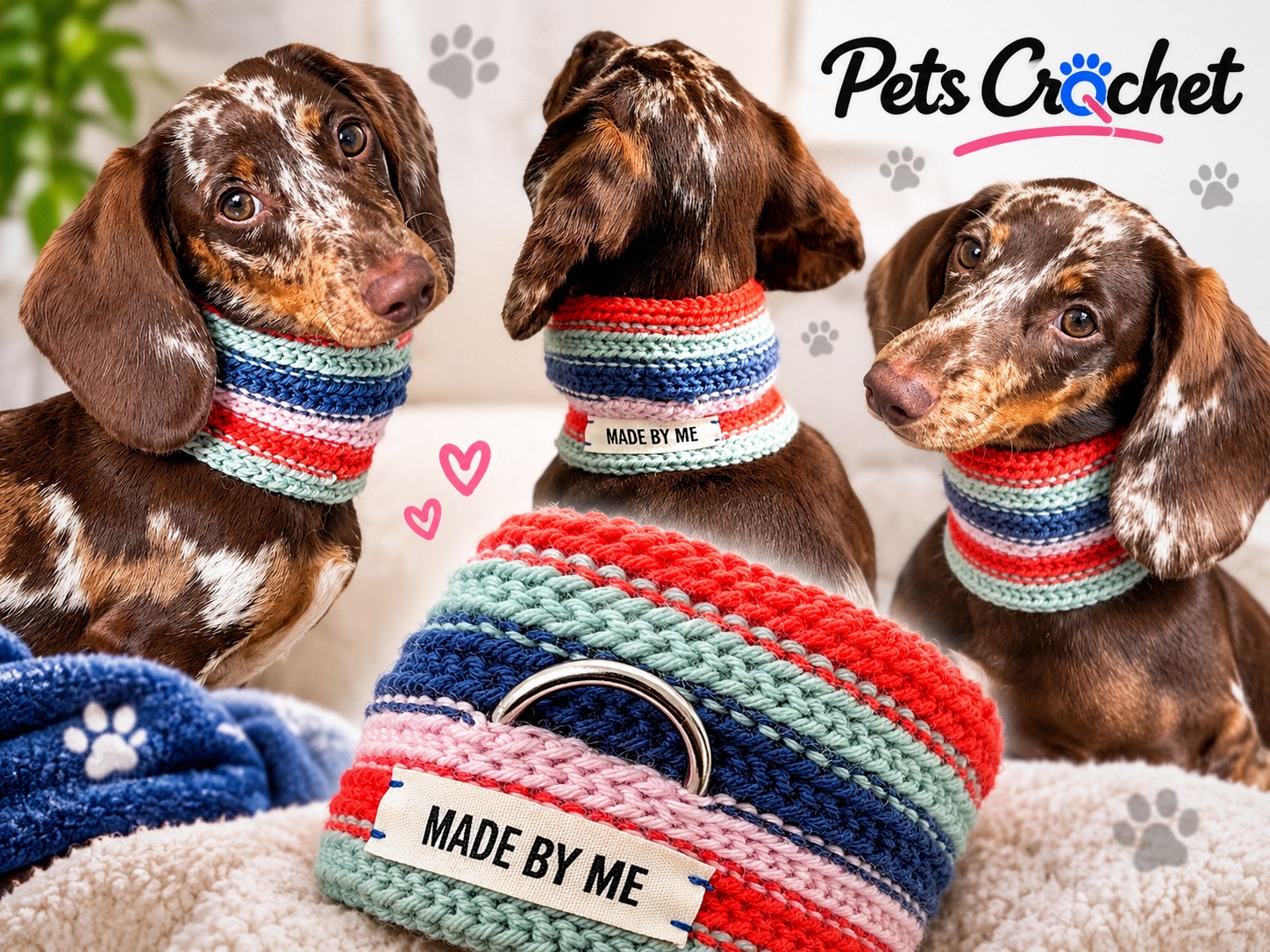
Orange red, misty green, dark denim and dusty rose give this crochet dog scarf a clear striped rhythm. Wes is a tube scarf rather than a tied bandana, with a close, knit-like texture and a different-looking surface on each side.
1. Wes: A Reversible Striped Tube Scarf

The stripes keep the shape simple. Each colour runs for four rounds before the next shade begins. One surface shows broad colour bands; the other has narrow contrasting stitch lines between them. Turning it over changes the look without making a second scarf.
Two stitches make the texture
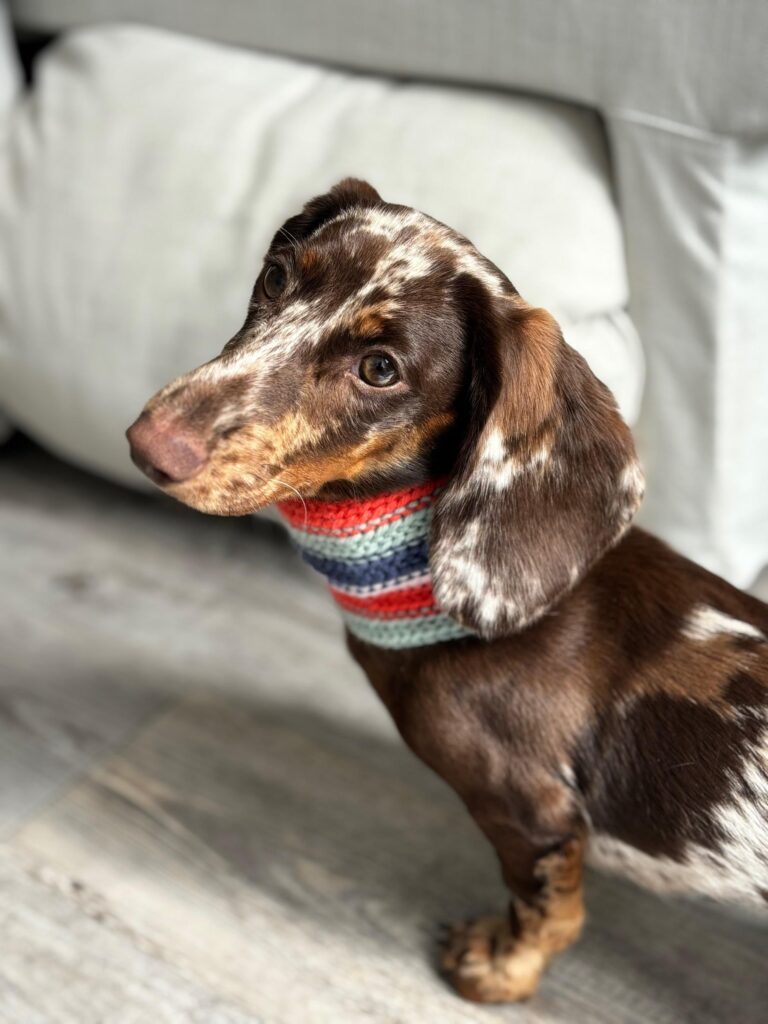
The fabric alternates slip stitches with half-double-crochet slip stitches. Most rounds use back loops only, leaving the front loops visible as part of the texture. These are short stitches, so keeping the tension even matters more than trying to work quickly.
The guide explains its stitch interpretation and restores an omitted fifth round. Those clarifications have not been independently crocheted. Make a small tube sample first and compare the actual fabric, gauge and recovery before working the full size.
Four sizes are reference choices

The XS–L instructions use 60, 76, 96 or 110 stitches around the tube. The listed opening circumferences are approximately 30, 38, 48 and 54.5 cm. These dimensions do not follow exactly from the stated gauge, so they are reference measurements rather than a promise for your sample.
Measure the dog’s head path and neck, then check the actual tube. It must go on and come off without pressure around the eyes or ears, and sit comfortably afterward. If a loose enough opening leaves too much fabric around the neck, a slip-over style may not suit that dog.
An opening for separate collar hardware
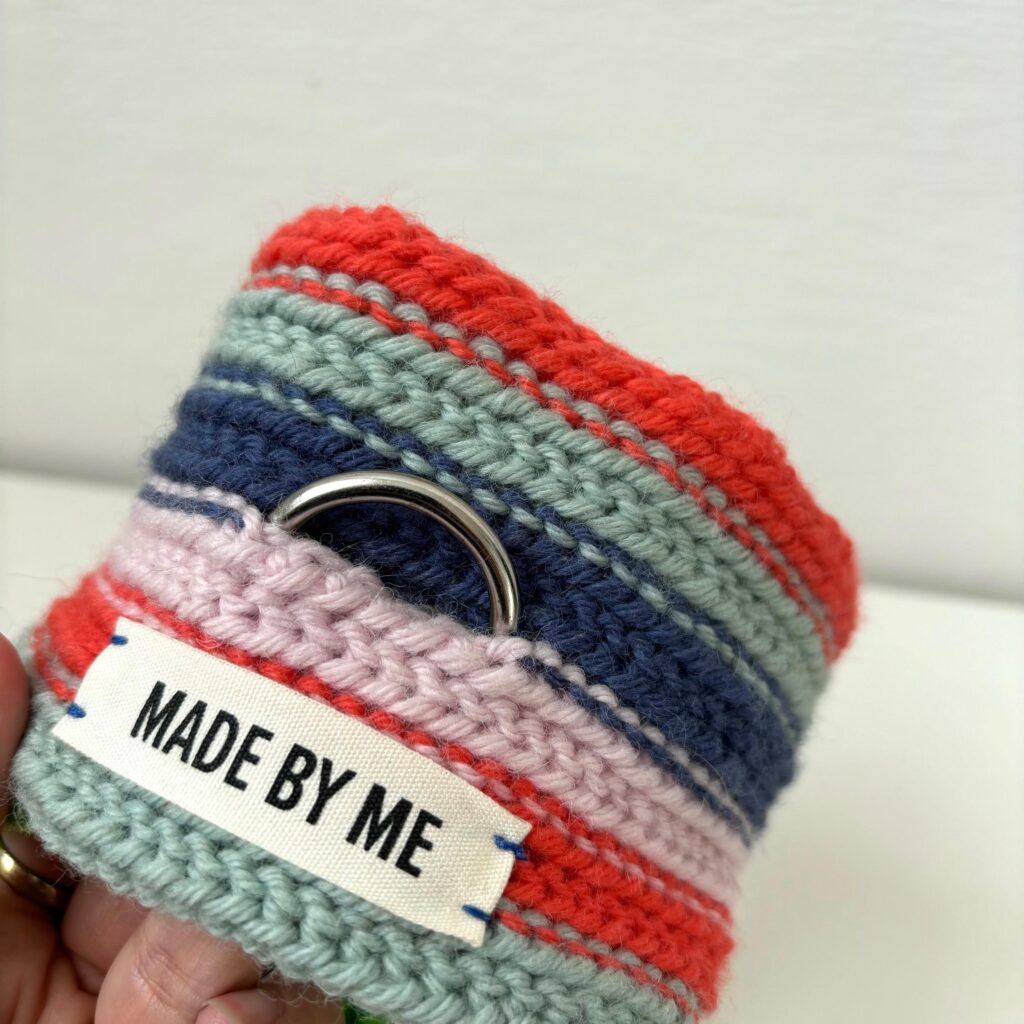
A six-chain bridge creates the access opening. It is intended to expose a separate collar ring, but the crochet itself is not a leash attachment. Keep the clip, walking equipment and any release mechanism clear of the fabric. The opening has no verified load rating or universal hardware fit.
Check that arrangement off the dog first. If the clip catches or pulls on the scarf, or a release is blocked, do not use the combination. An optional craft key ring is not part of the main making route.
Yarn and sampling
The reference uses Friends Wool, with one 50 g skein in each of four colours and a 4 mm hook. Those are purchasing references, not measured consumption for every size. Check actual fibre and care labels, and allow enough yarn for a sample.
The stated gauge is 21 stitches and 28 rounds over 10 cm. Measure the alternating fabric relaxed, then sample cleaning and remeasure when dry. No washed gauge or stretch-recovery result has been verified for the prepared guide.
Finishing and comfort checks
Weave colour tails without tightening the tube. If you add a label, sew its edges flat and inspect it alongside the opening. The scarf needs no label to hold its shape.
This is decorative clothing, not walking or restraint equipment. Use it only when appropriate for the dog, check movement and comfort, and remove it if it shifts, catches or causes distress. The prepared guide is an untested draft, with no waterproofing or fixed warmth claim.
Questions before you start
Is it a tied scarf?
No. The foundation joins into a tube, with no trailing tie ends or final joining seam.
Are the reverse views separate designs?
No. The photos show one scarf and its details, not several patterns.
Can the lead clip onto the crochet opening?
No. Any lead must connect directly to appropriate separate walking equipment, fully clear of the crochet and unobstructed releases.
Does the download cover every size?
Yes. The guide includes all four count schedules, stripe order, opening instructions and the proposed round-five and stitch clarifications.