
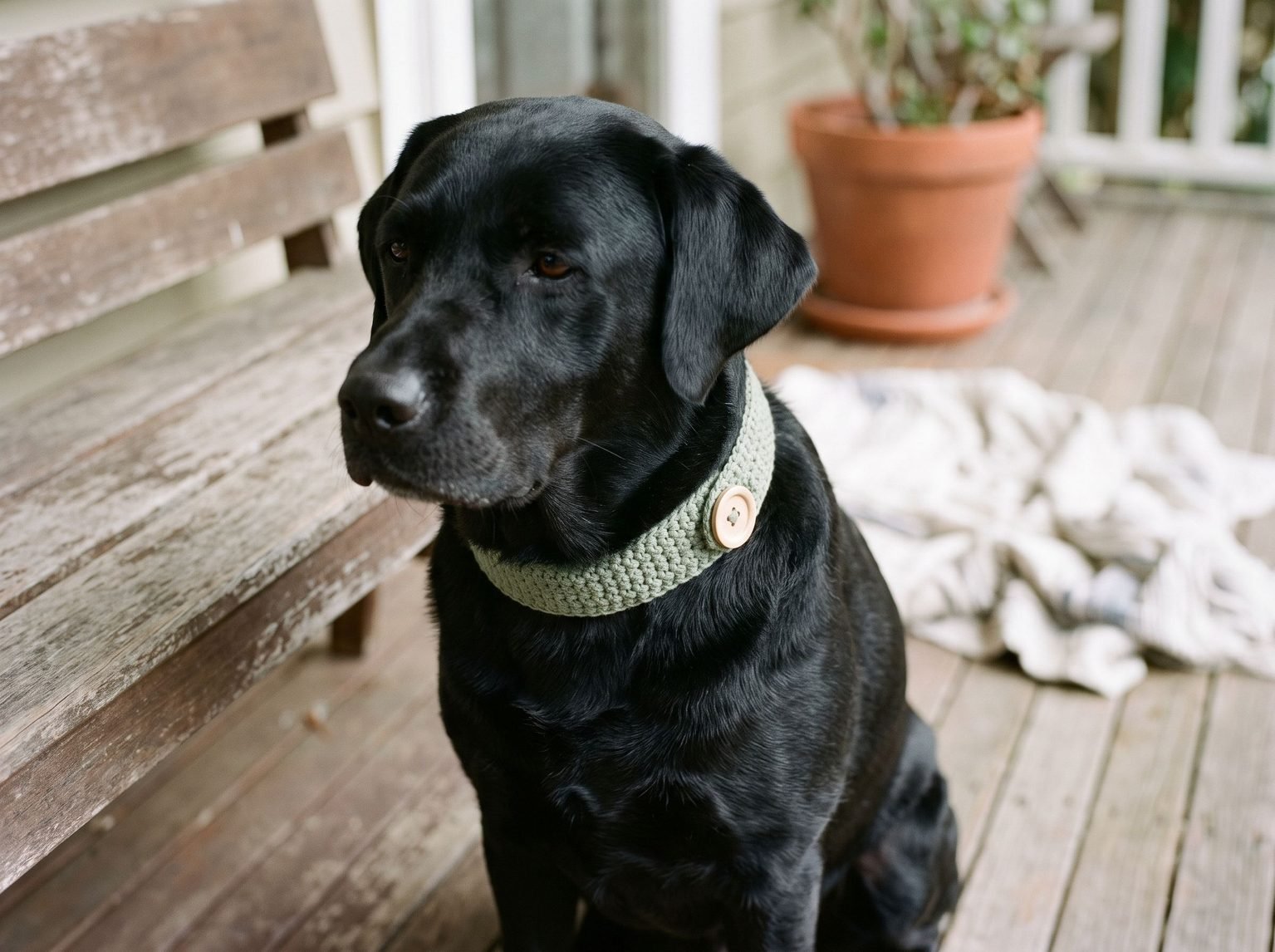
A crochet pet collar can be a small project, but it still needs more thought than choosing a pretty yarn and sewing on a button. The width has to suit the neck. Every end needs to disappear. Most importantly, the finished piece should behave like a supervised decorative accessory, not like walking equipment.
These ten ideas move from a simple sage band to a tiny bow tie, a granny-motif showpiece and a safer crochet cover that sits over a real collar. The photographs are here to help you choose a direction. The downloadable guide at the end gives you adjustable base constructions and explains how each pictured finish changes the making process.
Each idea below now has its own free photo-matched pattern PDF. Use the download under the design you want to prototype, then keep the collection guide for the shared measuring and safety checks.
Pet-first rule: Buttoned crochet bands are decorative accessories for brief, supervised wear. Never clip on a leash, tether or identification tag. For cats, keep a real breakaway collar underneath and leave its clasp completely clear.
Before You Choose a Crochet Pet Collar Idea
Measure the neck where the collar will sit, add modest comfort ease and choose a width that clears the jaw and ears. Smooth cotton is easier to inspect than novelty yarn. Flat buttons are preferable to heavy or shanked buttons, and every motif should be sewn down through multiple points.
- Fit: Two fingers should slide under a dog collar without force; do not rely on a standard breed size.
- Finish: Weave each end back through several stitches and trim only after stretching and checking the sample.
- Use: Remove before sleep, crating, rough play, chewing, walks or unsupervised outdoor time.
- Testing: Crochet and fit-test a real sample before publishing any exact pattern as tested.
1. Wide Mustard Ribbed Button Collar
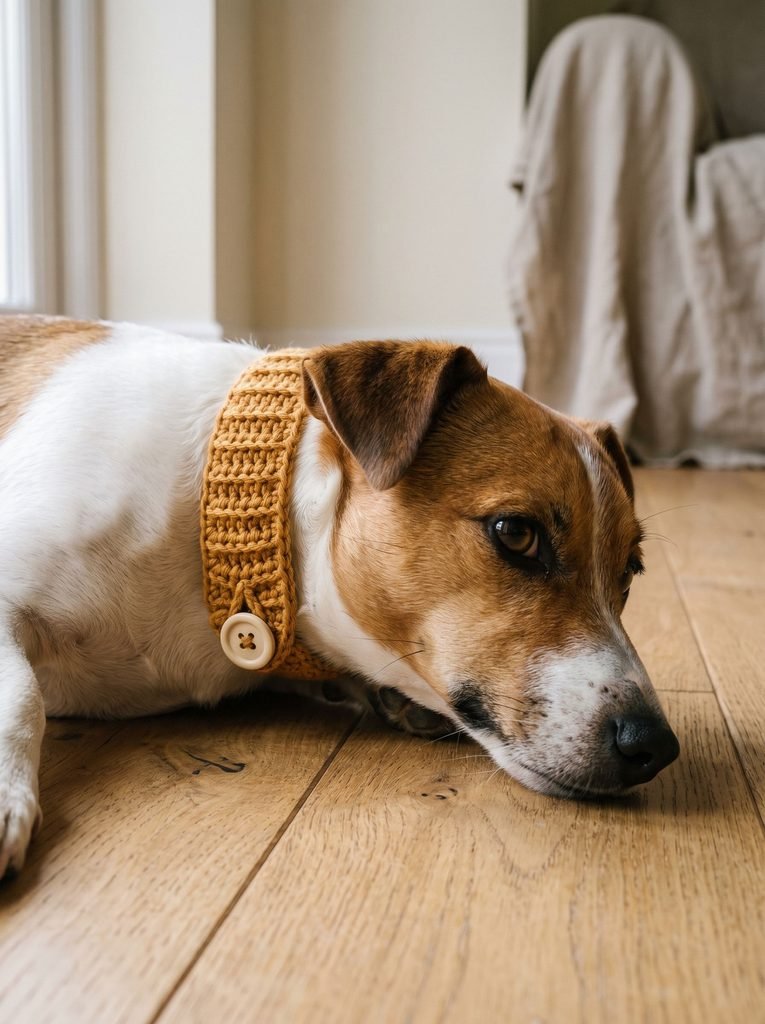
This is the collar that started the collection, and it still has the strongest everyday look. The wide band gives the mustard yarn room to show its ridges, while the plain cream button keeps the finish quiet. On a short-haired dog, that texture reads clearly even from a Pinterest feed.
Work the band sideways in back-loop half double crochet so each completed row adds length, not width. That makes the fit easy to adjust: keep crocheting until the strip reaches your measured length, then add the buttonhole near the final end. A smooth cotton or cotton-blend DK yarn will keep the ridges visible and reduce fuzz around the pet’s neck.
How to adapt the base
Best for: Beginner makers, short coats and warm neutral photography.
Construction: Use the wide ribbed base, about 4 to 5 cm across. Keep the button flat and light.
Reality check: The original image is the best hero because the collar, button and relaxed pet are all easy to read.
Make this design: Download the free Wide Mustard Ribbed Button Collar pattern PDF.
Photo-matched prototype route; crochet and fit-test a real sample before calling it tested.
2. Simple Sage Cotton Button Collar
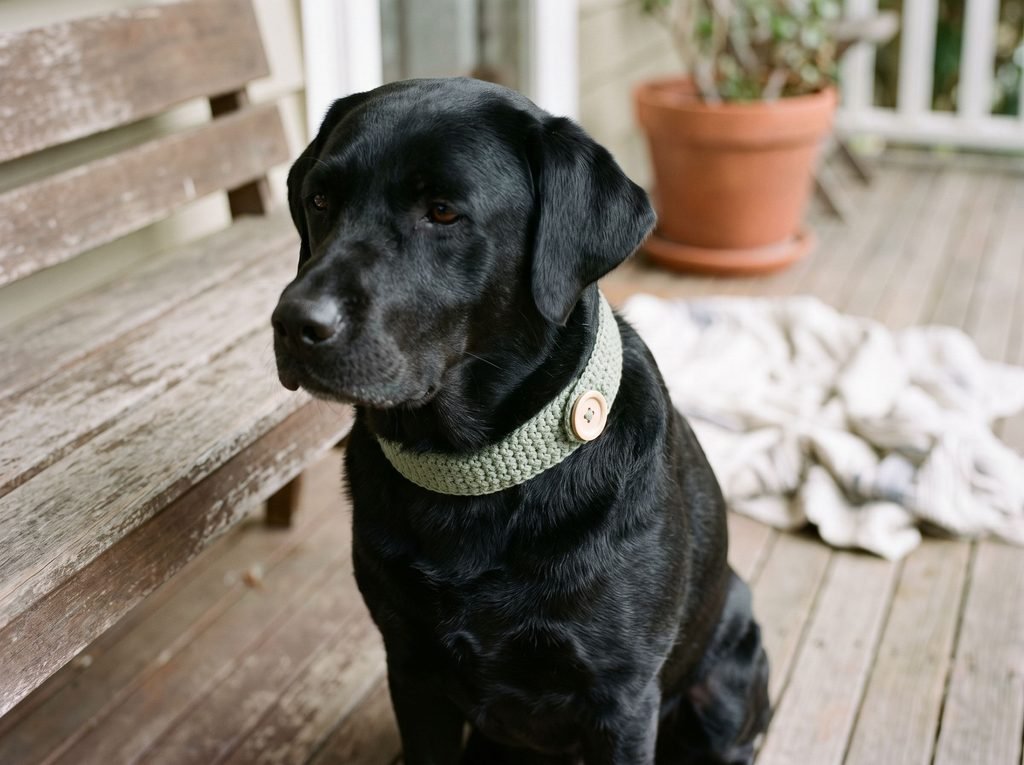
A plain sage collar is the most useful option in this list. There is no motif to catch, no bow to flatten and no color change to manage. The contrast against the Labrador’s black coat does most of the visual work, which is exactly why the result feels believable rather than over-designed.
Use dense single crochet for a smooth band about 3 cm wide. The pictured collar curves softly around a larger neck, so avoid a stiff yarn and stop tightening as soon as the fabric begins to cup. A flat wooden button is enough. Bigger does not automatically mean safer, and a heavy button can make the collar rotate.
How to adapt the base
Best for: A first pet-collar project and darker coats.
Construction: Use the narrow smooth base in single crochet. Add one light wooden button and no extra trim.
Reality check: This image is realistic and publishable as inspiration after the pattern is physically checked.
Make this design: Download the free Simple Sage Cotton Button Collar pattern PDF.
Photo-matched prototype route; crochet and fit-test a real sample before calling it tested.
3. Terracotta and Cream Color-Block Collar
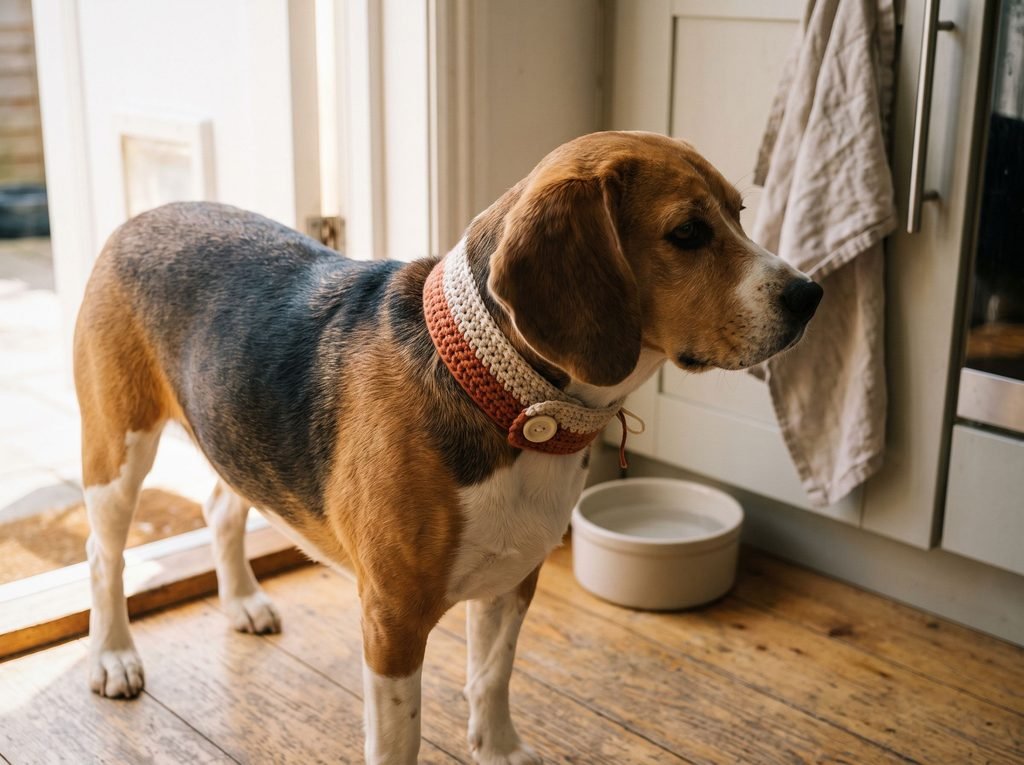
This version is for anyone who saves color combinations before saving patterns. Terracotta and cream echo the beagle’s coat without disappearing into it, and the broad blocks look calmer than a stack of tiny stripes. The overlapping tab also gives the collar a handmade, almost vintage finish.
Crochet a smooth wide band, changing color only once across the width. Carrying yarn along the edge would add bulk, so fasten off the first shade, join the second and weave both tails through several stitches. The generated image shows loose yarn beside the button. Treat that as a finishing reminder, not a feature: no loose loop or tail should remain on a wearable pet project.
How to adapt the base
Best for: Autumn palettes and confident color contrast.
Construction: Use the wide smooth base. Work half the rows in terracotta and half in cream, then finish every tail completely.
Reality check: Do not publish a final sample with the loose closure ends visible in the inspiration image.
Make this design: Download the free Terracotta and Cream Color-Block Collar pattern PDF.
Photo-matched prototype route; crochet and fit-test a real sample before calling it tested.
4. Blush Scalloped-Edge Collar
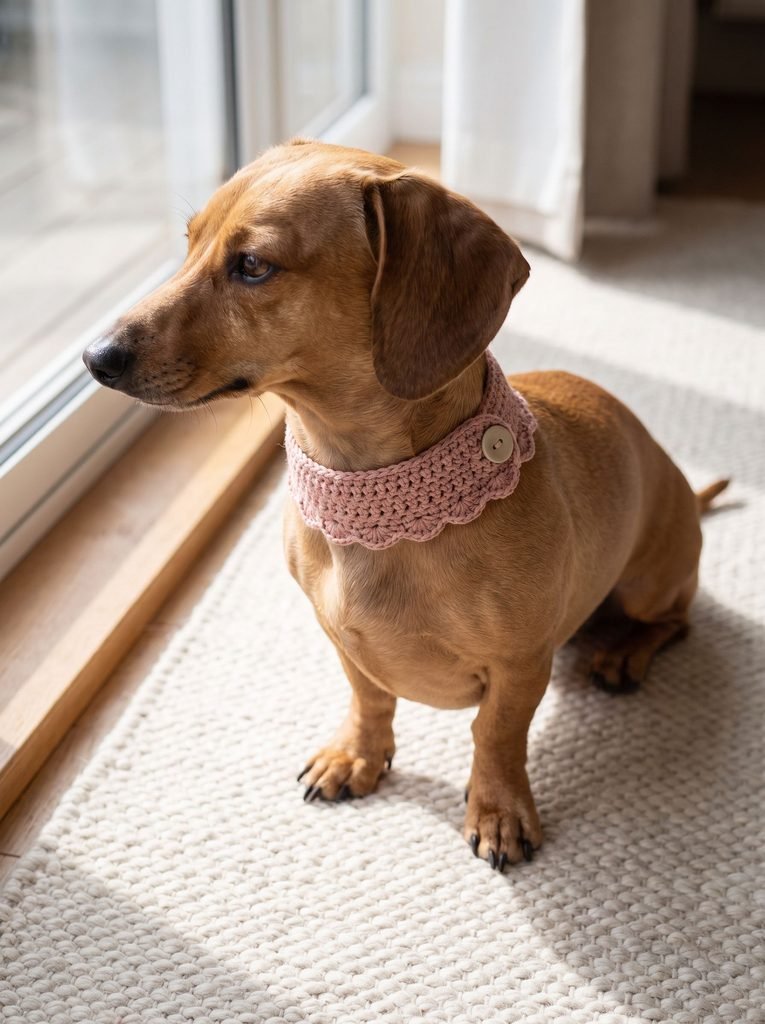
The blush collar is decorative, but it does not look fussy. Its scallops sit only along the lower edge, so the top remains smooth against the neck. That small decision matters. A full ruffle would be warmer, bulkier and much more likely to invite chewing.
Make the main band in firm single crochet, then attach yarn at one lower corner. Skip a stitch between compact five-double-crochet shells so the edge lies flat instead of flaring. Check the button area carefully because the scallop row should stop before the overlap. For a dachshund or another low, active dog, keep supervised wear brief and indoors.
How to adapt the base
Best for: Birthdays, gentle portraits and small short-haired dogs.
Construction: Use the smooth band, then add one compact shell row to the lower edge only.
Reality check: Keep the shells shallow and stop the trim before the button overlap.
Make this design: Download the free Blush Scalloped-Edge Collar pattern PDF.
Photo-matched prototype route; crochet and fit-test a real sample before calling it tested.
5. Aqua Summer Collar with Picot Edge
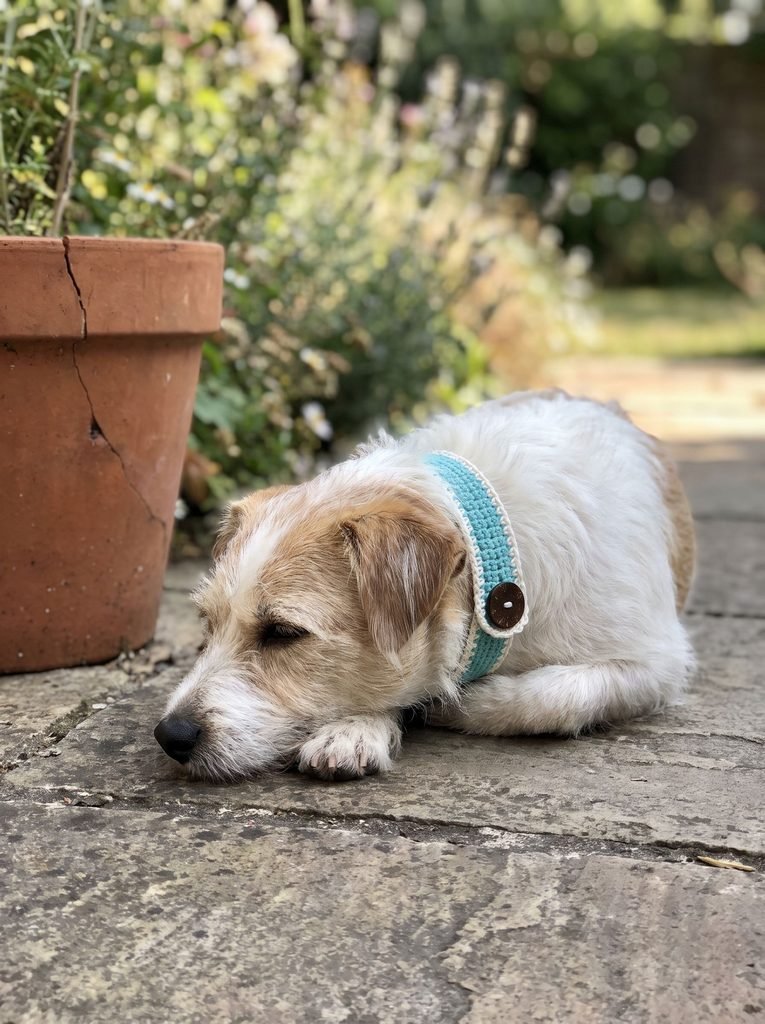
Aqua feels fresh in summer photographs, especially beside weathered stone and terracotta. The cream edging in this idea is tiny enough to read as a finish rather than lace. I would choose this over an open mesh collar because the denser fabric is easier to inspect for pulled loops.
Crochet the aqua band in tight single crochet and add a simple picot sequence along one edge: slip stitch, chain three, slip stitch back into the first chain, then space the next point a few stitches away. Run a finger along the finished edge. If a point catches on fur or opens into a loose loop, remove that section and work it more tightly.
How to adapt the base
Best for: Warm-weather inspiration and small amounts of cotton yarn.
Construction: Use the narrow smooth base with a sparse cream picot edge and a flat coconut-style button.
Reality check: The trim must be tight enough that a claw cannot enter a loop.
Make this design: Download the free Aqua Summer Collar with Picot Edge pattern PDF.
Photo-matched prototype route; crochet and fit-test a real sample before calling it tested.
6. Cranberry and Cream Holiday Collar
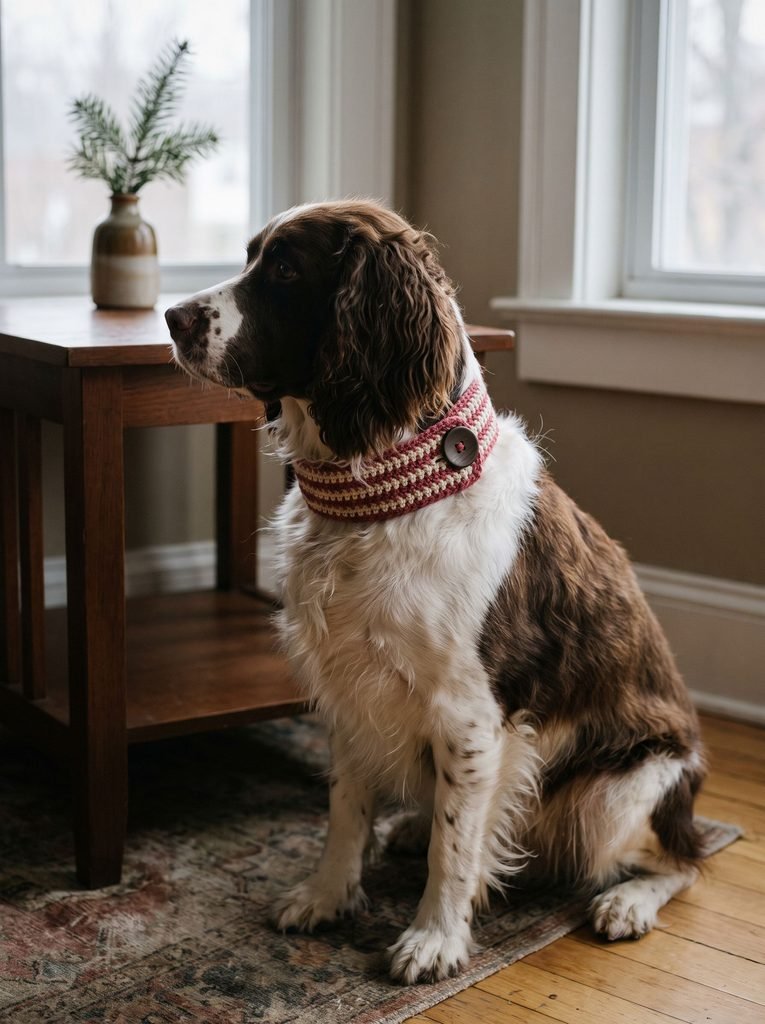
The holiday idea works because it stops at color. There are no bells, pom-poms or dangling ornaments. Muted cranberry and cream are enough to make the collar feel seasonal, and the spaniel’s ordinary home setting keeps the photograph grounded.
Start with the same wide smooth band and change yarn every two rows. Cut and weave the yarn rather than carrying long floats across the inside, where they could catch on fur. The photographed version is quite wide, so test jaw and ear clearance before copying its proportions. On a long-haired dog, a slightly narrower band may show better and feel less bulky.
How to adapt the base
Best for: Holiday cards and winter pet portraits.
Construction: Alternate two rows of cranberry with two rows of cream on the wide base. Bury every color-change tail.
Reality check: Seasonal does not need to mean embellished. Keep the collar quiet and supervised.
Make this design: Download the free Cranberry and Cream Holiday Collar pattern PDF.
Photo-matched prototype route; crochet and fit-test a real sample before calling it tested.
7. Tweed Crochet Collar Cover
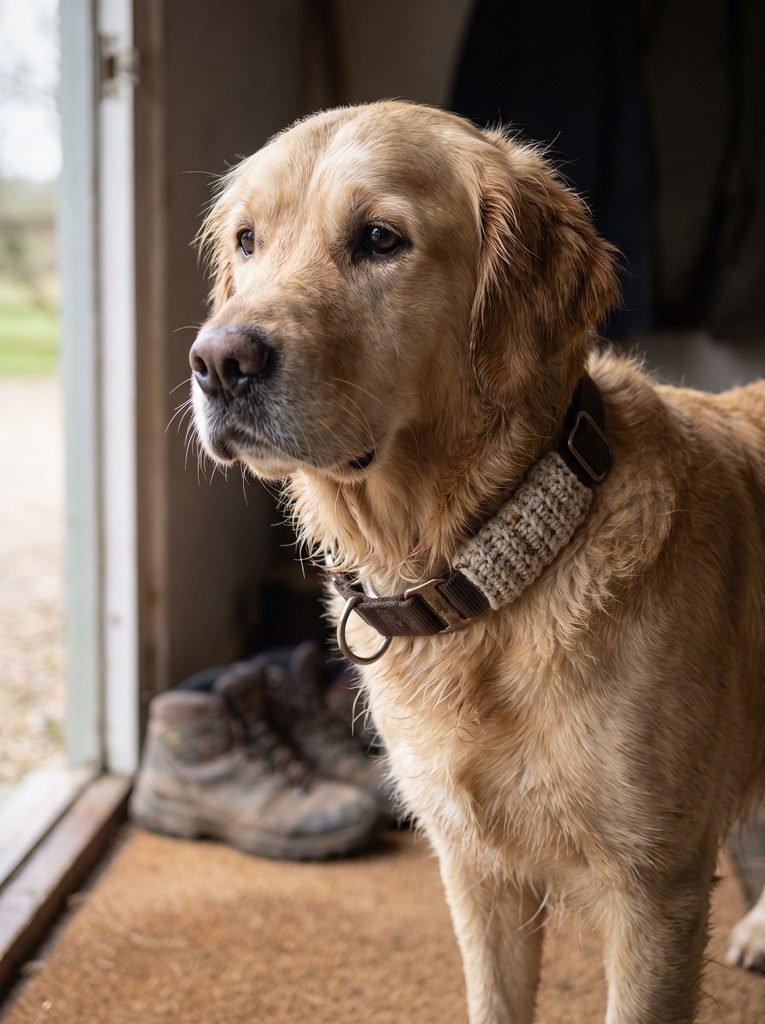
This is the most practical idea in the collection because the crochet is not pretending to be safety equipment. It is a short decorative sleeve over a normal nylon collar. The real buckle and D-ring remain uncovered, and the oatmeal tweed adds texture without changing how the underlying collar works.
Work a rectangle in ribbed half double crochet, seam the long edges around the straight center section of the existing collar, then slide or close it in place according to your tested construction. Keep the sleeve away from adjustment hardware. It should not migrate toward the buckle, cover identification or interfere with the D-ring. Remove it for walks if it shifts.
How to adapt the base
Best for: Pets that already wear a dependable flat collar.
Construction: Measure only the straight section between the hardware and make a snug removable sleeve, not a replacement collar.
Reality check: This is the safest concept to develop first because the load-bearing collar remains separate.
Make this design: Download the free Tweed Crochet Collar Cover pattern PDF.
Photo-matched prototype route; crochet and fit-test a real sample before calling it tested.
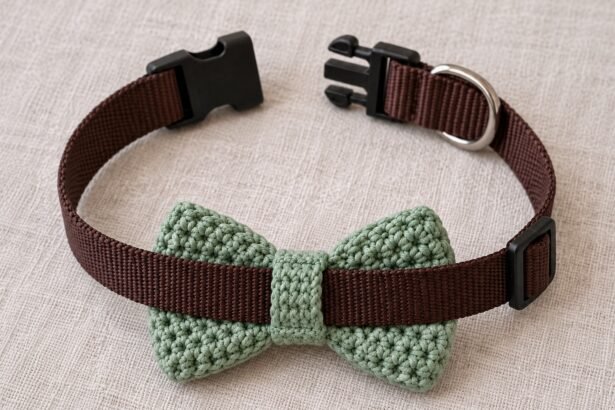
8. Navy Crochet Bow-Tie Collar
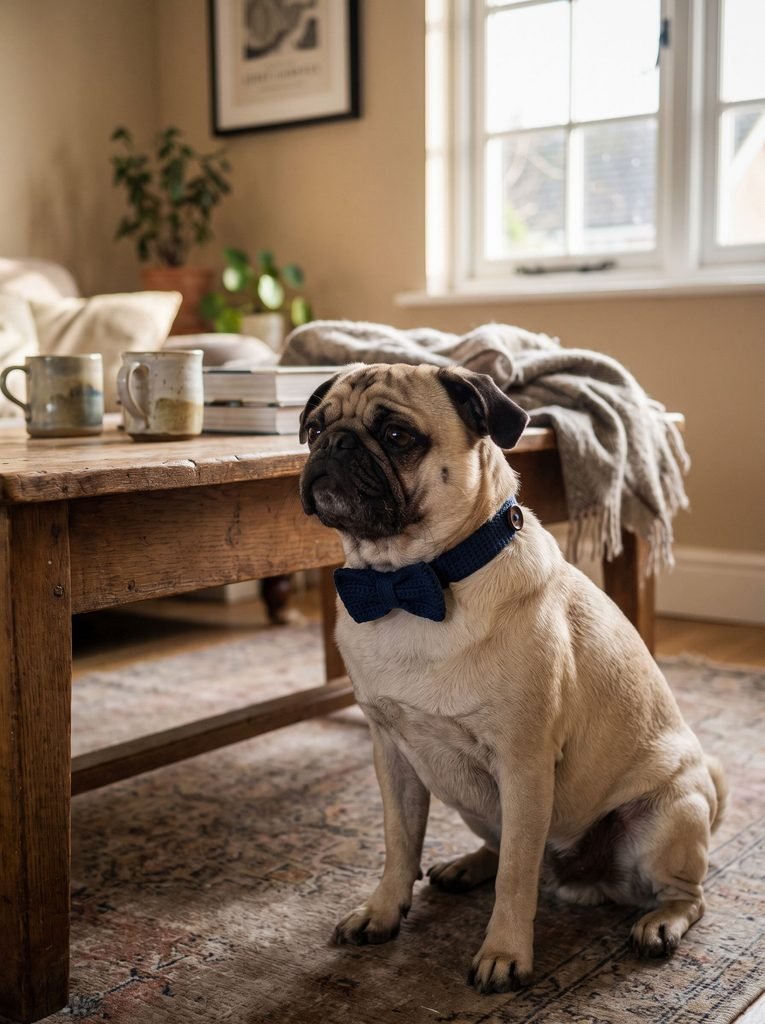
A navy bow tie is an easy choice for birthdays, adoption anniversaries and family photographs. The pictured bow is compact and sewn flat, which is much better than long ribbon tails. It also keeps the silhouette clean around a pug’s short neck.
Crochet the narrow band first. For the bow, make a small dense rectangle, fold its short edges toward the center and wrap a second strip around the middle. Sew through every layer and then sew the bow directly to the band. Tug it from several angles before fitting. If the bow rotates under the chin or becomes tempting to chew, remove it.
How to adapt the base
Best for: Pet parties, formal photographs and small dogs.
Construction: Use the narrow smooth base and attach one dense rectangular bow with a firmly wrapped center.
Reality check: The bow must be sewn flat, with no ribbon tails or loose wrap.
Make this design: Download the free Navy Crochet Bow-Tie Collar pattern PDF.
Photo-matched prototype route; crochet and fit-test a real sample before calling it tested.
9. Mini Granny-Motif Collar
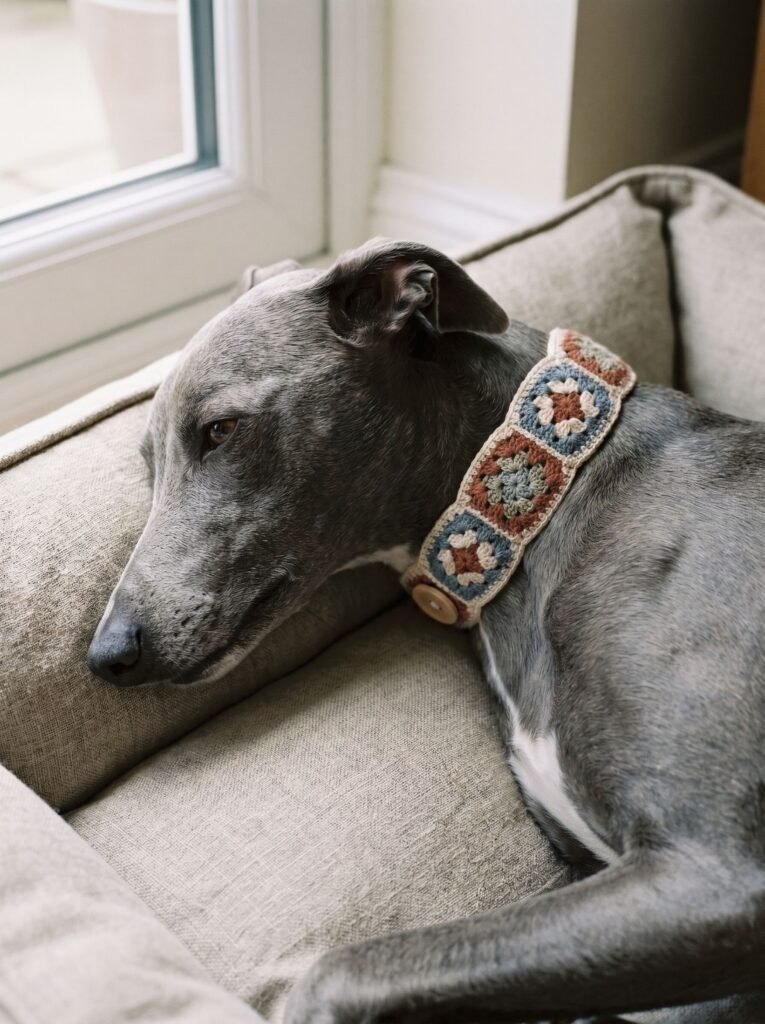
The granny-motif collar is the scrap-yarn showpiece. Rust, sage, cream and dusty blue give it an old-quilt feeling, while the whippet’s smooth grey coat lets every small cluster show. It is also the least beginner-friendly idea here, mostly because the joins and ends need patience.
Make identical compact motifs with the same final stitch count, block them to equal measurements and join edge to edge. Add a firm border along both long sides so the band cannot stretch into points between squares. The photographed motifs are decorative inspiration, not a chart: count and test your real sample before publishing exact motif instructions.
How to adapt the base
Best for: Experienced beginners, scrap yarn and smooth-coated dogs.
Construction: Join equal mini motifs, stabilize both long edges and add a separate tested button tab.
Reality check: Prototype the motif count and joins before converting this variation into fixed stitch counts.
Make this design: Download the free Mini Granny-Motif Collar pattern PDF.
Photo-matched prototype route; crochet and fit-test a real sample before calling it tested.
10. Breakaway Cat Collar Cover with Daisy
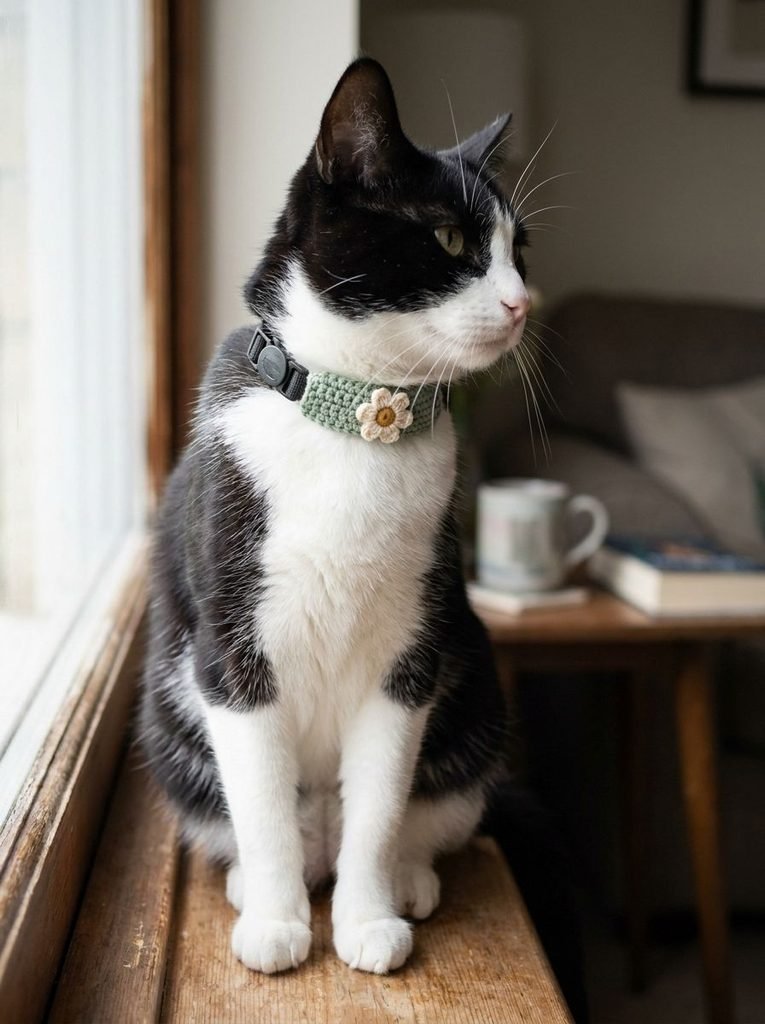
The cat version is deliberately different from the dog collars. The crochet covers only the front of a real breakaway collar, and the black safety clasp remains visible. That distinction should stay obvious in both the article and the PDF.
Make a short sage sleeve that fits the front section without reaching the clasp. Sew on one very small flat daisy with every petal anchored. Test the original collar after adding the sleeve: the clasp must still release as designed, the sleeve must not bridge it and the flower must not create a chewable loose edge. Never replace a breakaway cat collar with a buttoned crochet band.
How to adapt the base
Best for: Brief supervised cat portraits using an existing breakaway collar.
Construction: Cover only the front straight section and keep the original breakaway clasp completely clear.
Reality check: This is a decorative cover, never a full crochet cat collar or clasp substitute.
Make this design: Download the free Breakaway Cat Collar Cover with Daisy pattern PDF.
Photo-matched prototype route; crochet and fit-test a real sample before calling it tested.
How to Measure a Pet for a Decorative Crochet Collar
Wrap a soft tape around the place where the collar will rest. Keep the tape level and close to the coat without compressing it. Add 1 to 2 cm of wearing ease for most dogs, then add the closure overlap required by your tested button placement. Thick coats and very small pets need a hands-on check because a formula cannot read fur density or neck shape.
- Finger space: Two fingers slide under the band without forcing it.
- Jaw clearance: The band does not press under the jaw when the head lowers.
- Ear clearance: The top edge does not rub behind the ears.
- Behavior: No scratching, freezing, coughing, chewing or repeated head shaking.
Crochet Pet Collar FAQs
Can I attach a leash to a crochet pet collar?
No. These buttoned crochet ideas are decorative and are not engineered as load-bearing equipment. Use a properly fitted walking collar or harness.
What yarn is best for a crochet pet collar?
A smooth, washable cotton or cotton blend makes stitches easy to inspect. Avoid eyelash yarn, loose fibers and yarn that forms open snagging loops.
Can I make one for a cat?
Use the cat idea only as a short decorative cover on a real breakaway collar. The working clasp must remain completely exposed and still release normally.
How do I know the pattern matches the photographs?
The guide explains the visible construction and the changes needed for each look, but the exact numbers remain a prototype draft until a physical sample is crocheted, measured and fit-tested.