
Looking for a cat crochet pattern to make a new sleeping spot? These eight projects range from a chunky teal nest to a miniature grey couch, with a burger bed, a pink doughnut and a granny-square hideaway in between. Each idea has its own free PDF download.
Start with the shape your cat already chooses: an open cushion, a rim to curl against, or a covered corner. Then compare the measurements and construction. A simple-looking bed can still use a lot of yarn, and the couch needs foam and assembly as well as stitches. The downloads include full instructions and fitting notes; added clarifications are marked as untested.
| Looking for… | Compare these ideas | Plan first |
|---|---|---|
| A round nest | Cat Nap Nest, Kitten Ears, Ribbed Round | Inside sleeping space and wall height |
| An open front | Open-Front Padded Bed | Panel fit and quilt batting |
| A playful shape | Burger, Doughnut | Colour changes and stuffing |
| A furniture project | Kitty Couch, Granny-Square Hideaway | Foam or storage cube dimensions |
1. Cat Nap Nest
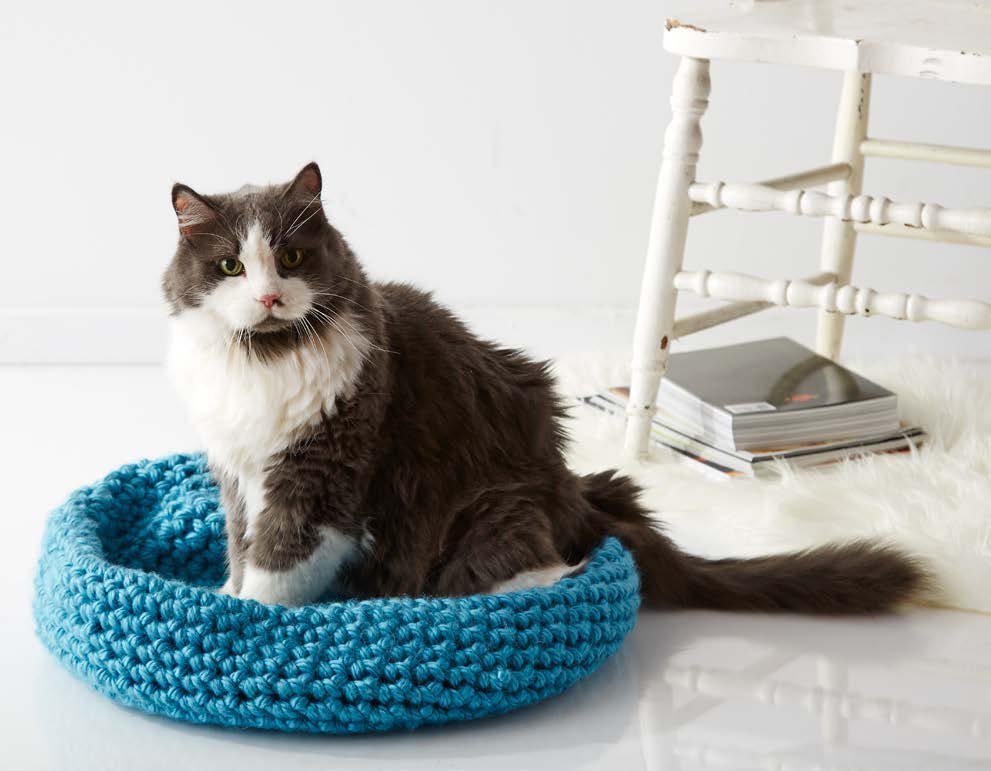
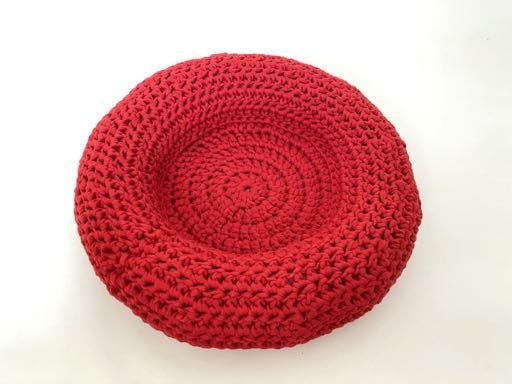
This teal nest keeps the shape simple: a round base, low sides and a thick folded edge. The large stitches are easy to see in the empty-bed view. One long piece folds into itself to make the double-layer basket shape, so there is no separate side panel to attach.
Size to compare: Approx 17 in (43 cm) across and 5 in (12.5 cm) tall.
Before you start
Try this one if you like working single crochet in joined rounds. Measure the base as you go, then follow the fold-back construction rather than stopping when it first looks like a bowl.
2. Kitten Ears Pet Bed
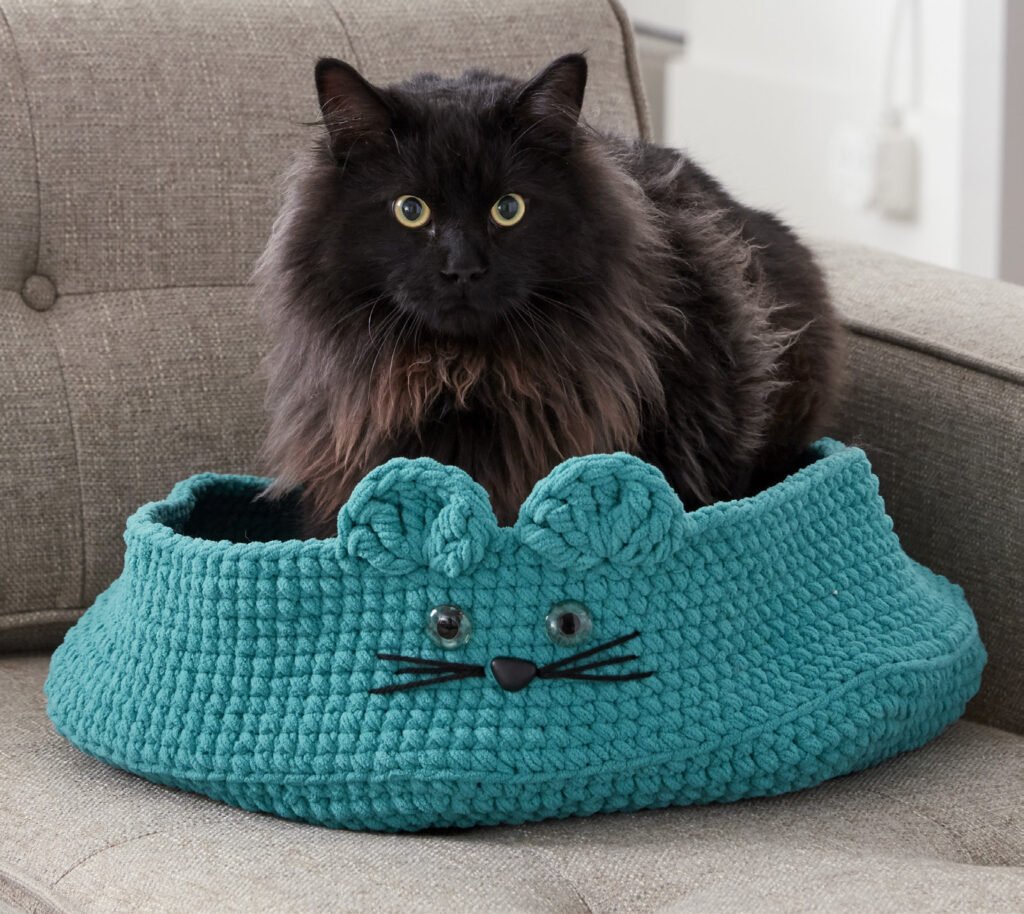
Two little ears and a cat face give this bed its character. Teal frames the darker navy centre, and the two crocheted base layers join before the wall begins. The ears are worked into the rim, so they belong to the bed itself.
Size to compare: Approx 20 or 32 in (51 or 81.5 cm) across; wall about 4 in (10 cm).
Before you start
Check the decoration plan before making the face. The guide offers an embroidered-face option for everyday pet use; the pictured version has hard eye and nose fittings.
3. Open-Front Padded Pet Bed
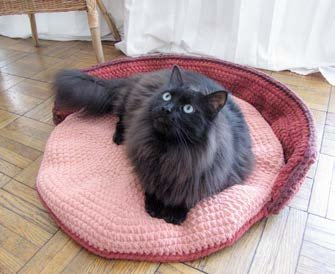
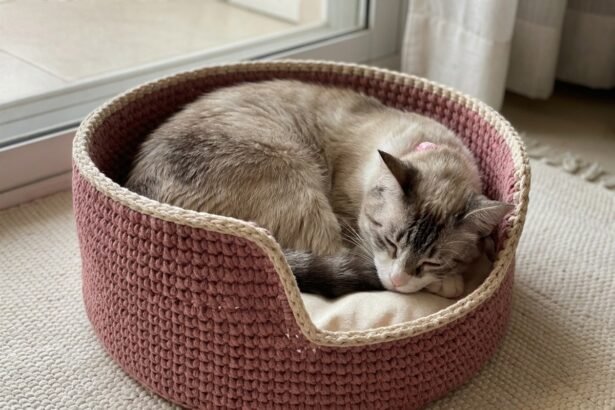
The pink-and-burgundy version has a broad padded base and a raised back, with a gap at the front. That opening changes the silhouette of a round bed and leaves the cushion visible. A blue version shows the same design used for a dog, rather than a second pattern.
Size to compare: Small about 16 in (40.5 cm), medium about 22-23 in (56-58.5 cm), large about 30 in (76 cm); border about 6 in (15 cm).
Before you start
This is a panels-and-seams project. Plan the batting and dry-fit the side border around the base before the final join, especially if you change yarn.
4. Burger Pet Bed
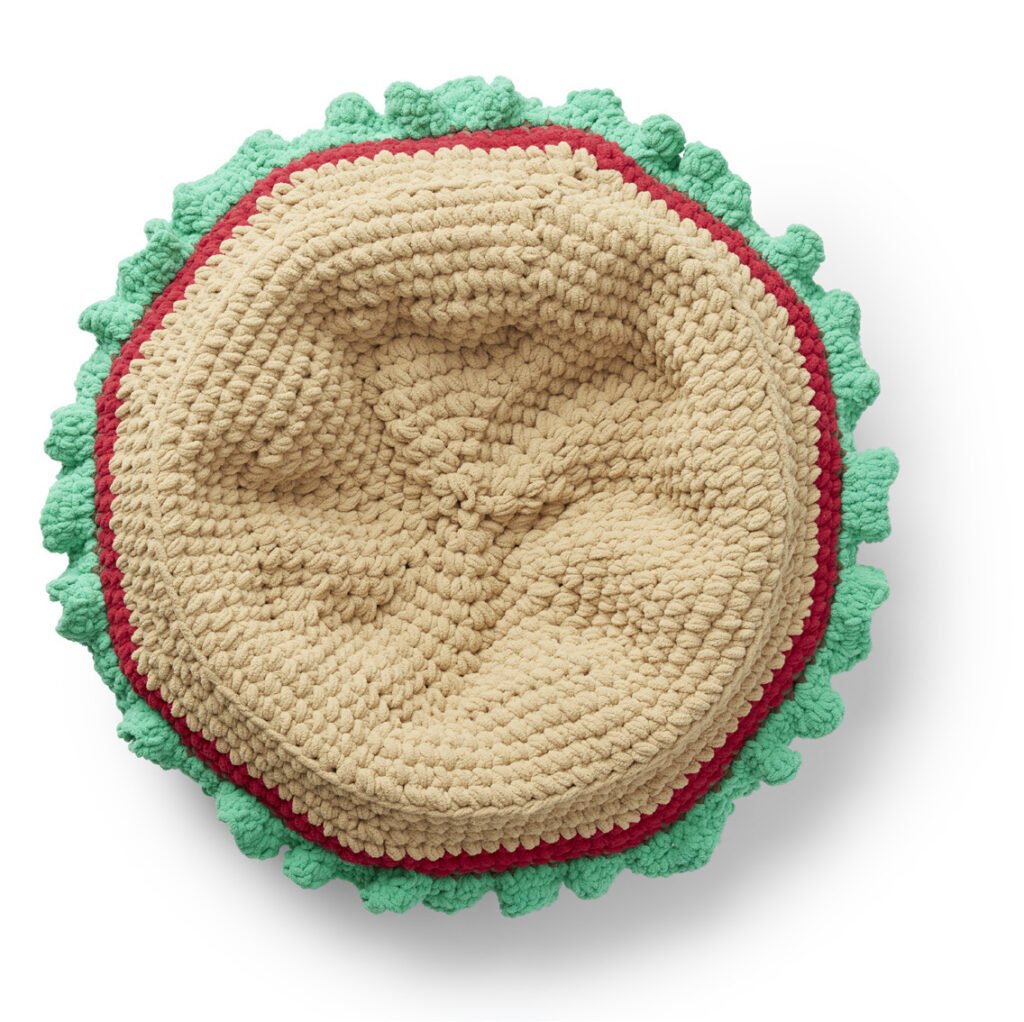
A tan bun surrounds the sleeping centre, with red and green stripes around the outside. The green frill gives the burger shape its most recognisable detail. The side view shows how the coloured layers sit around the bun rather than across the surface where the cat rests.
Size to compare: Approx 20 in (51 cm) across.
Before you start
Keep a round-by-round colour note. The green frill uses a smaller hook and one strand, while most of the bed uses two strands and the larger hook.
5. Doughnut Pet Bed
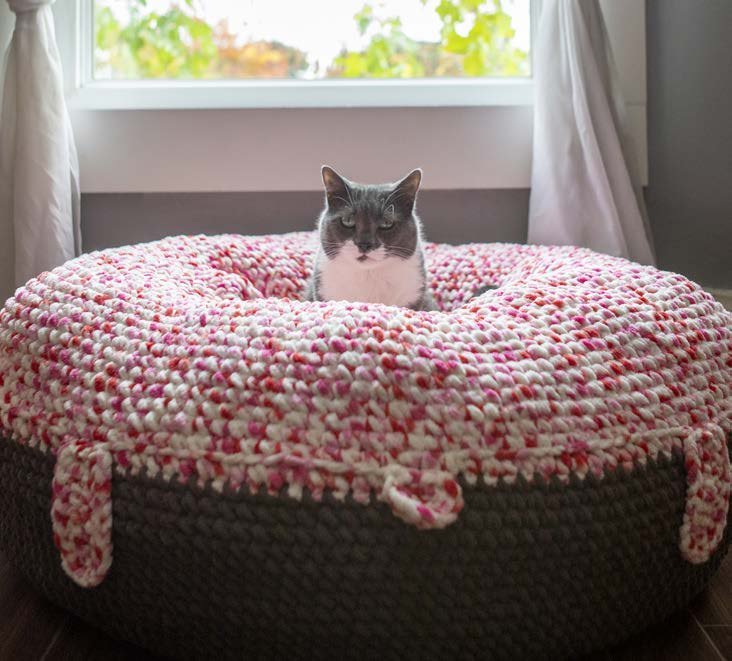
Pink-speckled icing covers the top of this doughnut bed and hangs over the taupe sides in little drips. It is the largest single-size round bed in this group. The deep ring and soft centre make it a substantial project, even though the main stitch is single crochet.
Size to compare: Approx 36 in (91.5 cm) across in the supplied instructions.
Before you start
Check the floor space and yarn allowance first. A 36-inch bed is much wider than the teal nest; the photos alone do not give you that comparison.
6. Kitty Couch and Granny Blanket
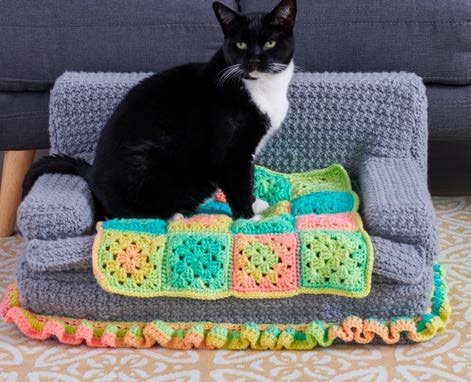
This miniature couch has armrests, two seat cushions and a bright ruffle along the front. The small granny-square blanket adds colour to the grey upholstery. It is the most furniture-like design here, with a foam foundation underneath the crocheted cover.
Size to compare: Couch about 24 x 16 x 12 in (61 x 40.5 x 30.5 cm); blanket about 16 in (40.5 cm) square.
Before you start
Read the assembly before choosing this one. It needs shaped panels, batting, foam pieces and seams, as well as the crochet. Make a texture swatch and fit each panel to its matching foam section.
7. Granny-Square Cat Hideaway
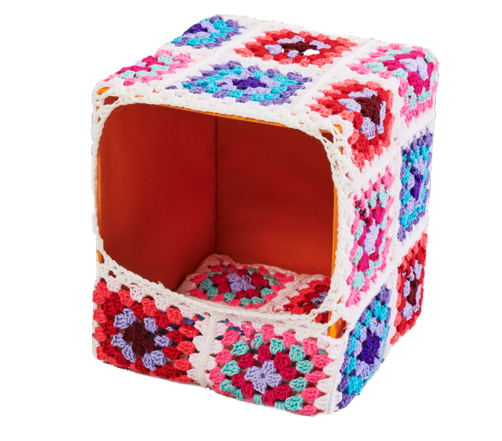
Bright granny squares turn a storage cube into a colourful hideaway. White joins outline the squares and frame the entrance. A matching pillow cover finishes the inside, with an overlapping back so the pillow form can be inserted.
Size to compare: Cover about 12.25 x 14.25 x 12.25 in (31 x 36 x 31 cm); intended cube 12.75 x 14.75 x 12.75 in (32.5 x 37.5 x 32.5 cm).
Before you start
Choose and measure the cube before joining the squares. The crochet cover gives the colour and texture; the cube supplies the structure. Check that your cat can enter, turn and leave freely.
8. Ribbed Round Pet Bed
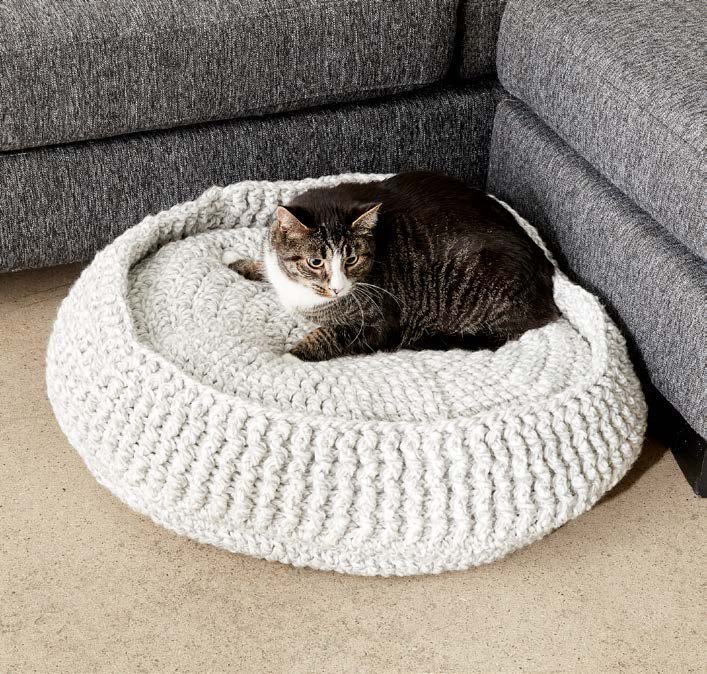
A ribbed side gives this grey bed a different texture from the single-crochet nests. The base is made from two round panels with batting between them. Four listed sizes make it a useful pattern to compare when your cat needs more sleeping space.
Size to compare: XS/S about 16 in (40.6 cm), M 22 in (56 cm), L 34 in (86.5 cm), XL 40 in (101.5 cm); wall about 5 in (12.5 cm).
Before you start
Choose one size column and follow it throughout. The textured wall is made flat and closed into a ring, then fitted to the circular base. Check that join before adding the centre detail.
How to choose a crochet cat bed pattern
For a project built mostly from single crochet, compare the teal nest and the kitten-ear bed. The nest folds into a double-layer shape; the kitten-ear version joins two base circles and adds a wall. Those are different construction routes, even though both start as circles.
If you like texture, the ribbed bed uses front- and back-post stitches for its wall. If you prefer motifs, the granny-square hideaway makes the squares part of a fitted cover. The grey couch combines a repeating textured stitch with shaped upholstery panels and a small granny blanket.
The burger and doughnut beds need stuffing distributed through their shaped bodies. Choose them for the finished outline and colour details, while allowing time to count rounds and check the shape as you fill it.
Measure the sleeping space, not just the outside
Measure a bed your cat already uses, or the space they take up when curled or stretched out. Compare that with the usable centre of the new bed. A thick rim can make the outside diameter look generous while leaving a smaller space inside.
Make the listed gauge swatch with the same number of yarn strands the pattern uses. Holding two strands together changes the fabric and the yarn allowance. For the couch, check a swatch of the alternating stitch against the foam pieces as well. For the hideaway, measure the actual cube before joining the cover.
Yarn, filling and everyday care
Several of these beds use super bulky yarn, often held double. The couch uses a smaller hook and medium-weight yarn. Follow the selected guide’s yarn weight, hook and gauge instead of choosing only by colour. Substitutions need a new swatch and a size check.
Batting, loose stuffing, foam and pillow forms need their own care plan. A yarn label alone does not tell you how a whole stuffed bed or foam couch will wash. Try the intended cleaning method on a spare swatch, check all component labels and let every layer dry fully.
Weave in ends securely and inspect the joins, decorations and fabric regularly. Remove a bed if it develops loose yarn or exposed filling. Embroidered facial features and an optional yarn tuft can replace hard decorations, but those changes still need a sample check.
Questions before you pick a pattern
Are these crochet cats or things for cats?
These are sleeping spaces for real cats: nests, padded beds, a couch and a covered cube. If you want a small stuffed cat figure, choose an amigurumi pattern instead.
Which design has the fewest separate pieces?
The teal Cat Nap Nest uses one main crocheted piece that folds into itself. The round beds with batting use paired bases, and the couch has several shaped panels. Fewer pieces can simplify assembly, but it does not establish a fixed making time.
Can I make a larger size?
The kitten-ear, open-front and ribbed beds include more than one size. Use the guide’s size route and measure the base before finishing. For single-size designs, changing yarn or adding rounds affects the later shaping; the resizing notes describe sample-based adjustments rather than a tested new size.
Does the granny-square hideaway stand on its own?
The storage cube holds the shape. The crochet is a fitted cover, with a matching pillow inside. Choose a cube with an entrance your cat can use comfortably, and check it remains stable on the floor.
Where should I put the finished bed?
Try a quiet, accessible place your cat already likes to rest. Let them explore the bed and leave freely. A new handmade bed can take time to become part of their routine.