
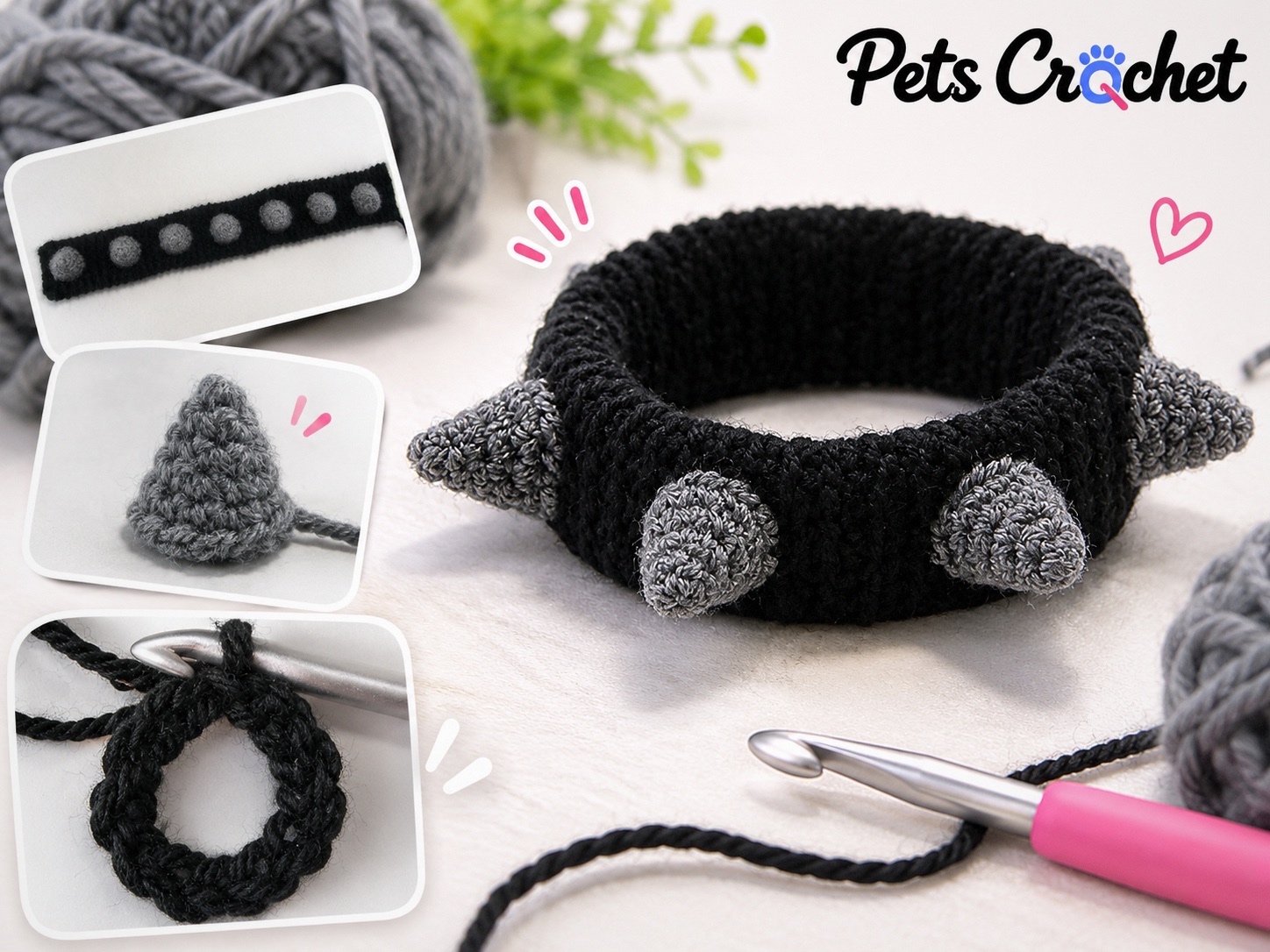
A black band and gray crocheted cones give this crochet dog collar its spiked outline. The spikes are yarn, with no metal points. The photographed version leaves them unstuffed, so their shape comes from the tight stitches and smaller hook.
1. A Ribbed Crochet Ring with Soft Yarn Spikes

The tube is flattened into a band before its ends are sewn together. Back-loop stitches leave visible ridges, which help space the cones evenly. It is a small construction detail that makes the attachment stage easier to plan.
This is decorative crochet, not a walking collar, identification collar or restraint. The sewn ring has no quick-release fastening. Keep it as an off-animal making sample if a comfortable head-and-neck fit cannot be achieved, and never force it over the dog’s head.
The band starts as a narrow tube

The foundation has 14 chains, joined into a small ring. That count goes around the tube itself; it is not the finished neck size. Working more spiral rounds adds length to the band, while the stitch count around it stays the same.
Back-loop ridges give the spacing
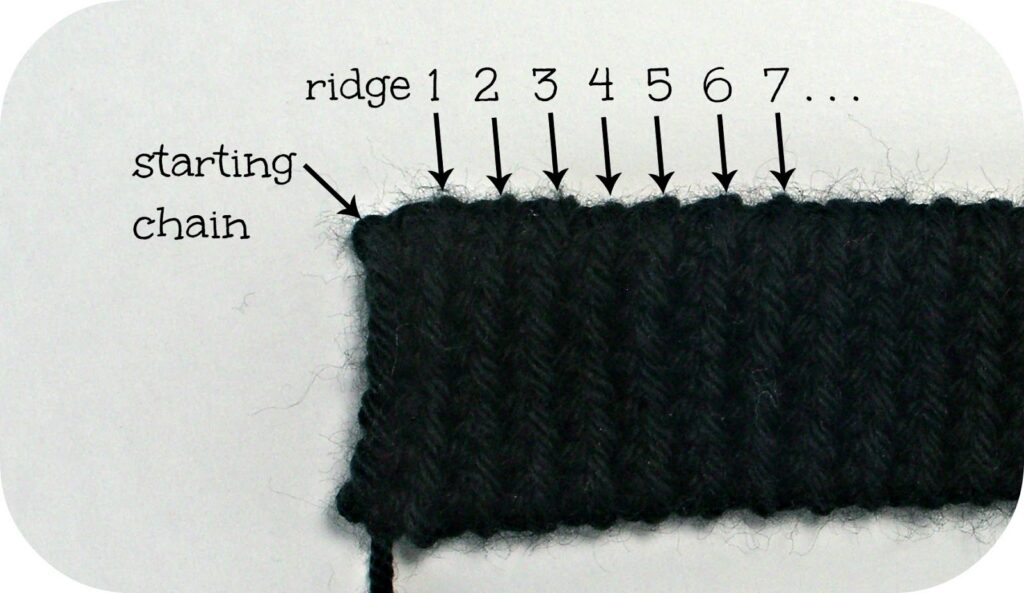
Each cone covers five ridges, followed by two clear ridges. That makes a seven-ridge module. The source example has 49 ridges and seven cones, but the example does not establish a suitable circumference for another dog.
Sample the tube and one cone before making the whole set. The band’s recovery, the cone’s base width and the completed seam all affect the result. A repeat count is a layout tool, not a fit test.
A smaller hook shapes the cones
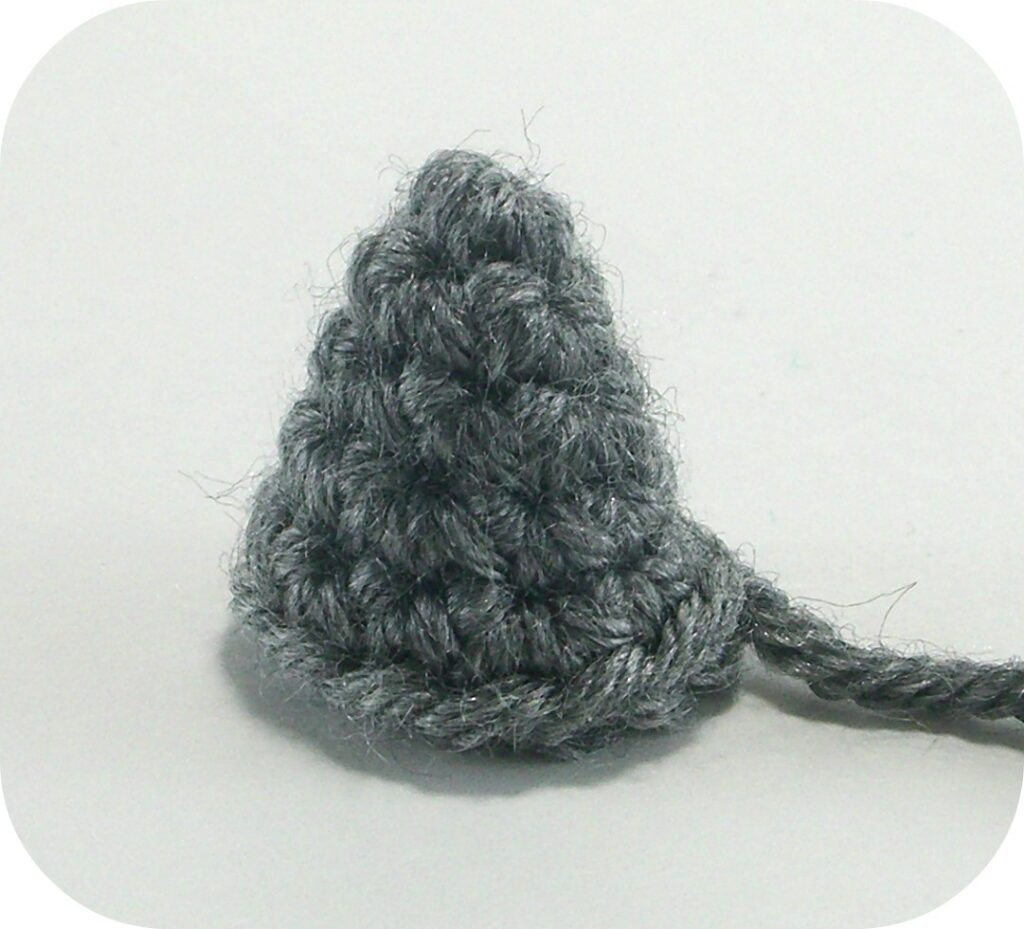
The cones use both loops, with five rounds increasing from four stitches to twelve. They are made separately and sewn around their open bases. The guide keeps the pictured unstuffed version as the main route and does not add hidden filling or hardware.

Mark every cone position before sewing. Keep the two-ridge gap at the final module as well, so the ring join does not crowd the first and last cones together.
Materials and sampling
The reference uses worsted acrylic yarn, a 5 mm hook for the tube and a 3.5 mm hook for the cones. Those are starting points. Choose the actual yarn by a tube sample and cone-base check, rather than assuming any worsted yarn will stretch and recover the same way.
The original small sample used about 29 m of black and 16 m of gray. Those figures are reference consumption, not a fixed allowance for every size. Record what your sample uses, including seams and trial pieces.
Fit matters more than the repeat
The completed ring must pass the head without pressure on the eyes or ears, then sit comfortably at the neck without creating a large catching loop. Some head-to-neck proportions will not suit this construction. If those conditions cannot both be met, choose another design.
The prepared guide has not been independently crocheted, washed or assessed on a dog. It has no verified seam-strength, stretch-recovery or release performance. Keep any considered wear brief and supervised; remove it for sleep, crating, play, chewing, snagging or discomfort. Use separate appropriate walking equipment.
Questions before making it
Are the spikes stuffed?
The photographed sample is unstuffed, and the guide follows that version.
Can I attach a lead?
No. This decorative crocheted ring is not walking or restraint equipment.
Does it have a buckle or breakaway?
No. Its ends are sewn together. Do not treat stretch as a release mechanism or use it as a cat collar.
Does the free PDF include the complete project?
Yes. It includes the tube, cone rounds, ridge layout, attachment and seam method, sample measurements and matching reference photos. It is an untested prepared guide.