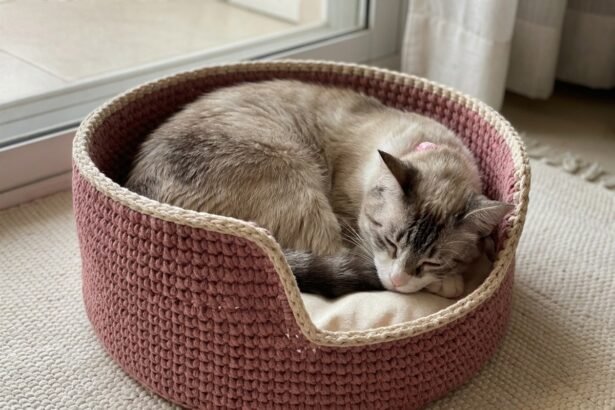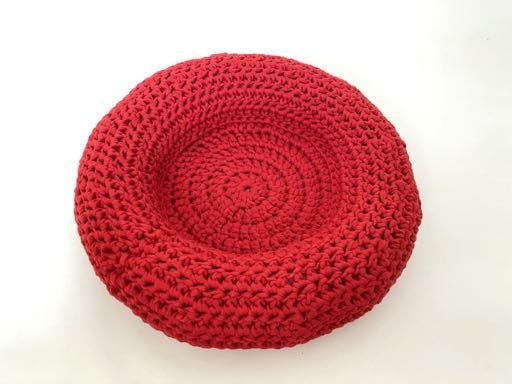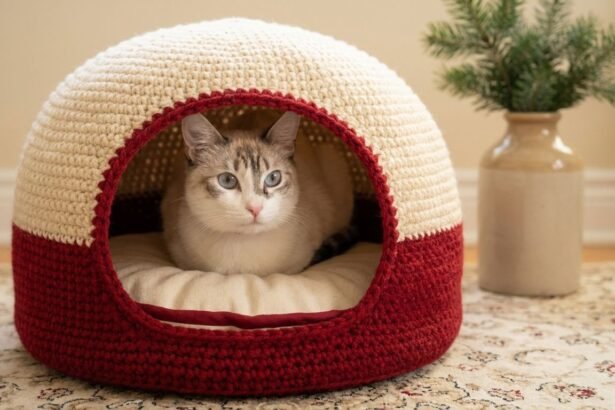

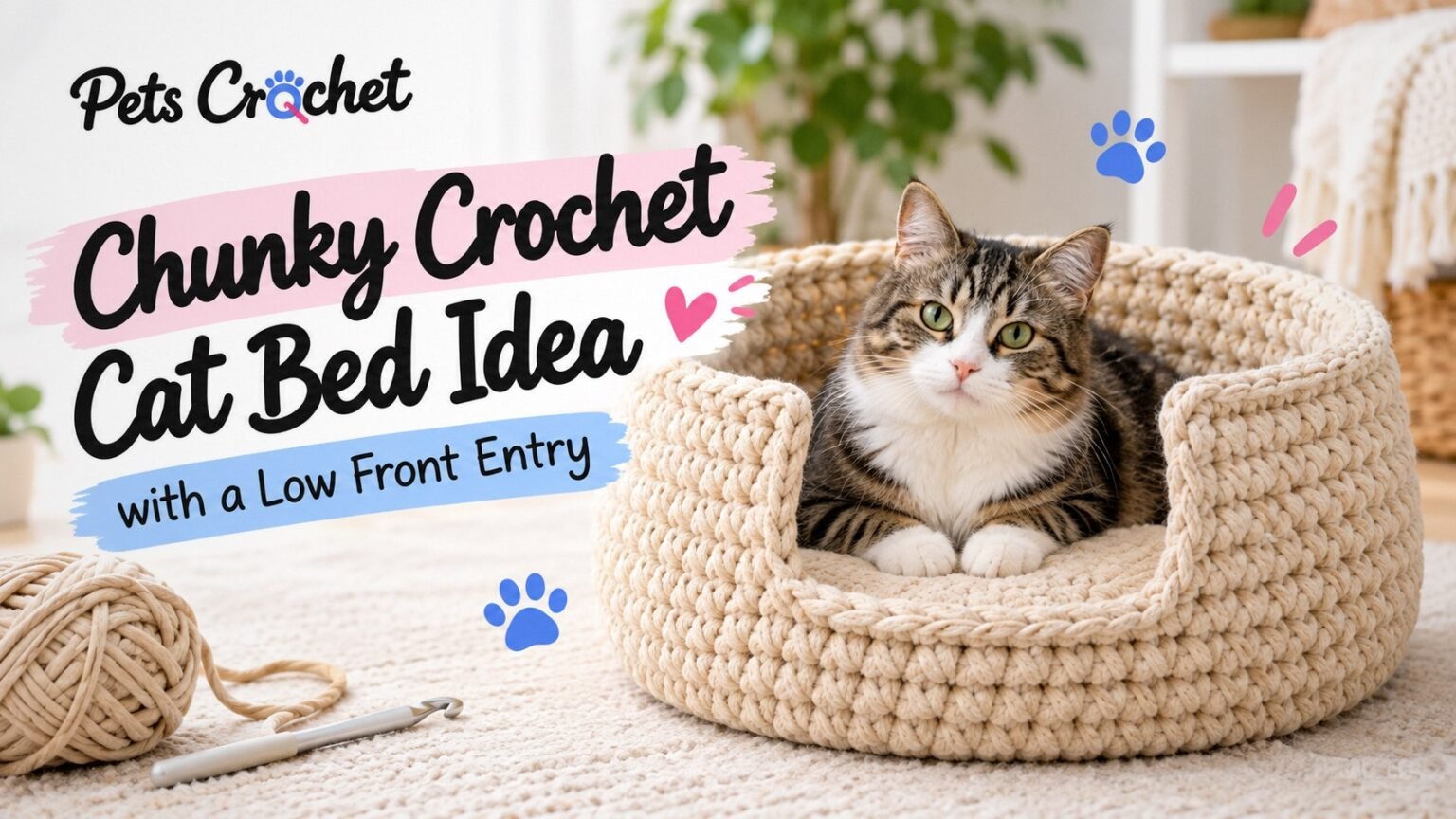
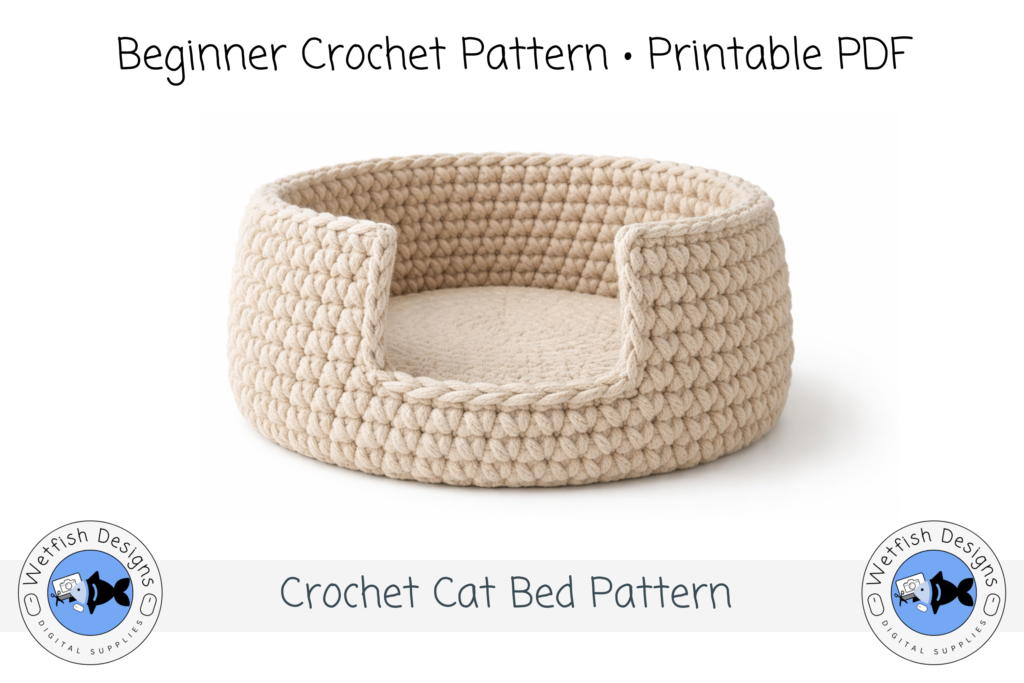
A cream chunky crochet cat bed can look right at home beside the sofa. This one has a round cushion, tall sides and a lower front edge that leaves the sleeping space open to the room. The appeal is in the shape: a little basket with somewhere to curl up, without a roof overhead.
The supplied Wetfish Designs images show the same bed on its own, with an orange cat and with three kittens. They are three views of one idea. The useful starting point is your own cat’s resting space, not the number of cats shown in a picture.
Private review draft: The supplied instructions and pictured opening differ. The linked guide proposes an untested single-entry construction and explains the changes. Source imagery and pattern reuse are not cleared for public release.
1. A chunky crochet cat bed with a low front entry
The back and sides form a curved wall, while the front drops down to a shallow threshold. A separate cushion fills the centre. The cream colour keeps the texture visible without adding another pattern to the room.
That front opening matters when planning the crochet. To leave it open at the top, the upper wall needs to stop at each side of the doorway. The draft builds the base and lower wall in rounds, then works back and forth over the back and sides. It does not bridge the opening with a chain.
Start with the sleeping space
Look at how your cat usually rests. A curled-up sleeper and a cat that stretches out need different amounts of room. Measure that resting area, then allow enough usable floor for the posture your cat chooses. The finished inner space matters more than the outside diameter.
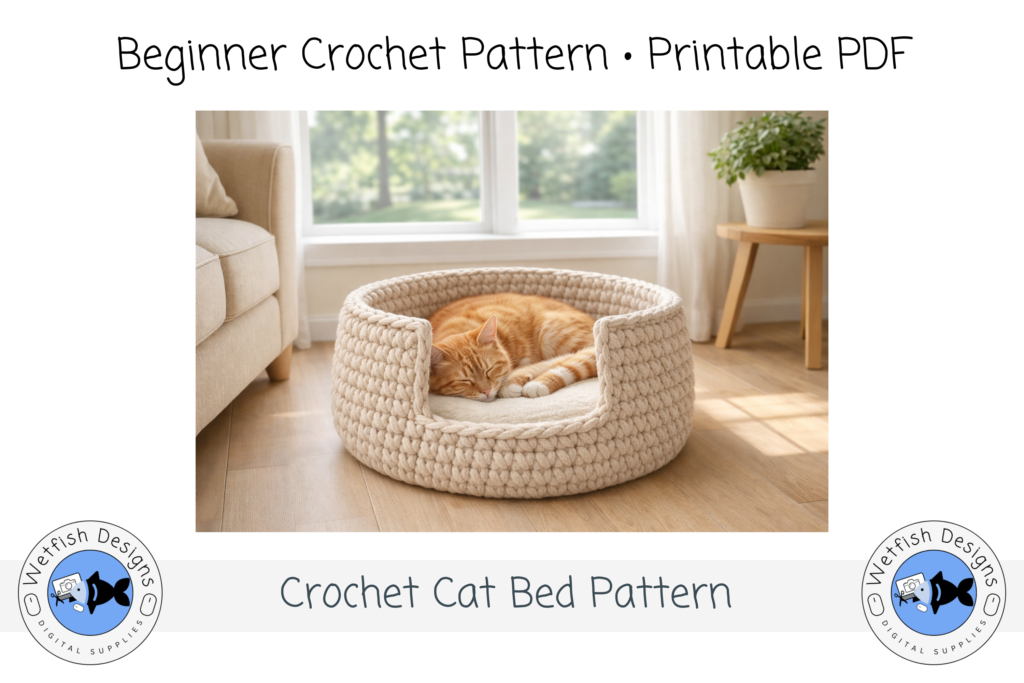
The cushion is a separate item. Choose it after measuring the basket’s inner floor so it lies flat without pushing the walls outward or lifting the threshold. A cushion that only fits when squeezed into place can change the shape of the whole bed.
Use the yarn label as well as the picture
The source suggests super-bulky T-shirt yarn or chunky cotton rope yarn and a 10 mm hook. Those yarns can behave differently even when their labels use the same weight category. Make a single-crochet swatch and check both its measurements and how the fabric bends.
A loose fabric may sag; a fabric that is very hard to work can make a large basket tiring to finish. The goal is a workable fabric that can hold the proposed wall shape after cleaning. That still needs to be demonstrated with a full sample.
Keep the entry clear
The draft leaves a short section of the lower wall uncovered while the upper rows grow around the back. Before finishing, check the actual clear opening with the cushion installed. The front edge should stay visible, and the cushion should not slide into the gap.
The supplied images suggest a thick, cord-like finish around the opening. The written prototype uses a simple single-crochet border; it does not promise that exact photographed texture. Its edging notes explain where to check for pulling and how to record a sample-based adjustment.
What to know about the supplied pattern
The original PDF describes two enclosed openings, while the supplied graphics show one opening that reaches the rim. Its opening round also consumes fewer stitches than its printed total. Those differences are explained in the private guide rather than carried forward as a tested tutorial.
The stated size is uncertain, too. At the source gauge, its 60-stitch perimeter estimates a substantially smaller circle than the advertised outer diameter. The new draft uses an 84-stitch starting plan, with dimensions labelled as estimates. Measure the actual piece before buying a cushion or describing a finished size.
A quiet spot for the finished bed
Once the sample has passed its construction and care checks, place it on a stable floor surface where it does not slide or tip. Cats Protection recommends a quiet sleeping spot away from draughts and heat sources. Let your cat decide whether to use it.
Check the yarn ends, entry edge and cushion regularly. Take the bed away if yarn is chewed, a loop catches claws or the wall folds into the sleeping space. A decorative reference image cannot establish durability or suitability for a particular cat.
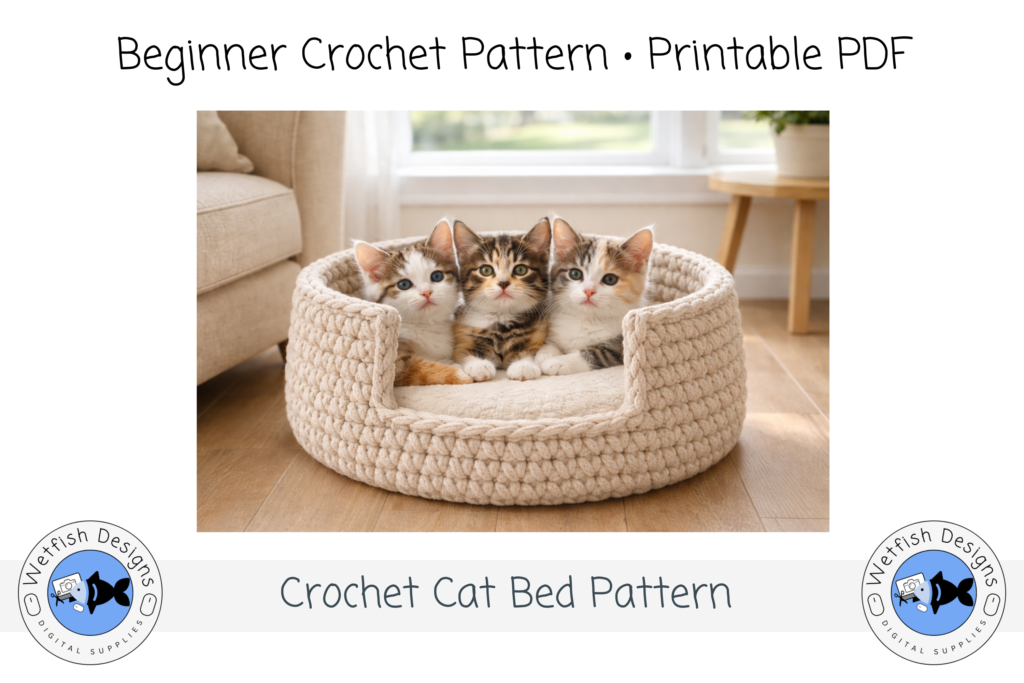
The kitten view is a supplied styling reference. It is not a capacity guide, and there is no tested three-cat size in the pattern.
Before you begin
Is this a beginner pattern?
The source markets it that way. The stitches are basic, but shaping a stable basket and checking an altered construction take care. This edition is a prototype for a maker who can count rounds, work turned rows and assess the fabric.
Does the guide include the cushion?
It includes cushion-fit checks, not a sewing or crochet pattern for the insert. The cushion is purchased separately and selected from the finished inner measurements.
Can I machine-wash it?
That depends on the actual yarn and cushion labels. Washability has not been established for this prototype. Follow each component’s care instructions and recheck the shape after cleaning.
Are there step-by-step photos?
The supplied material contains finished and lifestyle views. The guide adds written construction stages and a labelled schematic; these are not photographs of a tested sample.
Save the cream-bed reference while choosing yarn, then begin with the swatch. It gives you a firmer basis for planning the project than guessing scale from the cats in the pictures.
Source imagery: Wetfish Designs. PetsCrochet has prepared the editorial review and proposed construction.