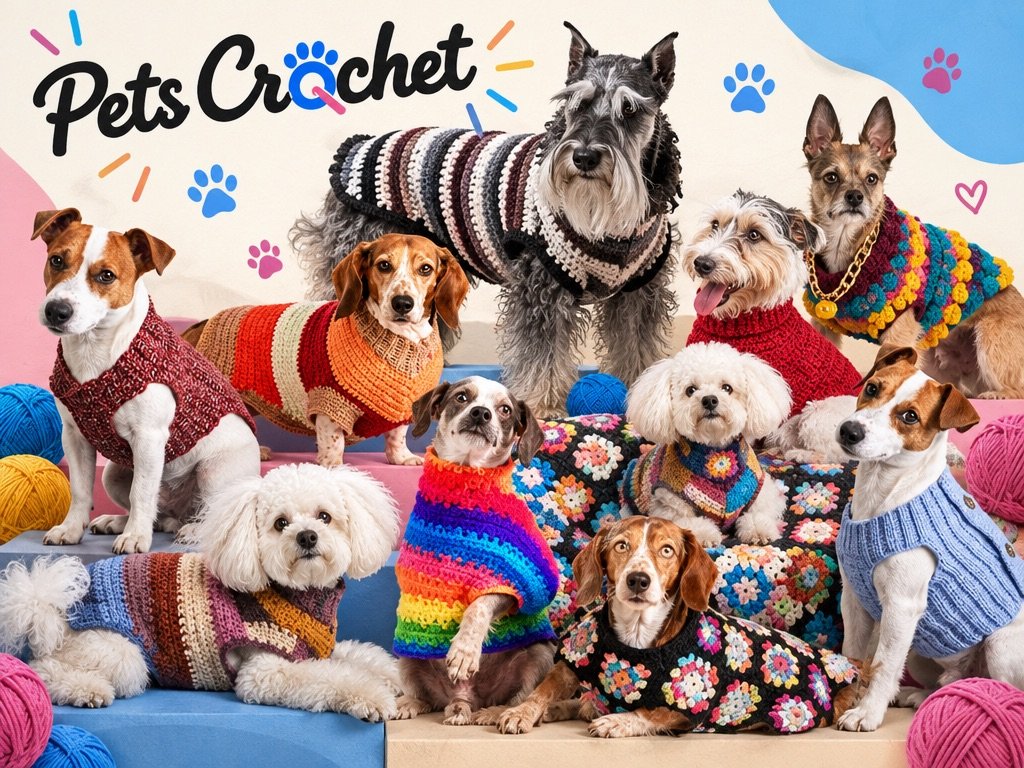
A bright bobble coat, a red textured sweater or a back full of granny squares: these eight crochet dog sweater patterns give you several ways to make a little wardrobe for your dog. Each design has a free PDF download. There is also a separate knit-and-crochet bonus with construction photos.
Start with your dog’s measurements, then choose the fabric and finishing you want to make. Some of these patterns cover four sizes, while the two photo-led designs each give one measurement range. The comparison below will help you narrow the list before buying yarn.
Choose your crochet dog sweater pattern
| Design | Listed dog chest | Main technique |
|---|---|---|
| Fun Bobbles Dog Coat | 10, 14, 17, 20 inches | Bobbles and shaped rows |
| Textured Crochet Dog Coat | 10, 16, 24, 30 inches | Single/double crochet texture |
| Berry Red Crochet Dog Coat | 10, 13, 16, 24 inches | Single/double crochet texture |
| Six-Color Striped Dog Coat | 10, 16, 24, 30 inches | Double crochet stripes |
| Granny Square Dog Sweater | 19, 23, 28 inches | Joined granny squares |
| Pup’s Favorite Rainbow Sweater | 10, 14, 17, 20 inches | Single crochet and ribbing |
| Color-Block D’O’Go Sweater | 10, 14, 17, 20 inches | Single crochet color blocks |
| Rubby Crochet Dog Sweater | 17–19-inch chest; 14–15-inch neck | Photo-led double crochet panel |
| Bonus: Blue Dream Knit-and-Crochet Sweater | 17–18-inch chest; 14–15-inch neck | Knitting plus crochet |
The chest figures describe the dog measurements listed in each PDF. Check any separate finished measurements and the pattern’s gauge before choosing a size.
1. Fun Bobbles Dog Coat
Intermediate. Listed dog chest: 10, 14, 17, 20 inches. 5 mm hook; medium-weight yarn.
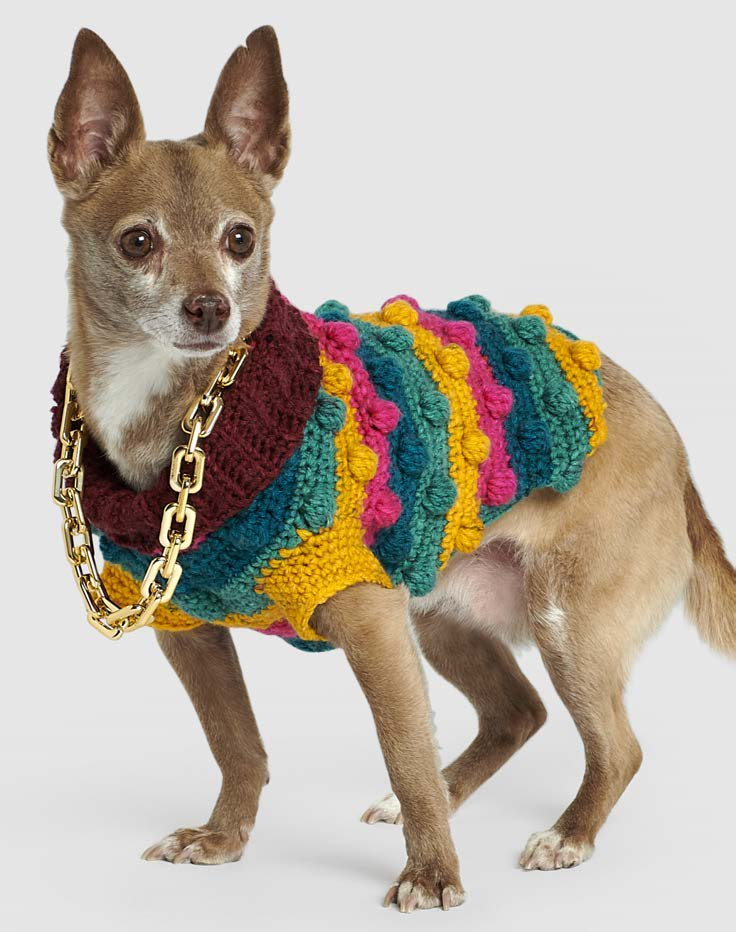
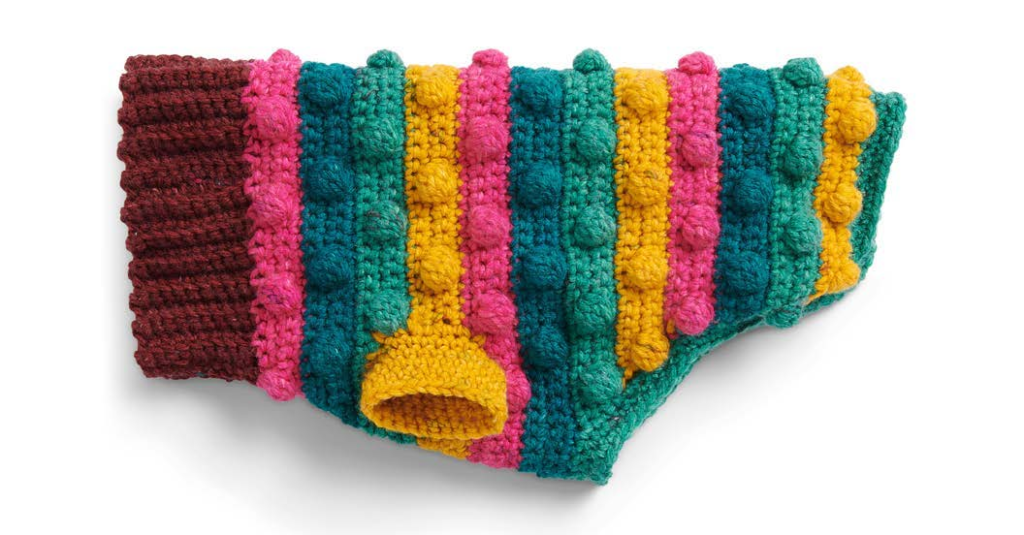
Raised bobbles run through bands of turquoise, green, yellow and pink, with a deep pink ribbed neck. The flat photo makes the texture especially easy to see. This is the most sculptural crochet dog sweater pattern in the collection.
Choose it if you enjoy keeping track of a texture repeat while shaping. The pattern includes a bobble chart, four chest sizes and separate finished measurements. Mark the color changes and the leg-opening rows before you start.
The download begins with count notes for the bobble repeat and belly shaping. Read those with your chosen size before making the sweater. The pictured chain around the dog’s neck is a separate accessory.
2. Textured Crochet Dog Coat
Easy. Listed dog chest: 10, 16, 24, 30 inches. 4 and 4.5 mm hooks; Caron Cakes yarn.
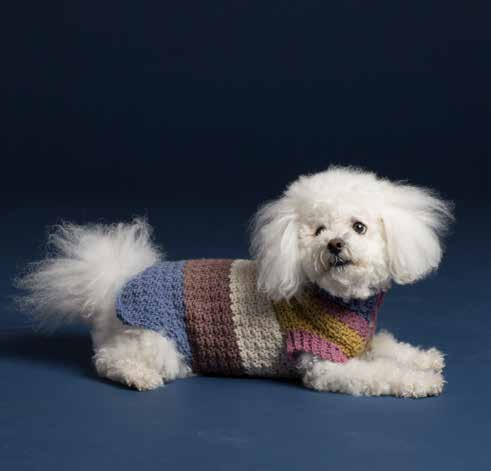
Wide, muted stripes and a folded ribbed collar give this coat a softer look than the bright bobble design. Alternating single and double crochet stitches create the pebbled surface across the body.
The four listed chest sizes extend to 30 inches, making this one worth checking when the smaller sweaters do not cover your dog’s measurements. The separate ribbed leg bands finish the openings neatly.
Keep the ribbing and body gauges in mind when choosing yarn. A different self-striping yarn can change both the fabric and the width of the color bands, so the photograph is a palette idea rather than a stripe-placement guarantee.
3. Berry Red Crochet Dog Coat
Easy. Listed dog chest: 10, 13, 16, 24 inches. 5 mm hook; Bernat Super Value yarn.
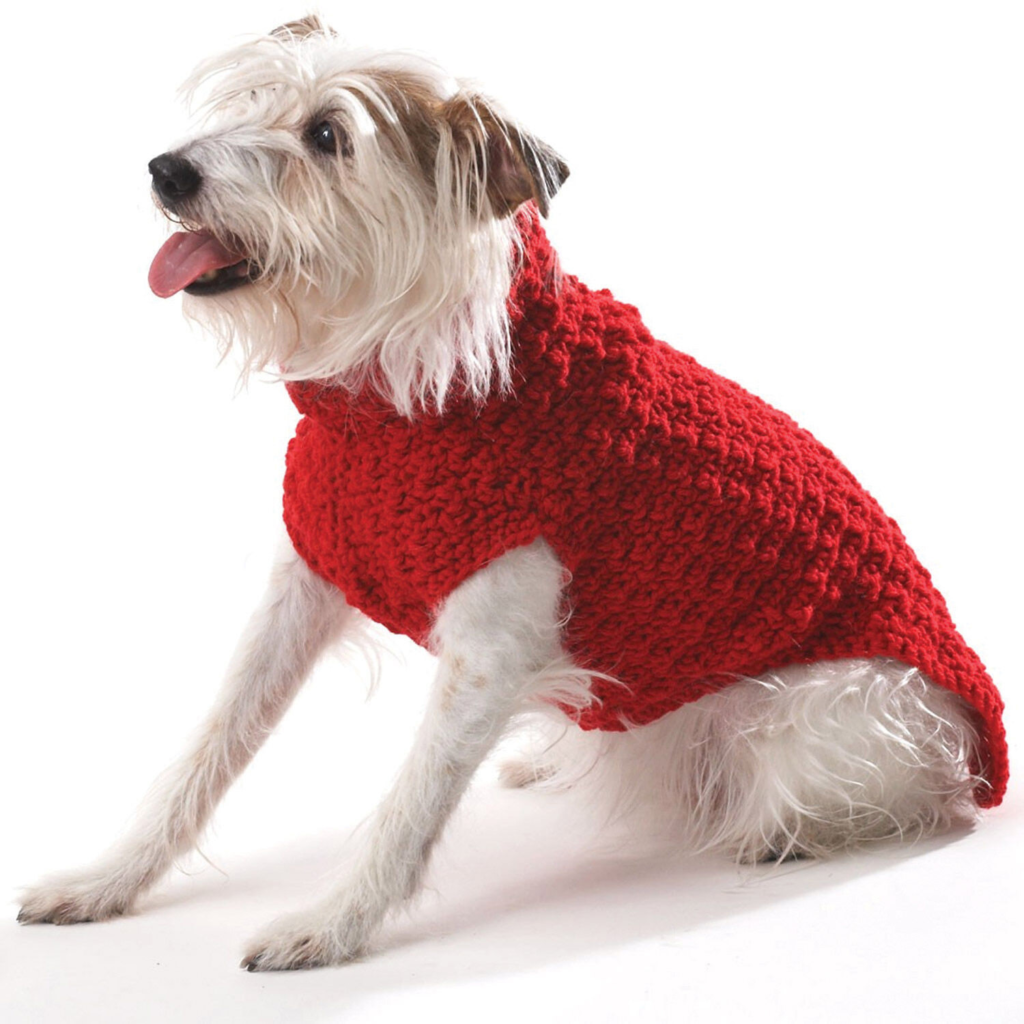
One rich red shade lets the textured stitches do the work. The neckline sits lower than the folded collars elsewhere in the roundup, and the simple edging keeps the outline uncluttered.
This is a good option for someone who wants a solid-color crochet dog sweater. The body alternates single and double crochet, with shaped leg openings and a seam under the body. There are no separate motifs to arrange.
Measure the chest and back before choosing among the four sizes. Make a swatch in the actual stitch pattern and compare the resulting dimensions with the PDF before committing to the whole coat.
4. Six-Color Striped Dog Coat
Read the shaping before starting. Listed dog chest: 10, 16, 24, 30 inches. 4 and 4.5 mm hooks; Bernat Super Value yarn.
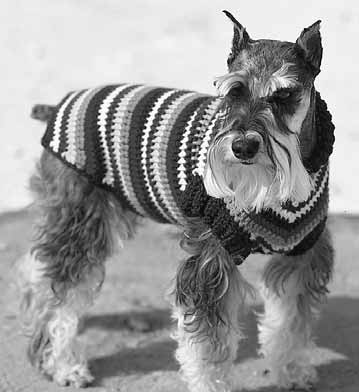
The older black-and-white photograph shows the shape clearly: a ribbed neck, striped body and fitted leg bands. The written pattern uses six colors, so you can build your own palette without trying to copy colors that the photo cannot show.
Double crochet makes up the striped body. One row in each of five contrast colors and one in the main color form the repeat. Keep the yarns labeled while working the separate leg sections.
The large and extra-large leg sections have conflicting printed totals. The download includes a proposed symmetrical count correction. Those revised sizes need a sample check before relying on the finished fit.
5. Granny Square Dog Sweater
Intermediate. Listed dog chest: 19, 23, 28 inches. 5 mm starting hook; 4.5-inch square gauge.
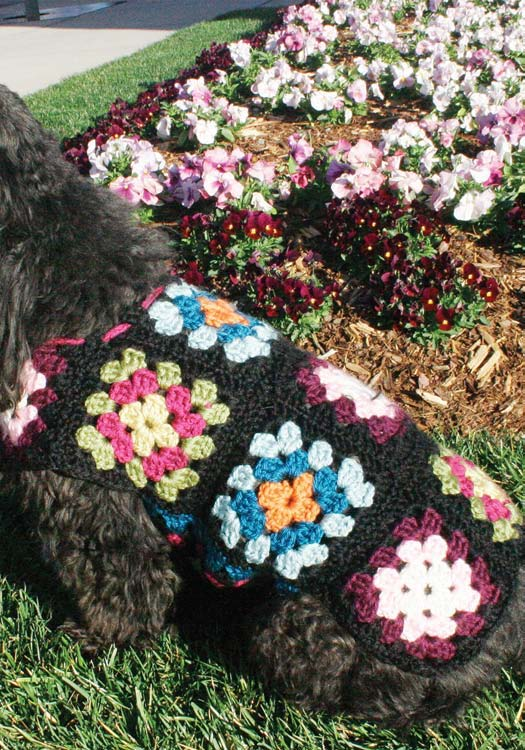
Bright granny-square centers stand out against black borders in this patchwork sweater. It is an appealing change of pace if you would rather make a stack of motifs than work a whole coat in rows.
The body uses six, nine or twelve squares, depending on size, with additional pieces for the neck and chest. Lay out the colors before joining so the strongest shades are spread across the back.
Each basic square should measure 4.5 inches. Even a small difference can add up over several joined motifs, so make and measure one complete square first. Read the neck chain and button instructions before finishing, and keep loose chain ends out of reach.
6. Pup’s Favorite Rainbow Sweater
Easy. Listed dog chest: 10, 14, 17, 20 inches. 5 mm hook; medium-weight self-striping yarn.
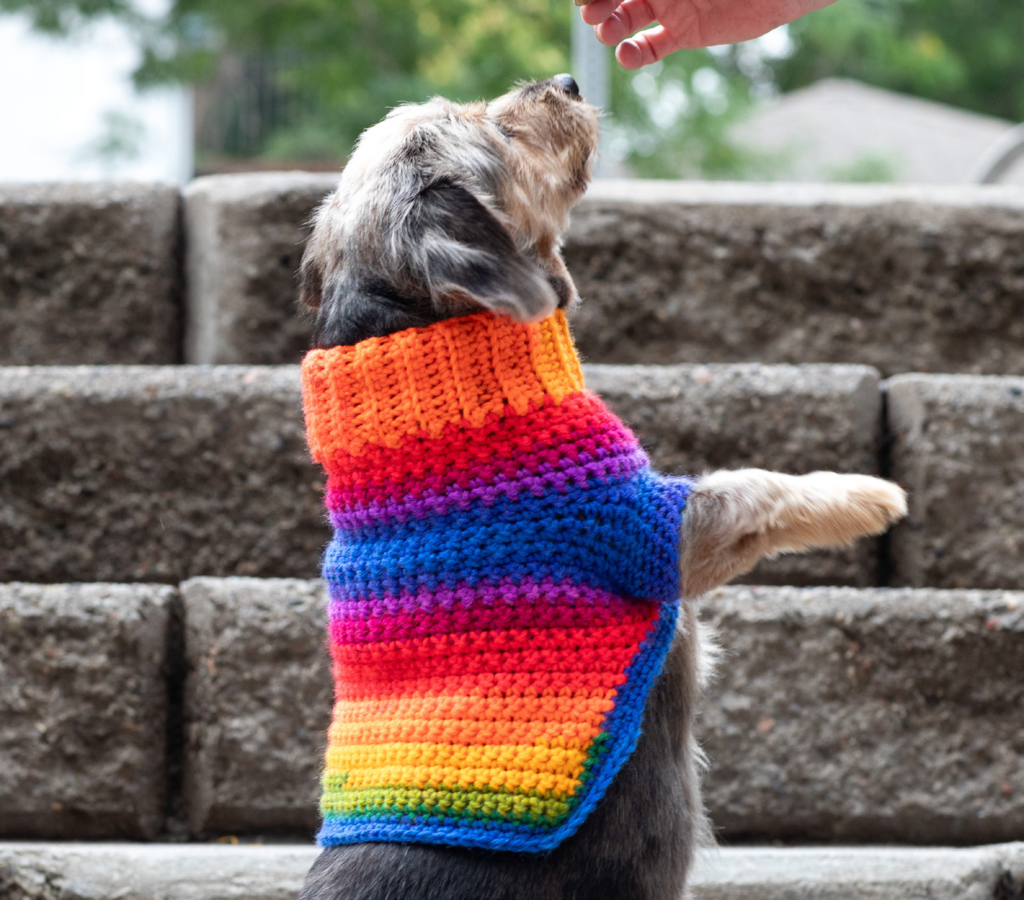
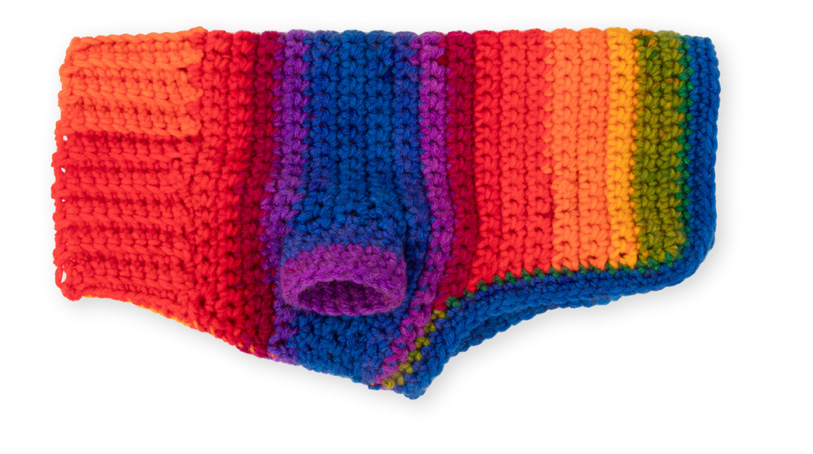
Orange, pink, purple and blue bands wrap around a simple single-crochet body. The back-view photograph shows how the stripes follow the shape, while the flat view makes the collar and leg openings easier to compare.
The ribbed collar is worked first. Stitches are then picked up along its long edge for the body, which is shaped around the front legs and joined underneath. Self-striping yarn supplies the color changes.
The listed finished chests are 12, 16.5, 19 and 22 inches, larger than the corresponding dog measurements. Keep that distinction when selecting a size. The PDF starts with a note explaining a mismatch between the written decrease repeats and their printed totals.
7. Color-Block D’O’Go Sweater
Easy. Listed dog chest: 10, 14, 17, 20 inches. 5 mm hook; Caron Big Donut O’Go yarn.
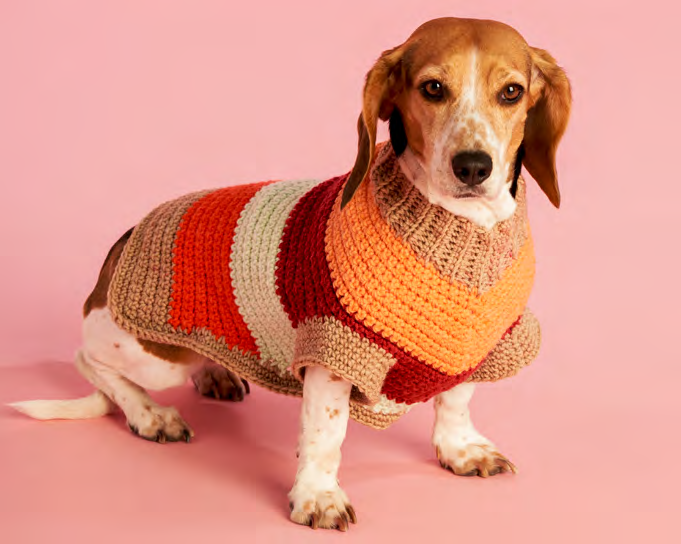
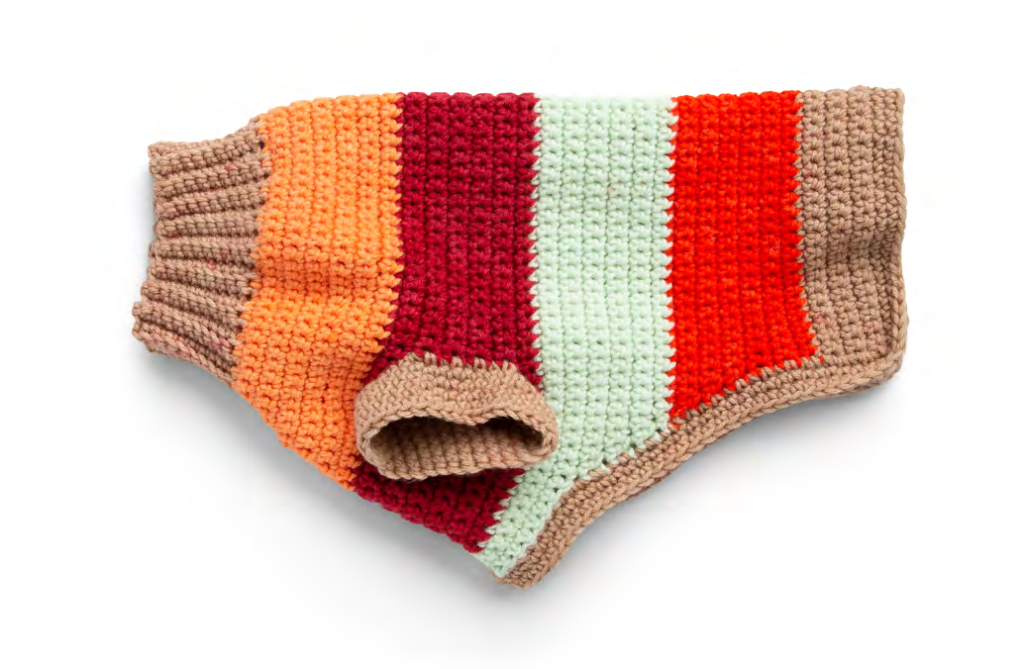
Broad blocks of orange, red, brown and muted green give this sweater a warm autumn palette. The ribbed collar and cuffs frame the simple body without adding extra motifs.
This uses a related coat shape to Pup’s Favorite, with a different collar schedule and a planned color sequence. The PDF specifies row counts for the color blocks rather than relying on a self-striping ball to place them.
The leg sections are worked at the same time with separate lengths of yarn. Read that step before dividing your colors. A count note at the front of the download explains the back-shaping totals.
8. Rubby Crochet Dog Sweater
For readers comfortable following photo instructions. Listed dog chest: 17–19-inch chest; 14–15-inch neck. 4 mm hook; about 100 g of medium wool.
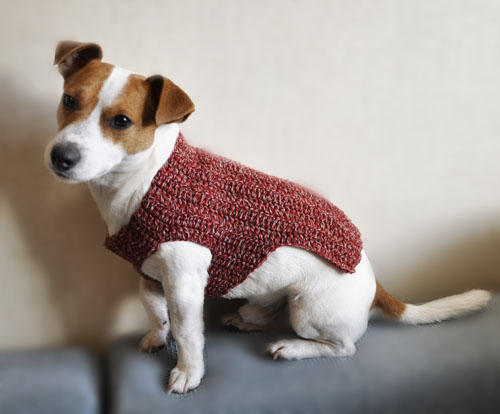
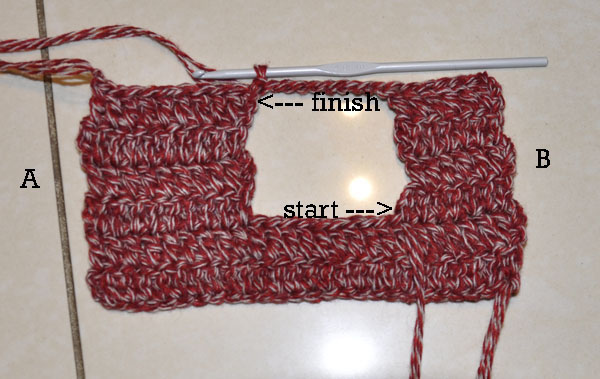
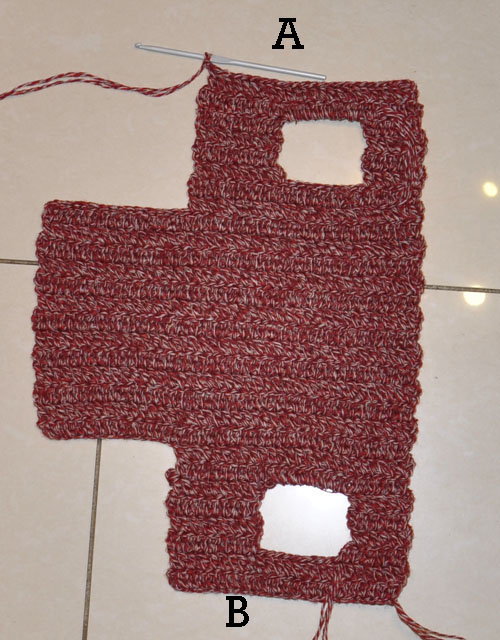
Deep red marled yarn gives Rubby a quieter finish than the striped coats. The useful part of this download is the construction photography: you can see the leg windows take shape in a flat panel before the seam is closed.
The instructions use double crochet and a sequence of short side sections, chains and longer body rows. The marked A and B edges in the final flat view show where the piece joins. It is a compact photo-led pattern for one listed measurement range.
Check that range against your dog before starting. The download does not supply a graded set of smaller and larger versions, so substantial resizing would mean developing and checking a new stitch schedule.
9. Bonus: Blue Dream Knit-and-Crochet Sweater
Knitting and crochet. Listed dog chest: 17–18-inch chest; 14–15-inch neck. 2 mm knitting needles and 4 mm crochet hook.
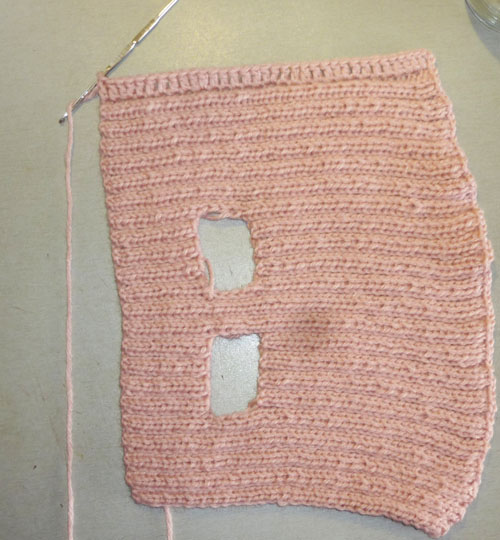
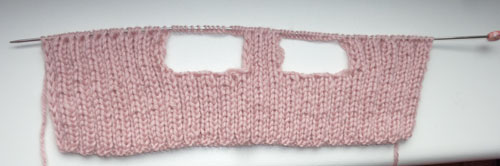
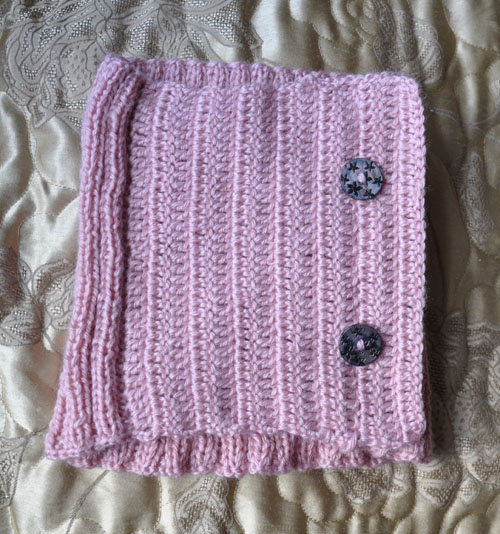
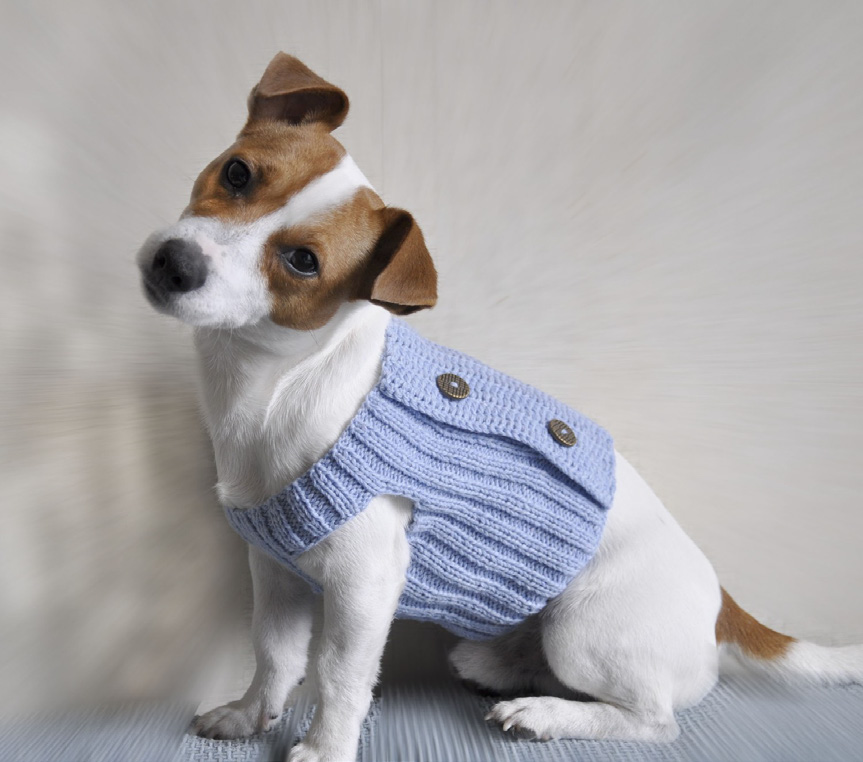
The blue sweater combines a knitted ribbed section with a crocheted extension and two buttons. It belongs here as a bonus for makers who enjoy both crafts.
The process photos use pink yarn for the construction stages. They show the separate leg windows, the change from knitting to crochet, and the joining and button details. They are steps in the same construction approach, rather than extra sweater patterns.
You will need both sets of tools and both stitch gauges. Read the complete sequence before casting on, especially the sections worked separately around the legs. The listed measurements cover one range; the PDF is not a crochet-only pattern.
Measure before choosing a size
Measure around the widest part of the chest while your dog stands comfortably. Also record the neck circumference and the back length from the base of the neck toward the tail. Check how far the front legs sit from the neck and how much space they need to move.
Small, medium and large mean different things in different patterns. A 10-inch chest is small in several of these PDFs, while the smallest granny-square size starts at 19 inches. Compare the actual numbers each time.
For patterns that give both dog and finished measurements, preserve the intended ease. For example, the rainbow sweater pairs a 14-inch dog chest with a 16.5-inch finished chest. That difference is part of its sizing, not a universal allowance to add to every sweater.
Yarn and tools to have ready
Most of the designs use medium-weight yarn, but their fabrics differ. A bobble fabric, a granny square and a double-crochet panel will not stretch or drape in the same way. Use the chosen PDF’s materials and gauge as your starting point.
Have stitch markers, a tape measure, scissors and a yarn needle nearby. Several coats have separate leg sections, so markers make it easier to track the unworked gaps. The mixed-craft bonus also needs knitting needles and buttons.
A few fit and care checks
Not every dog needs or enjoys clothing. For a dog that wears a sweater comfortably, check that the neckline, chest and leg openings allow normal movement. Keep the underside clear for toileting. Supervise the first fitting and remove the sweater if your dog seems uncomfortable, gets too warm or chews the fabric.
Attach a walking lead to suitable commercial equipment. Crochet fabric and decorative closures are not walking attachments. Follow the care label for your actual yarn, wash a swatch first and remeasure it after drying. Check the finished sweater for loose ends, stretched openings and damaged buttons before use.
Questions before you start
Which crochet dog sweater is best for a first garment?
The easy-rated textured, berry-red, rainbow and color-block patterns use familiar stitches, but they still involve shaping and fitting. Choose the one whose instructions you can follow completely before starting. A plain swatch and a measured leg-opening sample are useful practice.
Can I use a different yarn color?
Yes. Keep the yarn weight, fabric and gauge in mind when changing colors. Self-striping yarn determines its own band lengths; separate colors let you place each stripe. For the granny-square sweater, test one full motif with your planned colors before making the rest.
Can I make every pattern larger?
Use the sizes provided wherever possible. Adding length does not automatically create enough chest room or move the leg openings to the right place. Rubby and Blue Dream each give one measurement range, so a different size needs more than an extra row at the hem.
Are all nine downloads crochet-only?
Eight designs use crochet. The Blue Dream bonus combines knitting and crochet and needs both tools. The two color-block coats share a related construction, while their collar and color schedules differ.
Choose a texture you will enjoy making
Bobbles bring the strongest texture, granny squares offer small portable pieces, and the single-crochet coats leave more room to focus on fit. Save the designs you like, compare their measurements and open the free PDF before choosing your yarn.