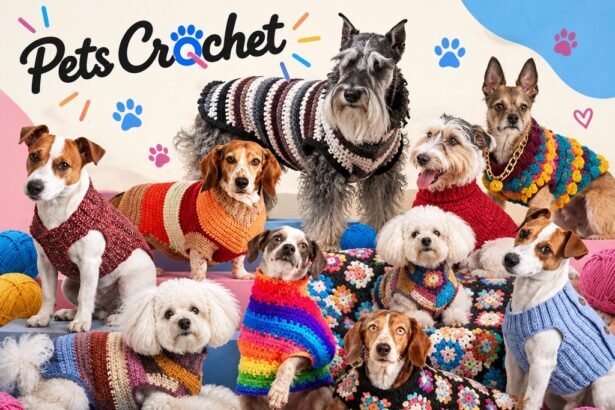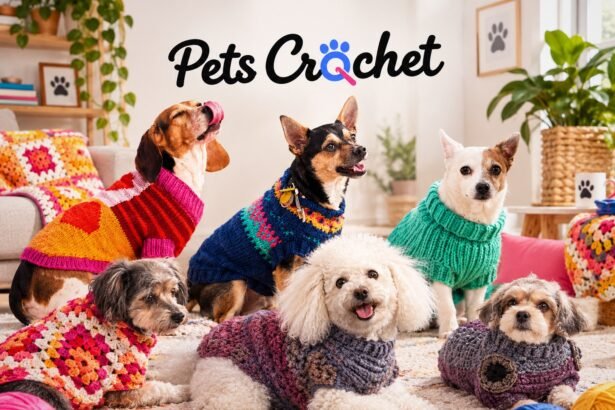
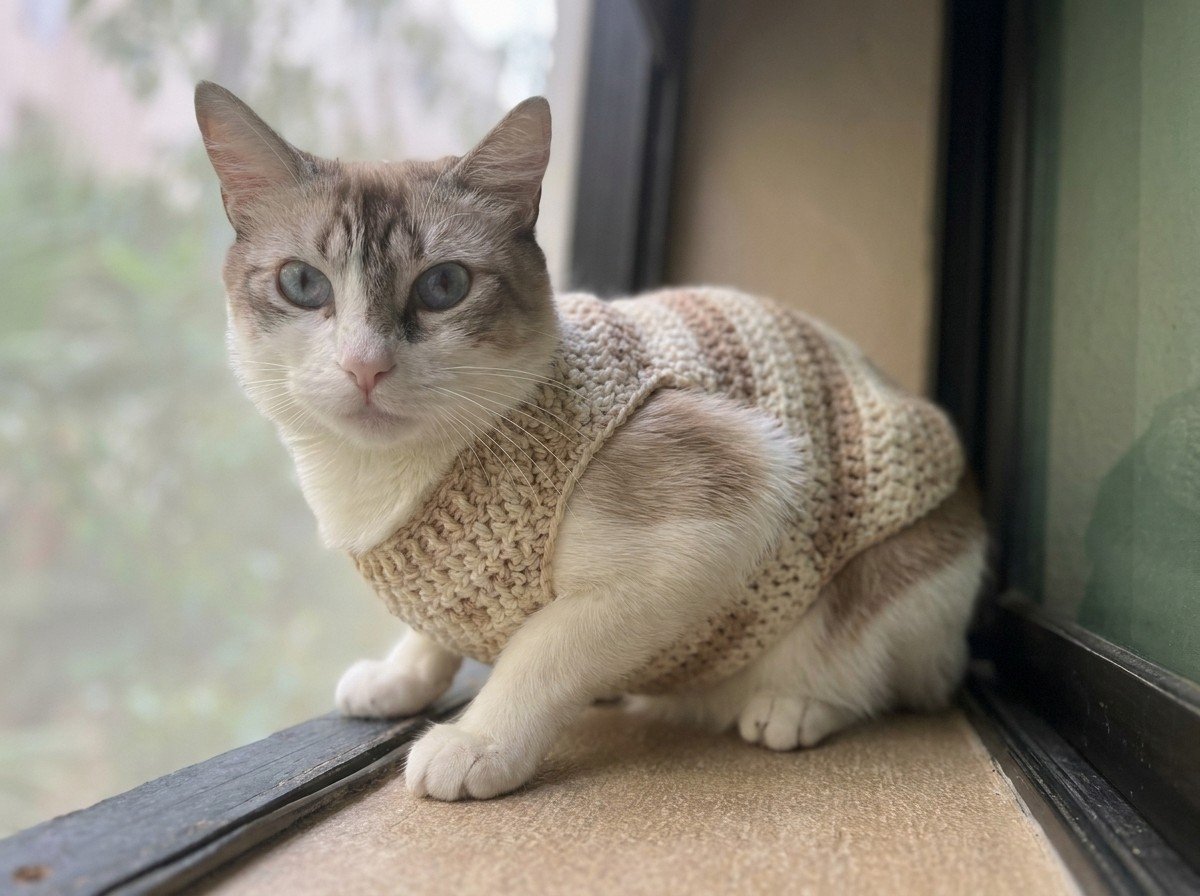
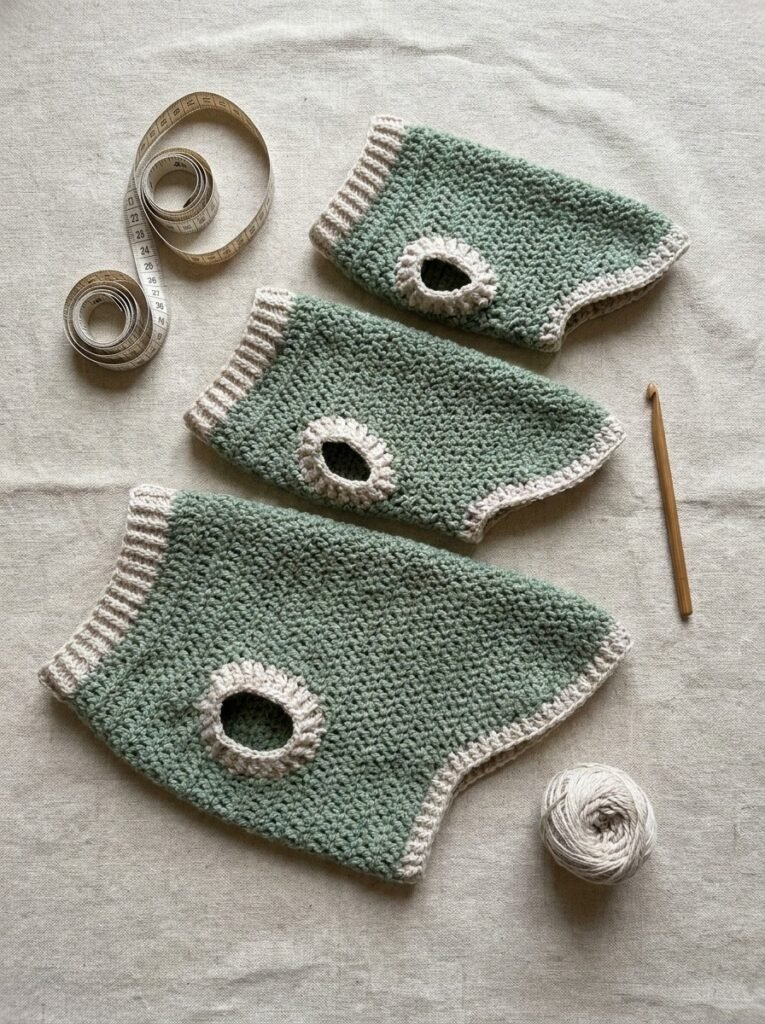
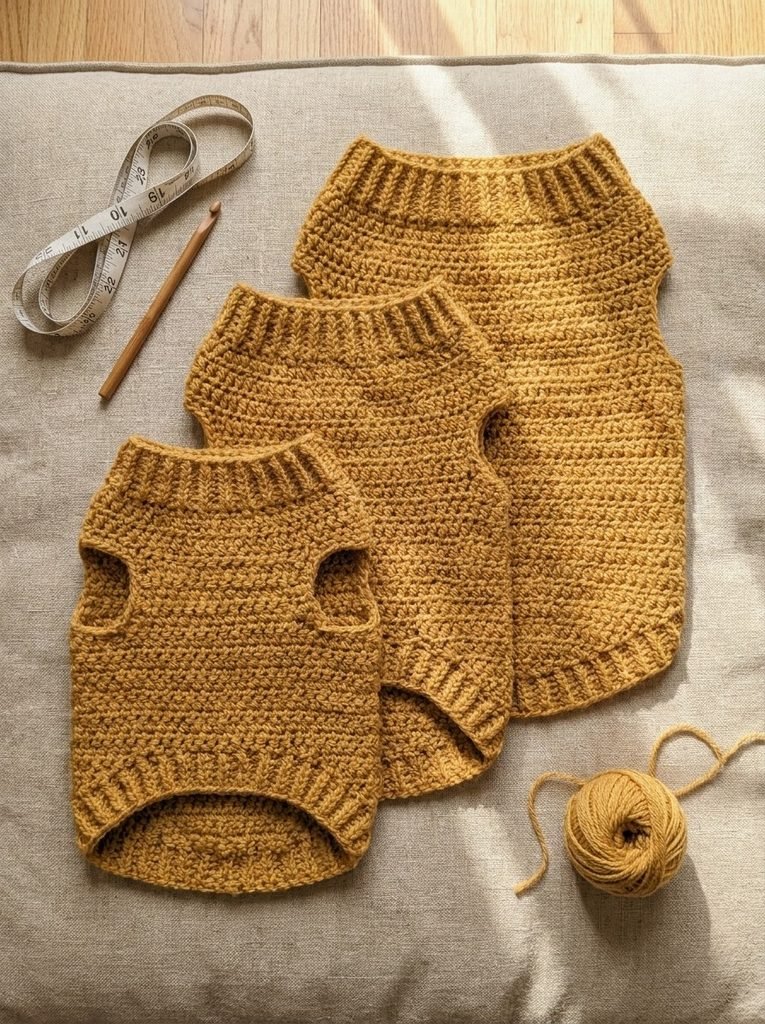
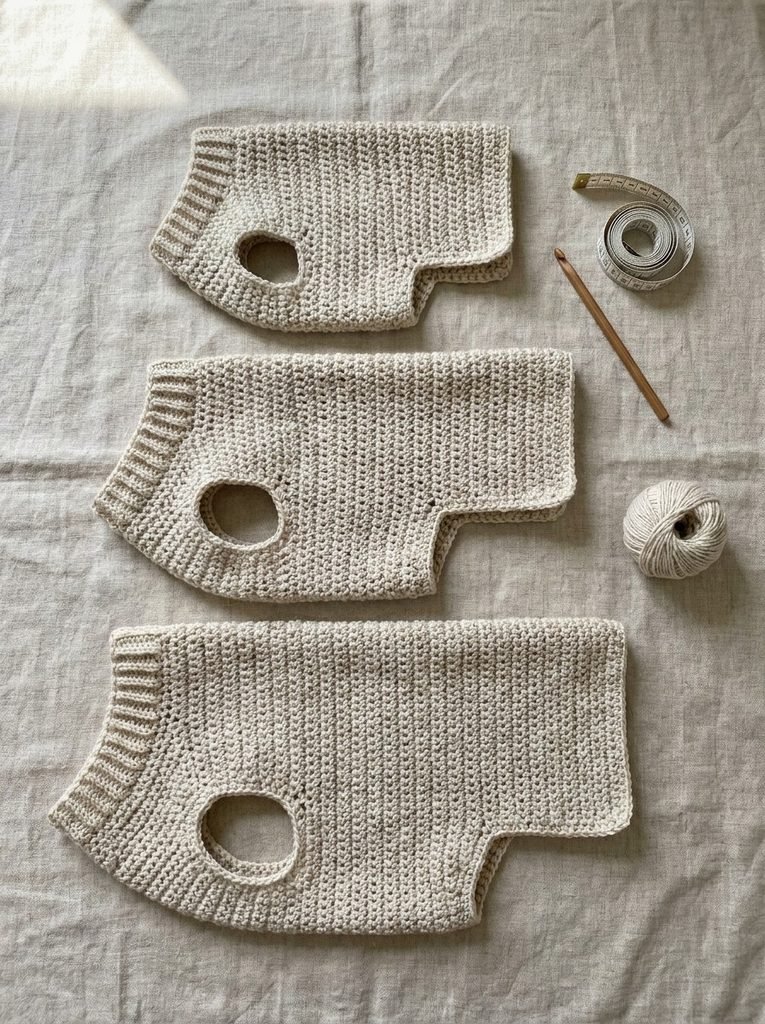
There is a lovely moment when a simple ball of yarn starts to look like something useful. These crochet pet sweaters free patterns are gathered around that feeling: warm colors, approachable shapes and enough room to adjust the fit for a real dog or cat. The supplied photographs show ten different sweater directions, and each matching flat-lay shows the same idea in three proportions.
The featured free pattern is designed as a measured three-size starting point rather than a one-size-fits-all garment. Choose the closest chest range, then check the neck, foreleg openings and back length on your own pet. A sweater can look perfect in a photograph and still pull in the wrong place on a different body.
Before you crochet a pet sweater
Pet clothing should add comfort, not create a new problem. Crochet fabric has very little forgiveness when a neckline is too tight or a loose end catches behind a leg, so take a few minutes to check the practical details first.
- Measure the neck, chest just behind the forelegs, back length and foreleg opening. Use the chest as the main size guide.
- Leave comfortable ease around the neck and chest. You should be able to slide two fingers under the finished neckline without pressing into the throat.
- Keep the forelegs, shoulders, tail and underside free enough for walking, sitting, grooming and toileting.
- Weave every yarn end securely into the fabric. Do not add cords, beads, bells, buttons or loose trim that can snag or be swallowed.
- Introduce the sweater for a short, supervised period. Remove it if your pet pants, freezes, scratches, hides, chews, overheats or tries to escape.
- Never attach a leash to a crochet sweater. Use a properly fitted harness or functional collar for walking.
Choose your starting size
The ranges below are practical starting points for this photo-matched draft, not a substitute for measuring your pet. Crochet gauge, yarn thickness and coat volume can change the finished fit.
| Size | Chest range | Neck range | Back length | Foreleg opening |
|---|---|---|---|---|
| Small | 30-40 cm / 12-16 in | 20-27 cm / 8-10.5 in | 20-28 cm / 8-11 in | 5-6 cm / 2-2.5 in |
| Medium | 40-56 cm / 16-22 in | 27-36 cm / 10.5-14 in | 28-38 cm / 11-15 in | 6-8 cm / 2.5-3 in |
| Large | 56-76 cm / 22-30 in | 36-48 cm / 14-19 in | 38-50 cm / 15-20 in | 8-10 cm / 3-4 in |
For the most reliable result, measure the pet while standing naturally. Add only the ease you can confirm with a fitting sample, then adjust the back length separately. A longer sweater is not automatically a better-fitting sweater.
10 crochet pet sweater ideas to try
Every idea below includes a separate pattern-download path. The PDFs are photo-matched prototype guides and should be physically crocheted, washed and fit-tested before being described as tested patterns.
1. Sage Green Ribbed Cat Sweater
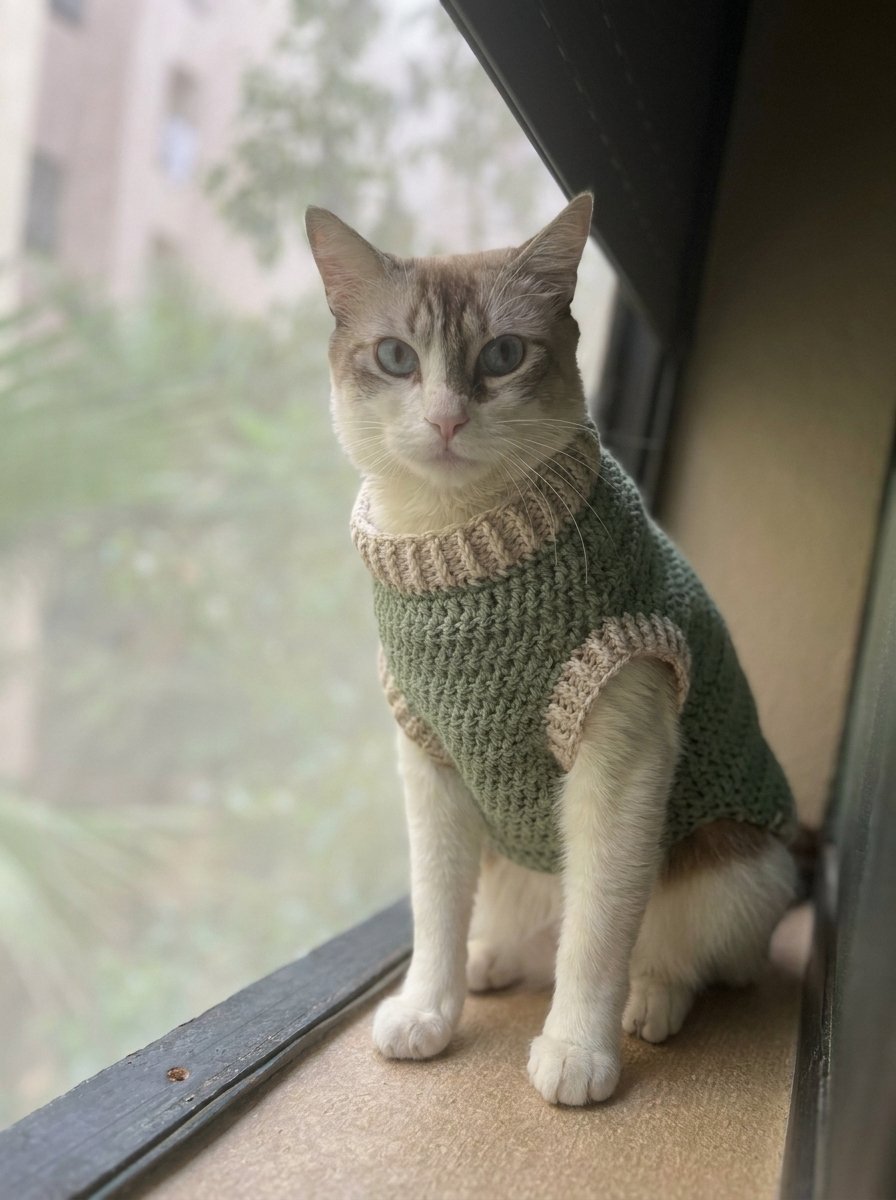
The sage green cat sweater is the softest-looking design in the collection. Its cream ribbed neckline gives the piece a finished edge, while the muted body keeps the overall shape simple and wearable.
Why this design works
A narrow ribbed neck and a smooth body make this a useful starting point for a small pet. Keep the neckline broad enough that the cat can swallow, groom and turn its head normally.
Pattern and fit notes
- Look: muted sage green with a soft cream ribbed neckline and trim.
- Construction: A dense, lightweight pullover with a ribbed neck and clean foreleg openings. The silhouette stays close to the body without squeezing the throat.
- Best for: calm indoor cats and very brief, supervised photo sessions.
- Fit check: Use the smallest size only when the chest and neck measurements agree. Cats should never be forced into clothing, and this style is for short, calm, supervised wear only.
2. Charcoal Textured Golden Retriever Sweater
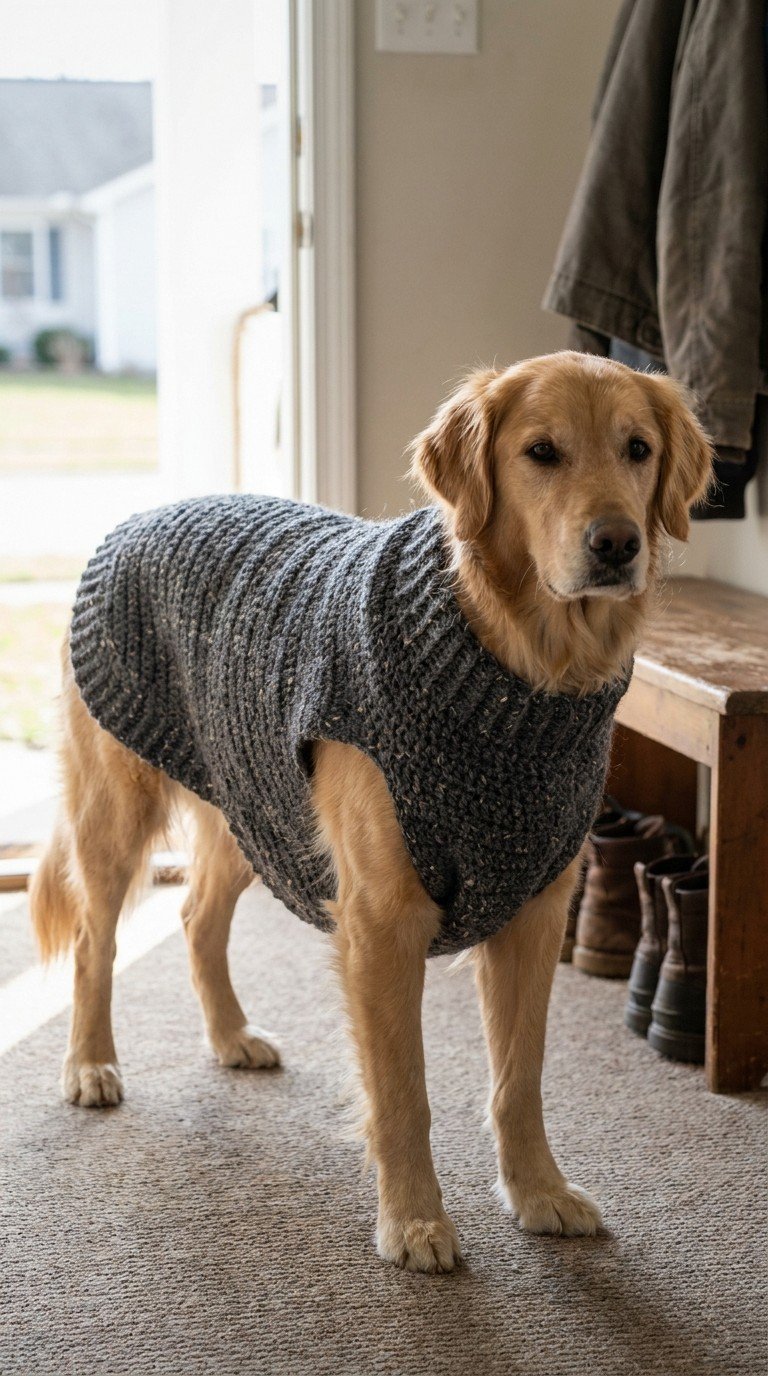
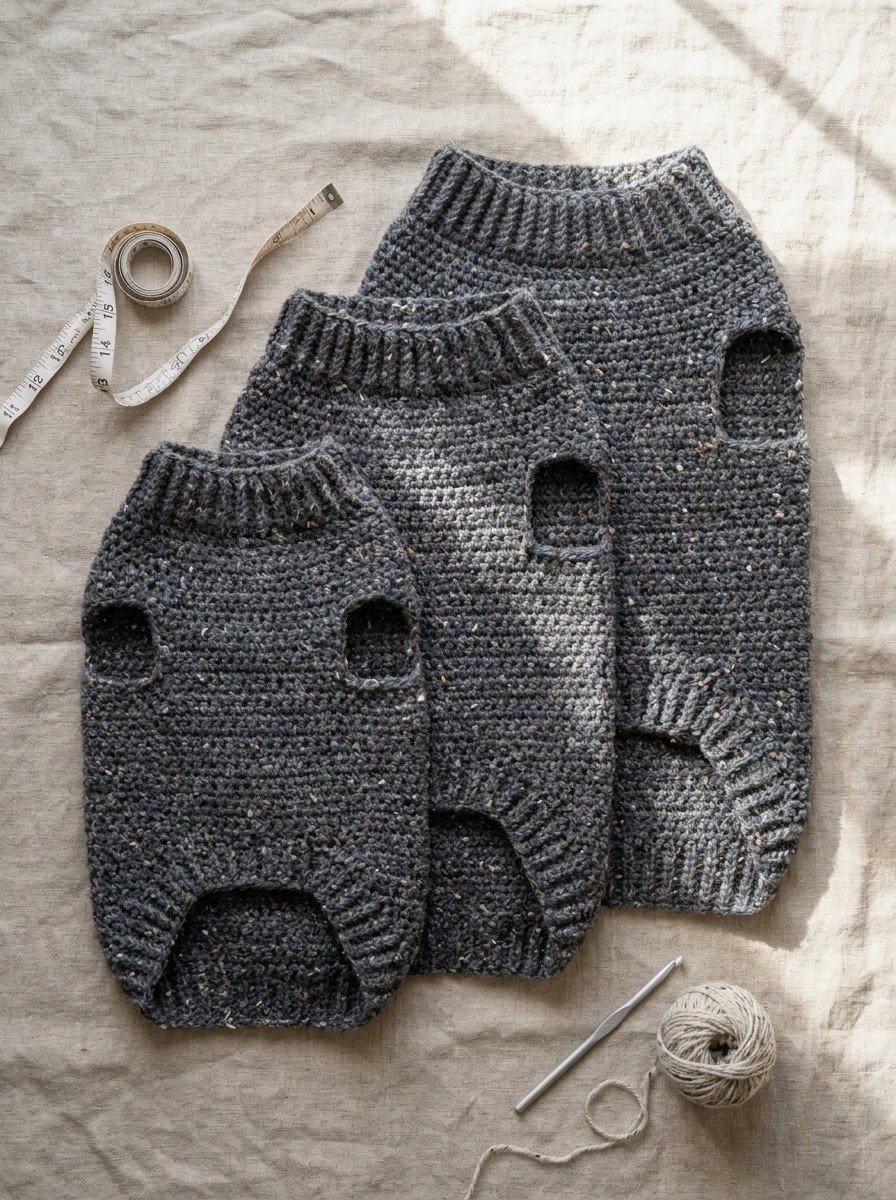
This charcoal design shows how texture can make a larger sweater feel special without adding anything that can snag. The raised rows give the back a clear handmade rhythm and keep the color from looking flat.
Why this design works
Ribbed rows are forgiving when you need a little extra ease across a broad chest. They also make it easier to see whether the fabric is stretching evenly as you try it on.
Pattern and fit notes
- Look: charcoal gray with subtle lighter flecks and a dark ribbed neck.
- Construction: A larger, dense pullover with vertical ribbing that adds visual texture without separate decorations or loose surface loops.
- Best for: larger dogs that need a warm-looking but flexible layer.
- Fit check: For a large dog, check the chest behind the forelegs and the clearance at the armpits before checking the back length. A sweater that looks roomy on the back can still pinch underneath.
3. Cranberry and Cream Cocker Spaniel Sweater
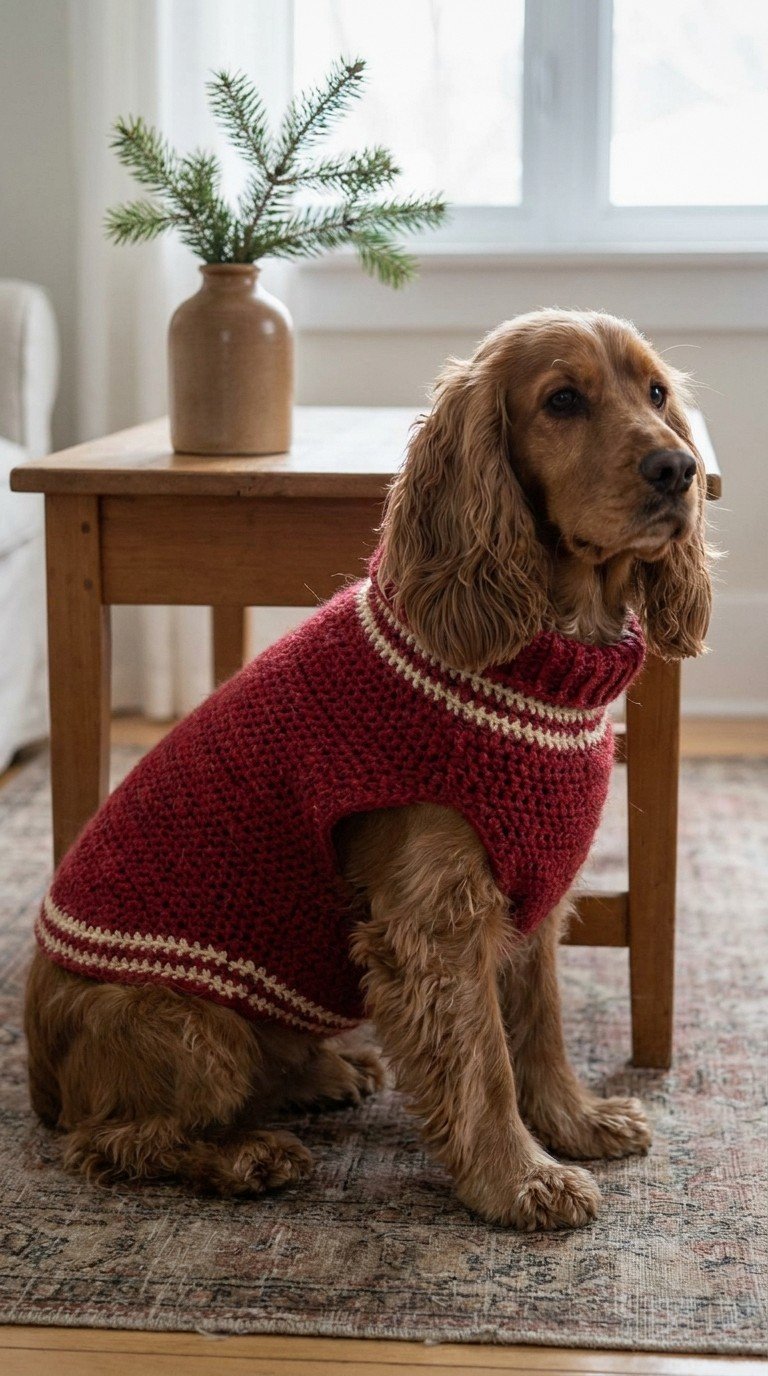
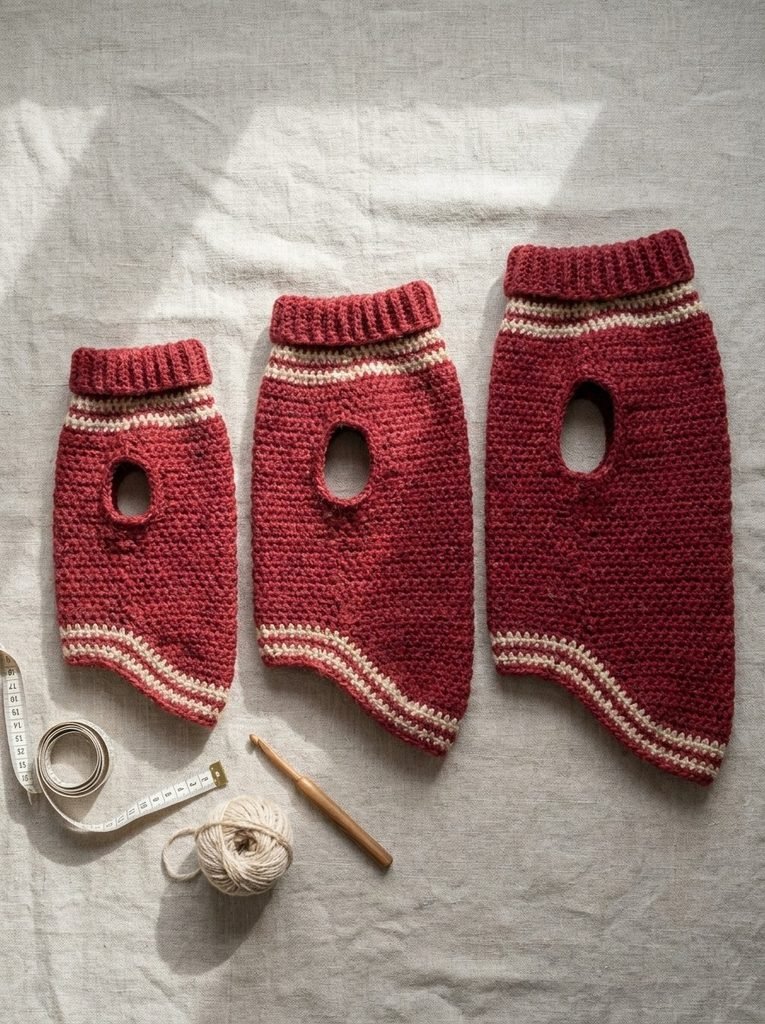
The cranberry sweater has the feeling of a winter favorite without turning into a costume. A slim cream border frames the red body and gives the finished piece a clear, row-by-row structure.
Why this design works
Two quiet colors are enough to make a beginner project look considered. The dense fabric also photographs well because the stitches remain readable from a few steps away.
Pattern and fit notes
- Look: muted cranberry red with narrow cream edging.
- Construction: A dense red body with a restrained cream border around the neck and lower edge. The design uses color contrast instead of loose embellishment.
- Best for: autumn portraits, holiday cards and medium-sized dogs.
- Fit check: Long ears and chest feathering can hide a tight neckline, so place your fingers under the collar and check that the dog can move its head freely. Keep the lower edge above the tail base.
4. Mustard Textured Corgi Sweater
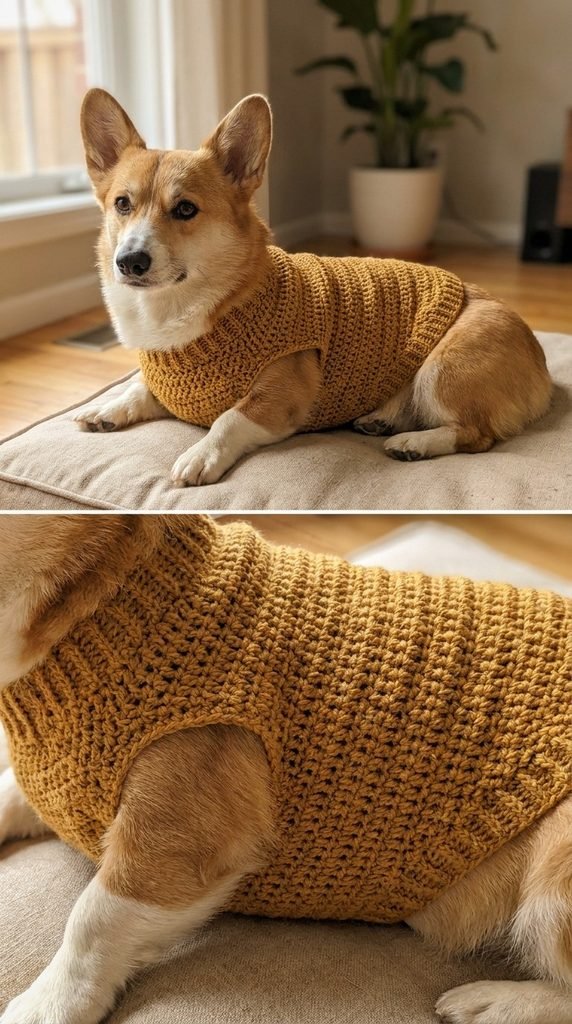
Mustard brings out every ridge in this Corgi-sized sweater. The compact textured stitch gives the piece a little personality, but the outline stays practical and easy to read.
Why this design works
A short-backed breed benefits from a clear hem that stops before the tail. The texture can be attractive without making the sweater heavy, provided the yarn remains soft and the gauge is not too tight.
Pattern and fit notes
- Look: warm mustard with a honeycomb-like dense texture.
- Construction: A short, sturdy body worked in a textured stitch that creates small raised blocks while keeping the fabric closed and flexible.
- Best for: short-backed dogs and makers who want visible stitch texture.
- Fit check: Check the short back length carefully. The sweater should cover the rib cage but stop before it bunches at the tail or presses into the dog when sitting.
5. Dusty Blush Papillon Sweater
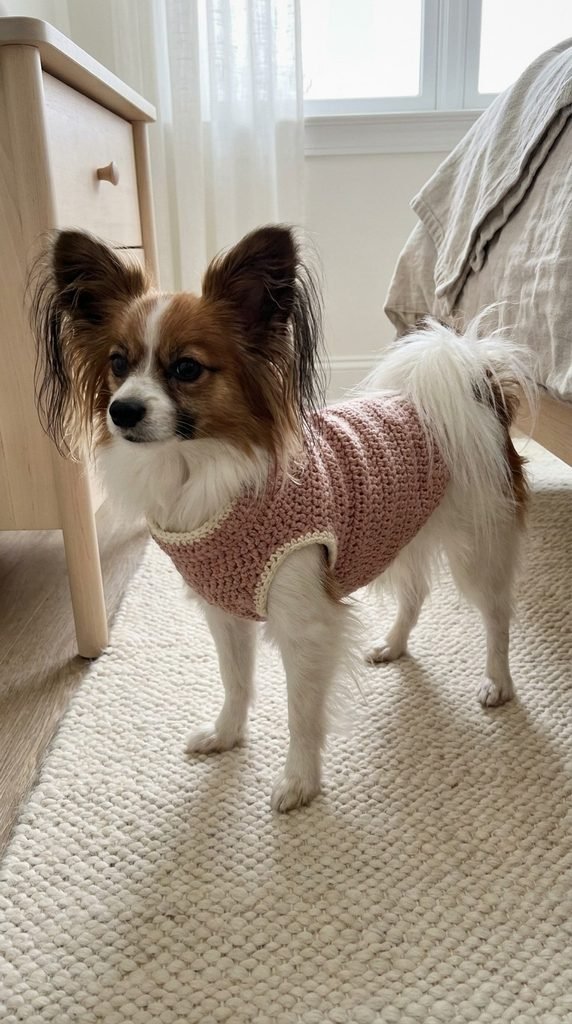
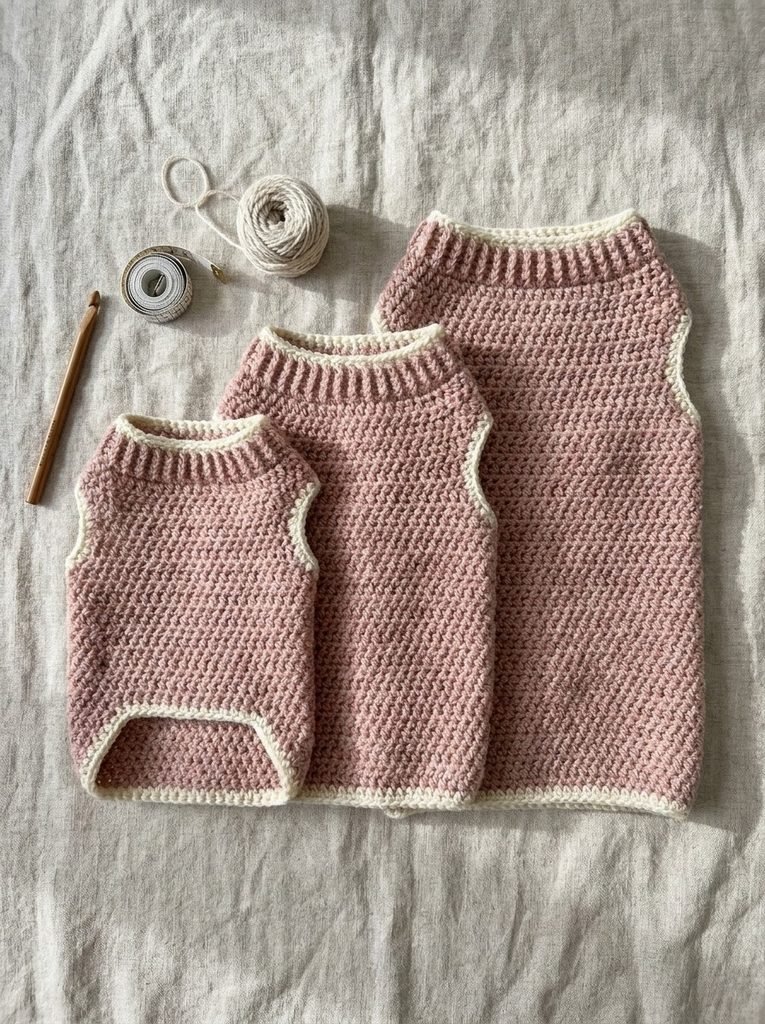
The blush Papillon sweater keeps things deliberately light. There are no bows or flowers to distract from the shape, just a soft pink body and a fine cream edge that helps the outline stand out.
Why this design works
Small garments can become stiff quickly when the yarn is too thick. A smooth stitch and a narrow border keep this version flexible around the shoulders and light enough for indoor wear.
Pattern and fit notes
- Look: dusty blush pink with a fine warm-cream border.
- Construction: A smooth, sleeveless small-dog sweater with a clean armhole shape, narrow neckline and short back hem.
- Best for: small dogs, delicate yarn palettes and first-time garment makers.
- Fit check: Papillon feathering can make the sweater appear tighter than it is. Check the real fabric at the chest and forelegs, not only the visible silhouette in the photograph.
6. Denim Blue Small-Dog Sweater
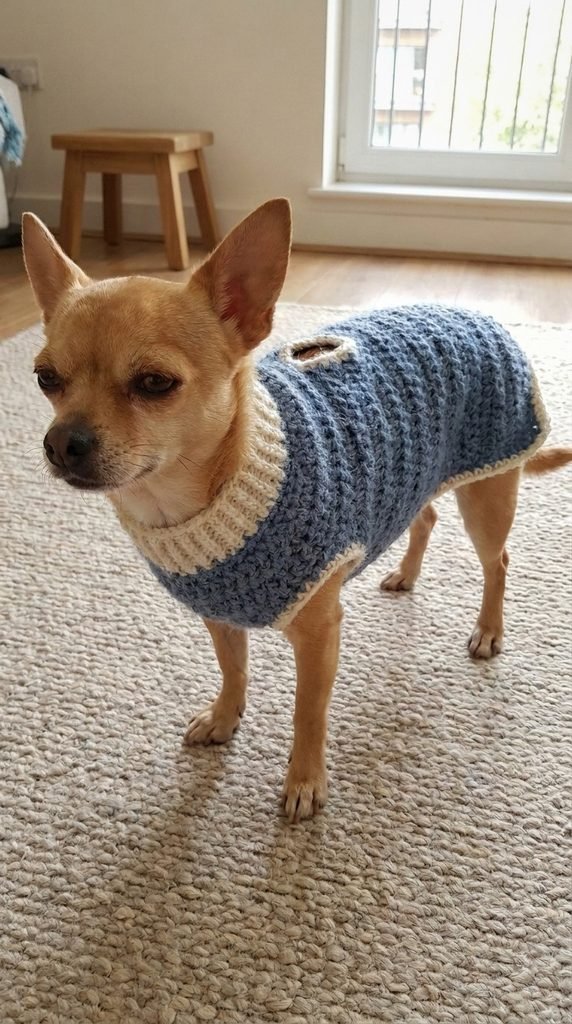
The denim-blue version is the everyday sweater of the group. The cream neckline gives the blue enough contrast to show the construction, while the rest of the piece stays uncomplicated.
Why this design works
A simple two-color edge is easy to repeat across three sizes. It also gives you a useful visual checkpoint: if the neckline pulls, the body should not be considered ready just because the color looks right.
Pattern and fit notes
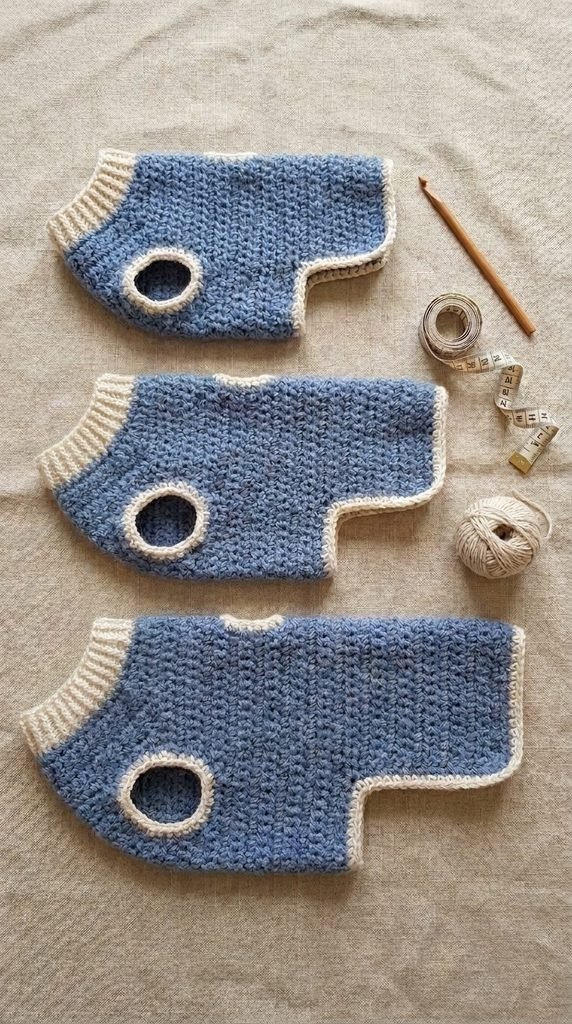
- Look: denim blue with a cream ribbed neckline and clean lower border.
- Construction: A simple dense pullover with a clearly framed neck and practical foreleg openings. The three flat-lay sizes show the same shape scaled by width and length.
- Best for: small dogs, denim-inspired palettes and an easy everyday layer.
- Fit check: Small dogs often need more chest ease than their narrow neck suggests. Measure both areas and adjust the body before lengthening the back.
7. Terracotta and Cream French Bulldog Sweater
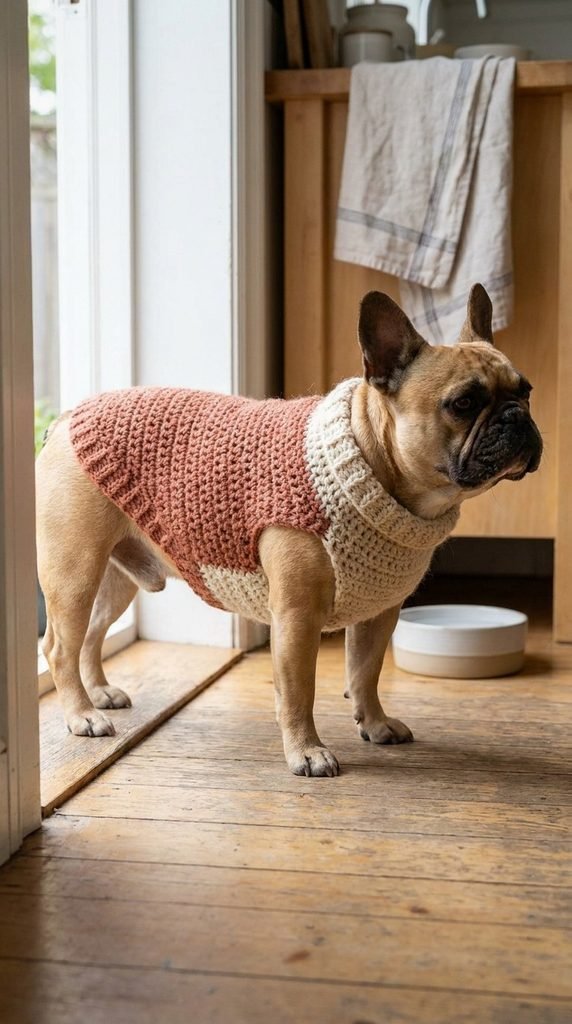
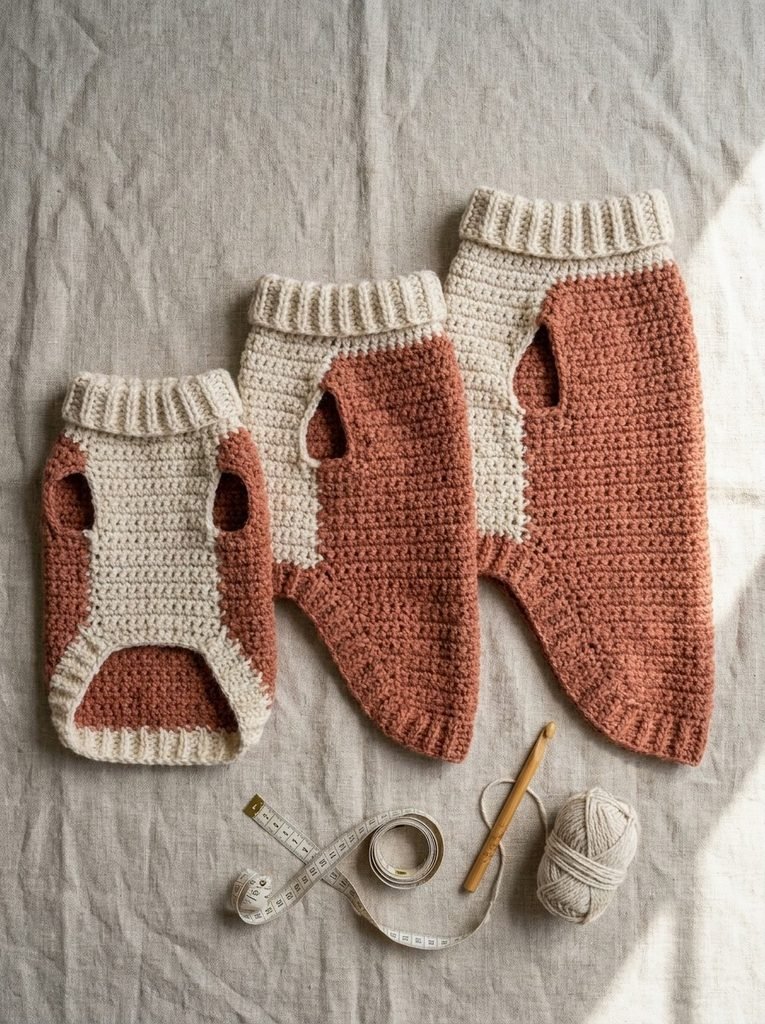
Terracotta and cream make this French Bulldog version feel warm without needing a festive print. The color blocking follows the garment’s shape and gives the broad chest a neat visual boundary.
Why this design works
The best detail here is proportion. A stocky dog needs chest room, but the sweater still needs a short enough back and a low, comfortable neckline.
Pattern and fit notes
- Look: muted terracotta with a warm cream neckline and lower edge.
- Construction: A compact color-block pullover designed around a broad chest, short back and clean foreleg openings.
- Best for: stockier small and medium dogs with broad chests.
- Fit check: Check breathing and armpit clearance while the dog stands and sits. Do not use a sweater to hold a harness or leash, and remove it immediately if the dog pants, scratches or tries to back out.
8. Navy and Cream Striped Shiba Sweater
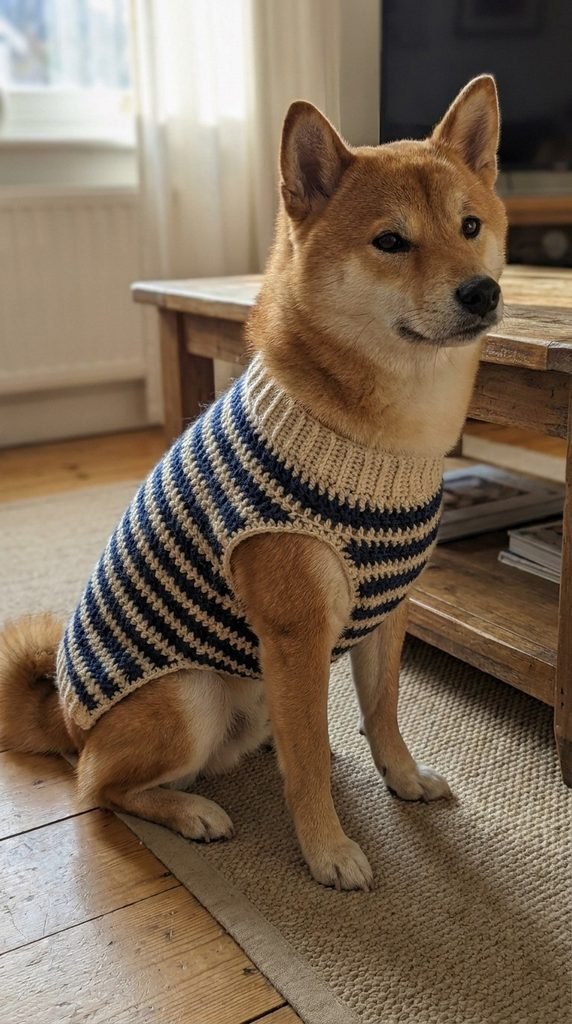
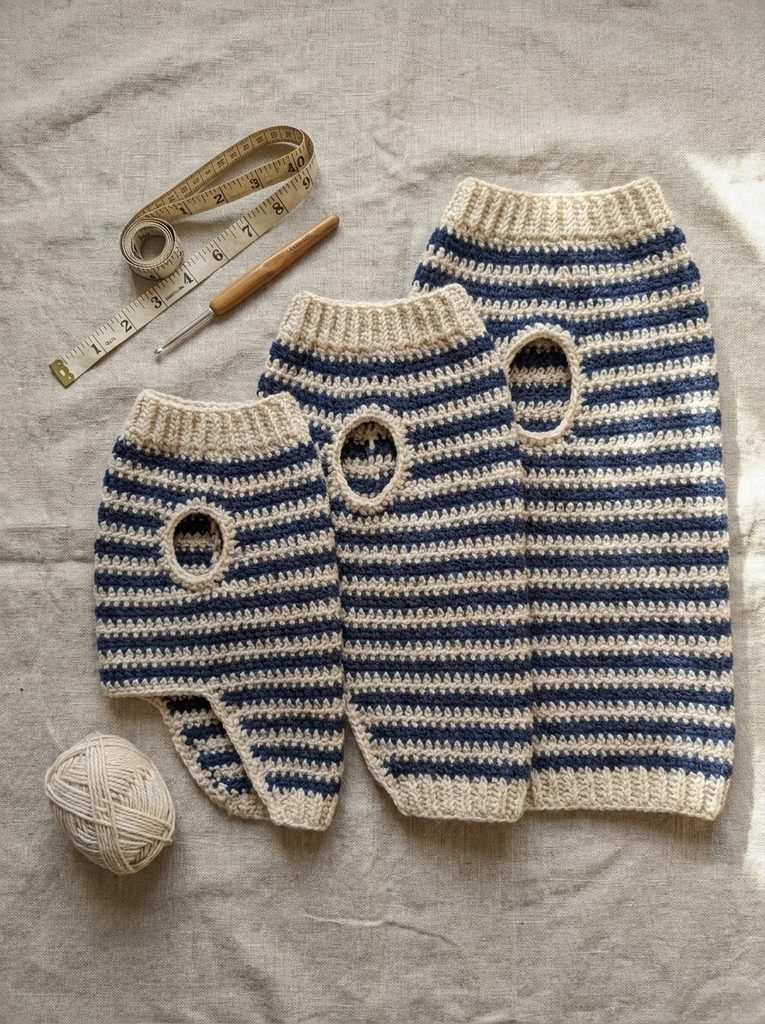
The navy and cream stripes give the collection its most graphic look. They are narrow enough to feel handmade and even enough to make the sizing changes easy to compare in the flat-lay photo.
Why this design works
Stripes are helpful during construction because every color change becomes a progress marker. They also make it easy to compare small, medium and large versions without adding a new stitch pattern.
Pattern and fit notes
- Look: navy and warm cream in even horizontal stripes.
- Construction: A row-based striped sweater with a cream ribbed neckline, dense body and short lower edge above the tail.
- Best for: makers who enjoy color changes and clear visual row markers.
- Fit check: A thick double coat can disguise a tight chest. Measure over the coat without compressing it, then try the sweater on for only a short period while watching movement and breathing.
9. Sage Green Large-Dog Sweater
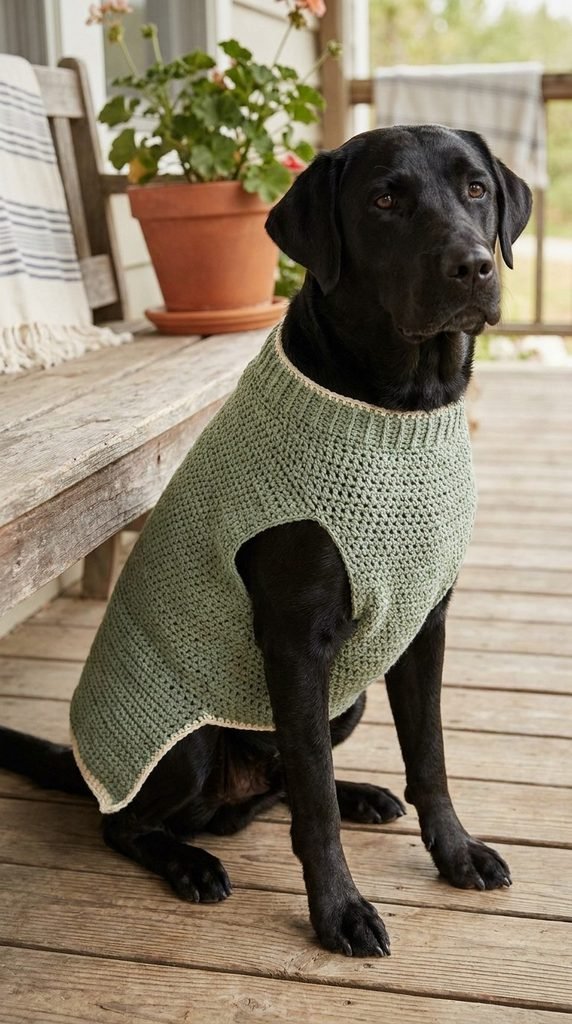
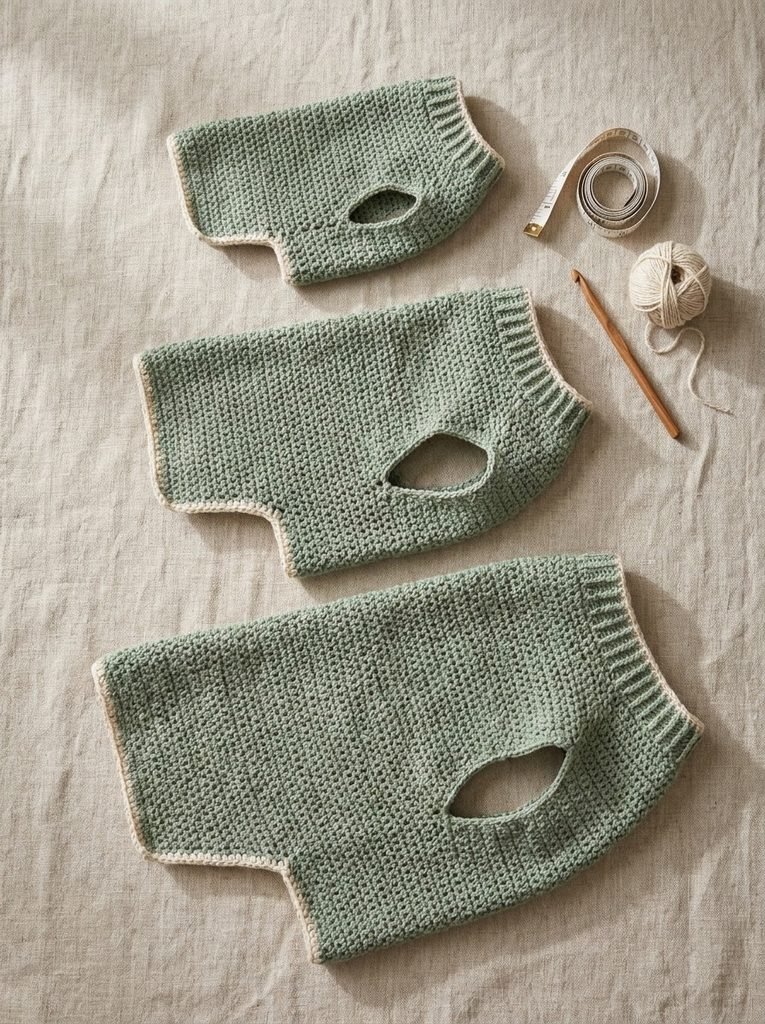
The sage Labrador sweater is intentionally calm. On a large dog, a clean shape often says more than a complicated stitch pattern, especially when the goal is a piece that can be measured and adjusted without guesswork.
Why this design works
The broad body makes the chest measurement the main checkpoint. Once the chest and armpits are comfortable, adjust the back length separately so the hem does not drag or bunch.
Pattern and fit notes
- Look: soft sage green with a simple untrimmed finish.
- Construction: A roomy large-size pullover with dense rows, a low neck and a clear front-leg opening. The shape is intentionally plain so fit remains the focus.
- Best for: large dogs and makers who prefer a quiet, useful-looking garment.
- Fit check: Large dogs generate more heat and movement, so keep the yarn washable and the fabric flexible. Check the garment while the dog walks, sits and turns before considering the size successful.
10. Oatmeal Beagle Sweater
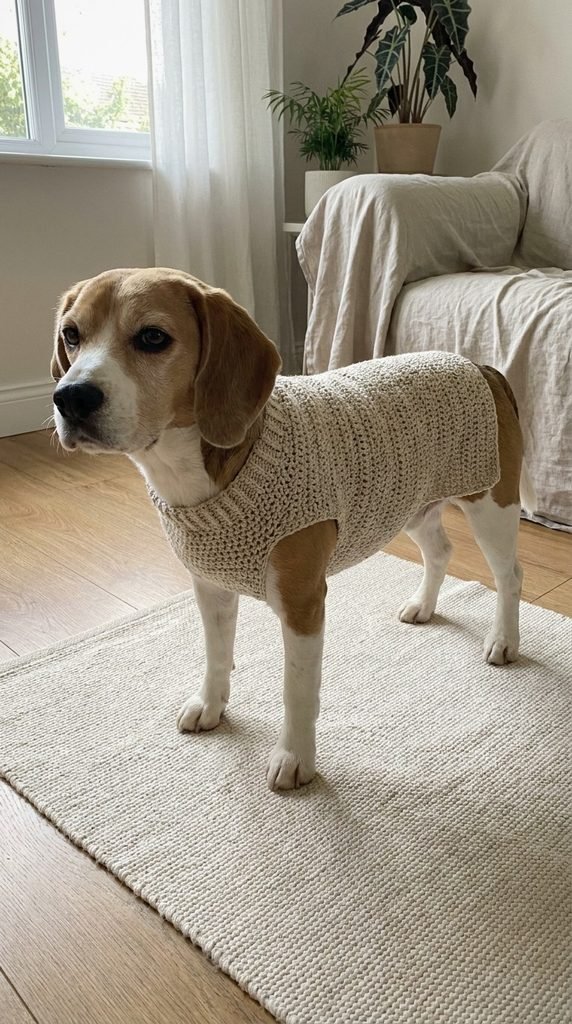
If you want one practical starting point, choose the oatmeal Beagle sweater. It is quiet enough to wear with any coat color and simple enough that the fit, rather than the decoration, becomes the main feature.
Why this design works
Neutral yarn makes mistakes easier to spot. You can see whether the neckline sits flat, whether the body is pulling behind the forelegs and whether the lower edge remains even as the dog moves.
Pattern and fit notes
- Look: natural oatmeal with a soft ribbed neckline.
- Construction: A plain, dense sweater with a comfortable neck, simple foreleg openings and a short back hem. It is the cleanest base for the three-size free pattern.
- Best for: a first full-size pet garment and neutral home photography.
- Fit check: Use this design as the main three-size reference, but do not treat the size chart as universal. Measure the actual dog and shorten the back if the hem approaches the tail base.
How to wash a crochet pet sweater
Follow the yarn label first. In general, secure all ends, wash the sweater gently in cool water, press out moisture without wringing and reshape it flat. Let it dry completely before putting it back on a pet. Inspect the neckline, foreleg openings and lower edge after every wash because stretching can change the fit.
Common questions
Are crochet sweaters safe for dogs and cats?
They can be used safely only when the fit is comfortable, the fabric has no loose hazards and the pet is supervised. Clothing is not appropriate for every animal. Stop if the pet shows stress, overheating, restricted movement or chewing.
Can I use the same crochet pet sweater pattern for every breed?
No. The three size labels are starting ranges. Chest shape, neck size, coat thickness, back length and leg placement vary widely, so measure the individual pet and adjust the pattern before finishing.
Can I leave a pet sweater on overnight?
No. Remove crochet clothing for sleep, crating, rough play and any time the pet is unattended. Regularly inspect for stretched stitches, loose yarn and areas that rub.
Are these crochet pet sweater patterns tested?
They are prototype-ready, photo-matched guides. A physical sample still needs to be crocheted in the selected yarn, washed, measured and fit-checked before the final version is called tested.
Ready to start? Choose the design that suits your pet, download its free PDF pattern above and begin with a small gauge swatch before making the full sweater.