
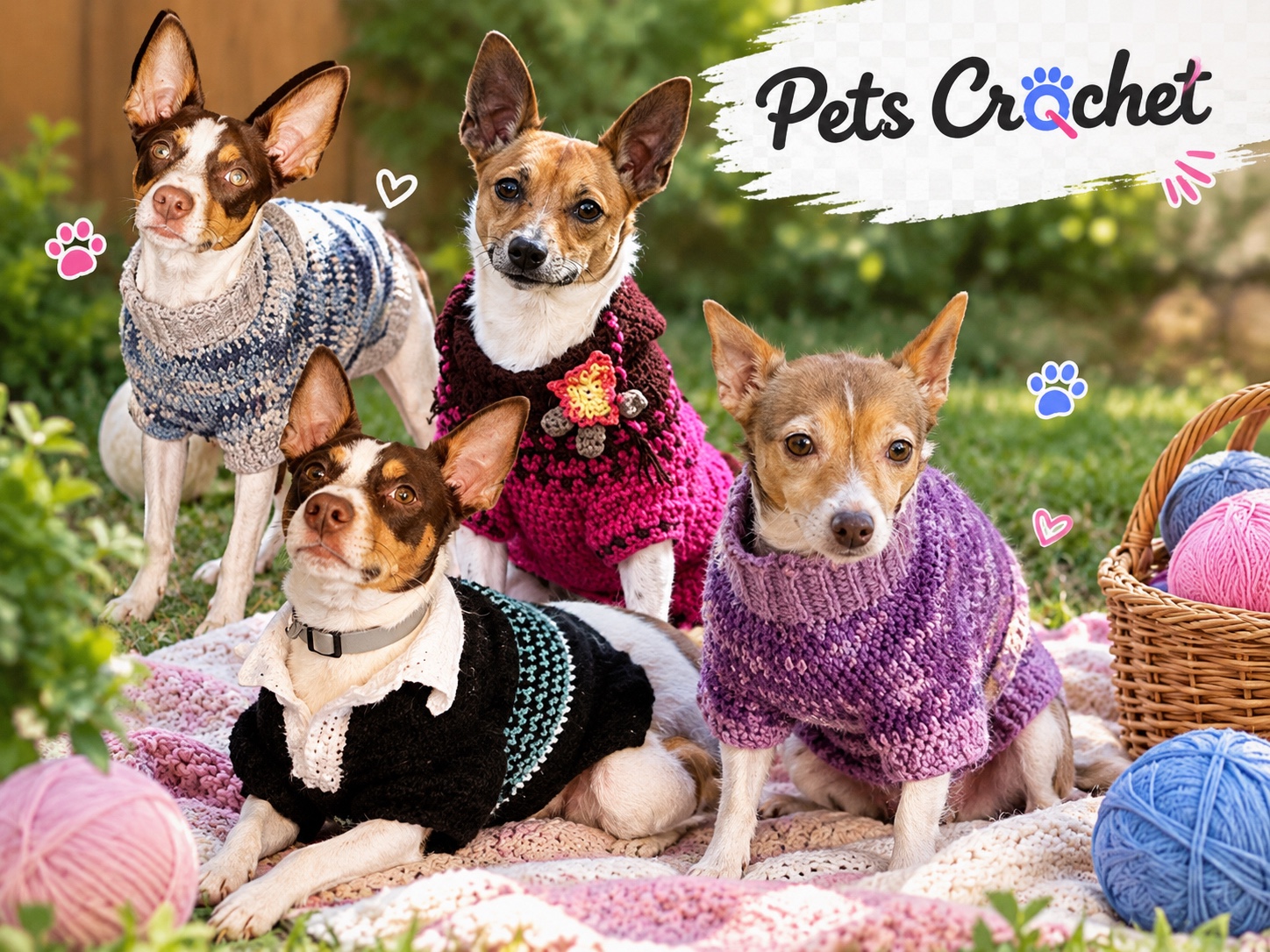
A crochet dog sweater can fit beautifully at the neck and still pull across the chest. Or the chest fits, but the back hangs too far over the tail. These four styles start with the dog’s measurements and let you check the shape as you crochet.
Choose a simple ribbed-neck pullover, a multicolour sweater with contrasting trim, a folded-collar polo or a colour-block hoodie. They share a basic fitting method, with different collars and finishing details. Each style has its own free PDF guide, including the shared steps it needs.
Which sweater would you like to make?
| Style | What makes it different | What to plan |
|---|---|---|
| Basic pullover | Ribbed neckline, half double crochet body and short sleeves. | Neckline stretch, chest expansion and leg openings. |
| Multicolour sweater | A taller solid collar and wide ribbed edging around a contrasting body. | Room for the trim and matching sleeve cuffs. |
| Polo sweater | A folded collar, front placket and separate lower belly and back panels. | Collar construction, opening and fastening choice. |
| Dog hoodie | Colour blocks, textured transition rows and an ornamental hood. | Accent-row depth and an unobstructed head opening. |
If this is your first fitted dog sweater, the basic pullover is the clearest place to learn the method. The other looks build on the same neck, yoke and leg-opening decisions.
1. Basic Ribbed-Neck Dog Sweater
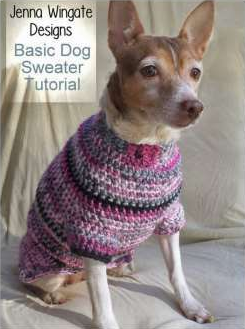
The simple shape lets the yarn do the decorating. In this example, pink, grey and dark stripes run around the body, with a narrow ribbed collar framing the neck. The half double crochet fabric keeps the construction easy to see as you work.
You begin with a small strip of ribbing, join it into a neckline, then crochet the yoke around its edge. Two side markers help you spread the increases. Once the yoke is deep and wide enough, chains bridge the leg openings and the body continues below them.
Pause before making the leg holes
This is where a measurement check saves a lot of undoing. The yoke needs enough depth to reach between the front legs and enough circumference for the chest. Reaching one of those targets does not mean the other is ready.
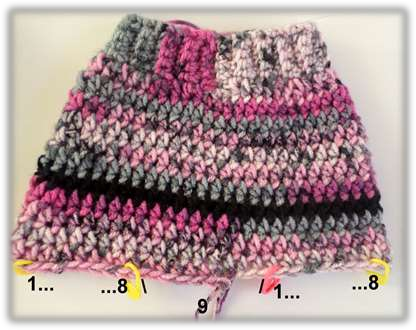
The front span is divided between two openings and the chest bridge. Keep the openings equal, then check their placement against your dog’s shape. A wider chest may need a wider bridge; larger shoulders may need more room in the openings.
2. Multicolour Dog Sweater with Ribbed Trim
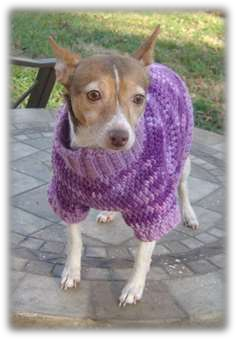
The wide trim gives this sweater a more finished edge without changing the whole fitting method. A solid yarn defines the neckline, lower opening and sleeve cuffs, while the body can use an ombre or multicolour yarn.
Those borders need space. You stop the plain body and back section early enough to allow for the trim, then check the length again after it is added. The exact allowance depends on your yarn, hook and finished edging, so a small trim trial is useful.
Keep the corners above the stitch repeat
The lower ribbing alternates front-post double crochet with half double crochet. Around a corner or inward curve, shaping matters more than forcing a perfect alternation. Mark the turns before starting the ribbed round and compare the two sides as you go.
This is a good next project once you understand the basic yoke and leg openings. The guide includes the shared construction, the wider trim and the matching cuff route, with the turning-chain clarification called out where it matters.
3. Folded-Collar Polo Dog Sweater
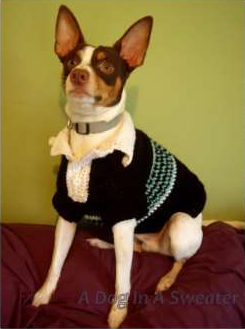
A pale folded collar changes the whole look of this dark sweater. A contrasting band across the body adds another detail, but the collar and placket are the main pieces to concentrate on.
The collar is made in stages. First comes the neck band and fold-over section; the yoke starts before the two placket edges are finished. Joining those edges at the bottom turns the open front into a complete body ring.
Choose the opening before you crochet
The pictured sweaters use buttons. Decide whether that finish suits your dog before making buttonholes. A partly sewn opening with embroidered details is a proposed alternative, but it still needs enough room for comfortable dressing. Check the actual opening and the security of any fittings.
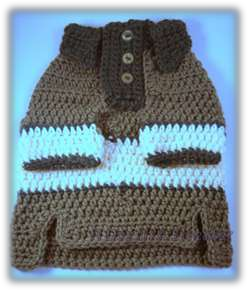
The polo also treats the lower front and back as separate short panels. That gives it a different hem from the basic pullover. The guide includes the complete simple-placket route and its shared fitting steps, so you can follow the whole sweater in one download.
4. Colour-Block Crochet Dog Hoodie
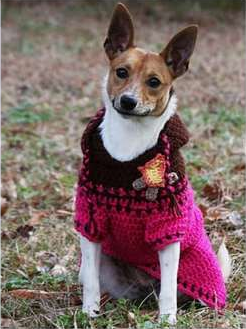
The hoodie uses two colours and a narrow textured transition to break up the body. Its hood is made after the sweater, picking up stitches from the collar’s free edge. That order lets you check the body before adding the final shape around the neck.
The accent rows mix single crochet, chains and half double crochet. Their height and stretch differ from the plain body rounds. Measure the block as you make it instead of assuming five rounds will always fill the same distance.
Let the hood rest behind the head
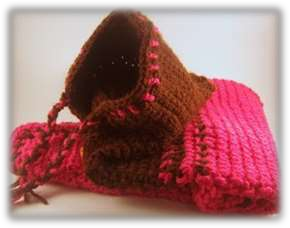
The hood is ornamental. Keep it behind the head, with the eyes, ears, nose and mouth clear, and check that it does not pull on the neckline. The photos show decorative braids; the guide offers an untested no-braid finish with all yarn tails woven in.
Choose this style when you want to practise colour changes and a different neckline construction. It shares the fitted body method with the pullover, with its own joined yoke rounds, accent sequence and hood instructions.
Take these measurements before choosing a size
Record the neck where the collar sits, the fullest chest circumference, the distance from the lower collar edge to between the front legs, and the centre-back length to the tail base. Also check head passage and the space your dog needs around the legs and elbows.
Use the same starting point when checking length throughout the project. A back endpoint already measured from the collar should not have the yoke length added again. The guides explain their measurement convention and provide a place to record the counts you actually use.
These are measure-as-you-go patterns, rather than a set of small, medium and large sizes. The worked example in the basic reference belongs to one dog. It does not establish a fit for every dog with a similar weight or breed.
Yarn, hooks and a useful trial
Medium-weight yarn is the starting point for the collection. Use the hook suggested for your actual yarn, then check the fabric and measurements. The basic example uses a 5.5 mm body hook and a 4 mm collar hook; those are example choices rather than a rule for all four sweaters.
Make separate trials for the body and ribbing. Finish them as you intend to care for the sweater, let them dry and measure again. A trim or accent-row trial is helpful for the multicolour sweater and hoodie, where the fabric changes between sections.
Yarn quantity depends on the dog, the fabric and the style. No single measured yardage is supplied for the collection. Keep a record of what your own sample uses before planning another size.
Comfort checks while you work
A dog that needs an extra layer should still be able to walk, sit and toilet normally. Check the underarms, neckline and sleeve ends for pulling or rubbing. Remove the sweater if the dog bites or scratches at it, rubs against furniture or appears uncomfortable or too warm.
Keep the real collar or harness accessible. An optional crochet opening lets you reach the equipment beneath; the crochet itself is not a place to attach a lead. If you are unsure whether a sweater is suitable for your dog, ask your vet.
Supervise wear and remove the sweater for rough play, crating, sleep or time alone. Follow the actual yarn and trim labels for cleaning, then recheck the fit after drying. Crochet fabric is not automatically waterproof or windproof.
Questions before you start
Are these four completely separate constructions?
They are four sweater styles built on one shared fitting concept. The collars, trim, plackets and hood change the making route. Alternate colours and bonus accessories are not counted as extra sweater patterns.
Which one should I make first?
Start with the basic pullover if you want to learn the yoke, leg openings and back shaping without the extra collar or colourwork stages. You should already be comfortable with chains, single crochet, half double crochet and turning your work.
Can I use the free PDF without another guide?
Yes. Each download includes the core steps its style needs, along with the relevant reference pages. The basic guide also retains the bonus stitch, collar, sleeve, hem and appliqué references.
Are the added changes tested?
The measurement explanations, stitch-count clarifications and alternative finishes have not been physically crocheted or fitted as a new sample. Use them as a draft to check, record your counts and verify the fit at each stage.
Can I make a dog hoodie without braids?
The guide includes that proposed finish. Secure and weave in the yarn tails instead of leaving them for braiding, then check the hood and neckline on your sample.