
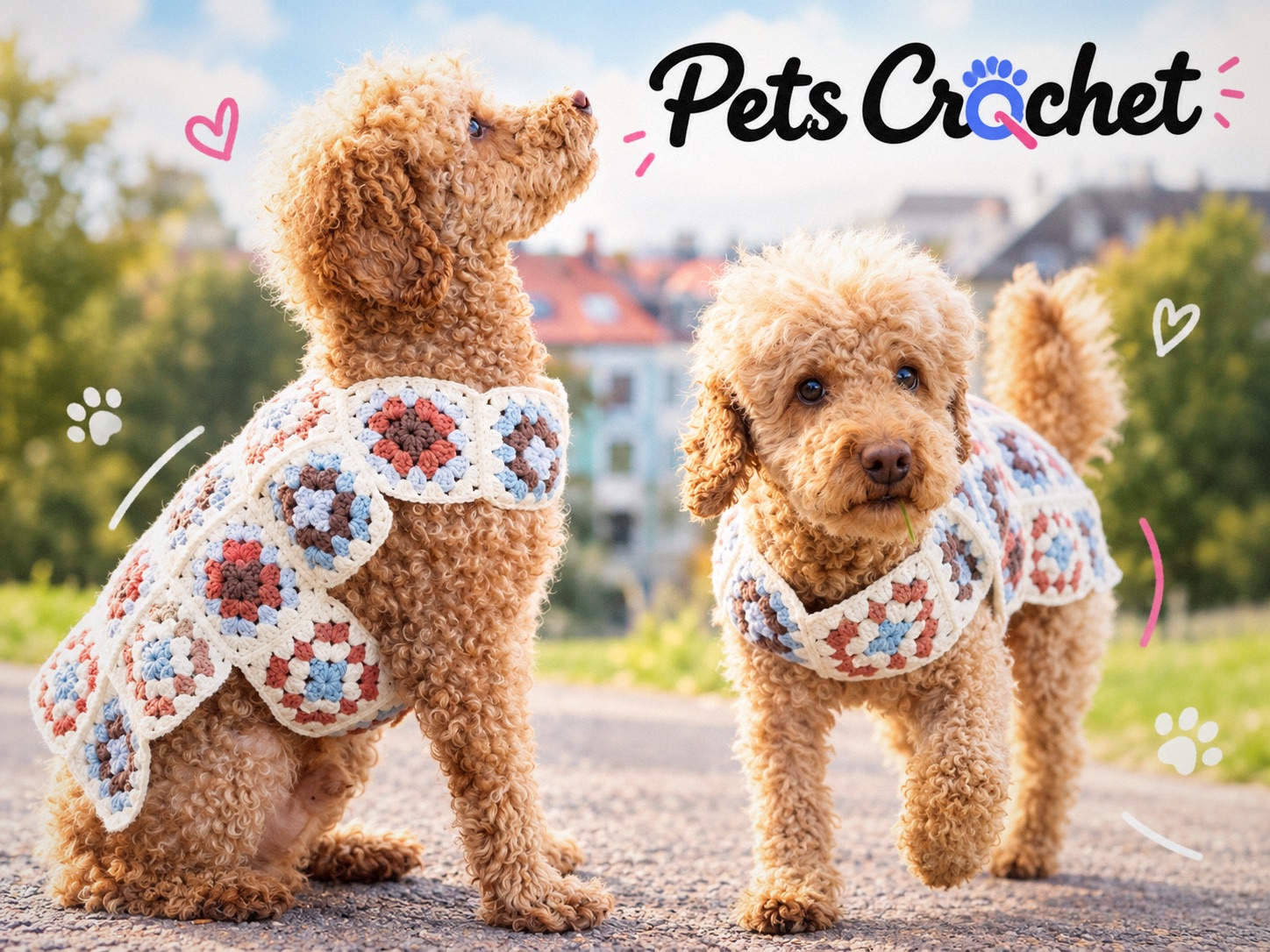
Rust, chocolate and blue centres sit inside an off-white grid in this crochet dog sweater. The granny squares make a light, open coat that rests over the back, with separate sections around the chest and belly. It has no fitted sleeves to work around the legs.
1. A Granny Square Dog Coat with Buttoned Belly Sections
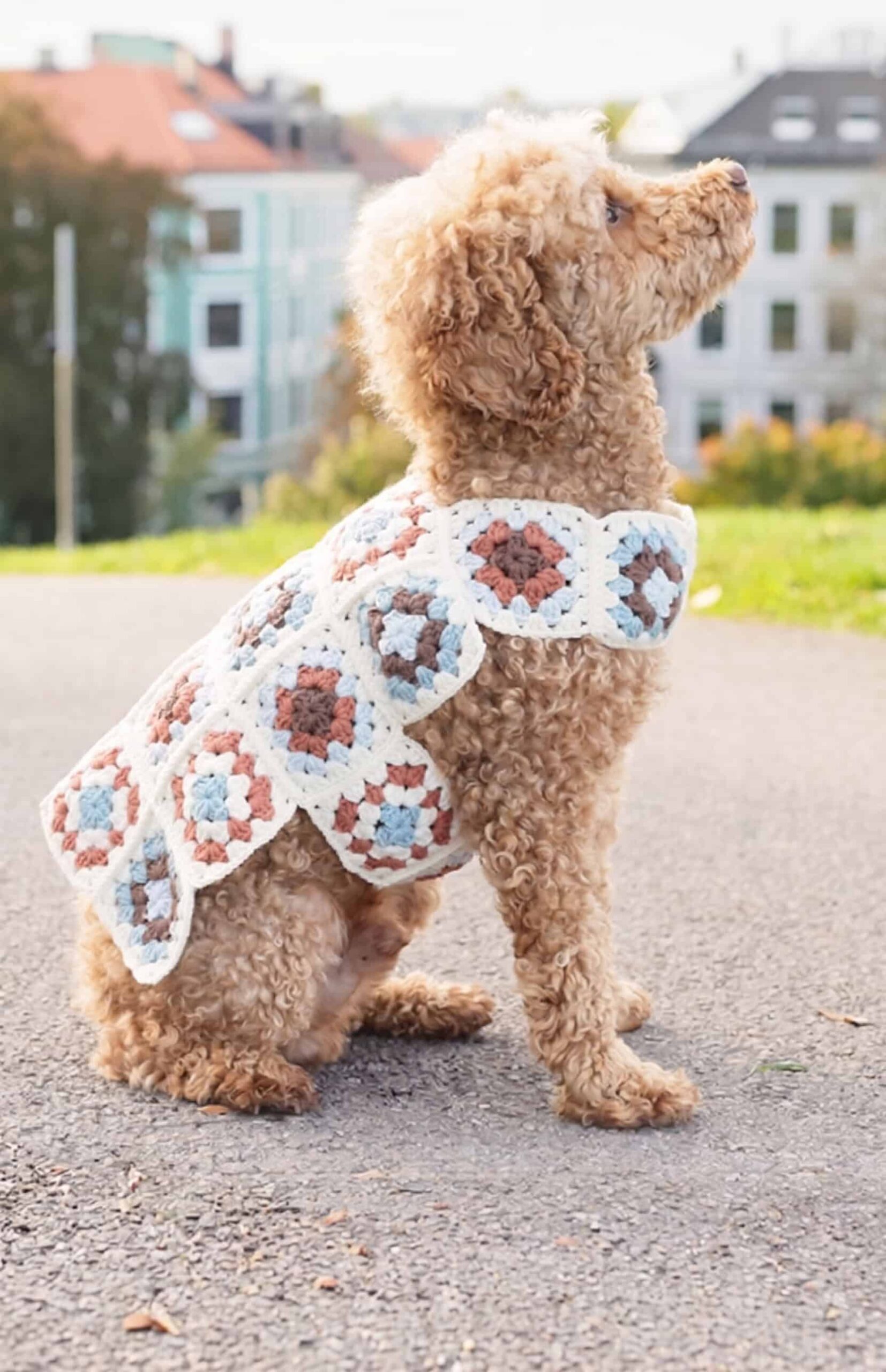
The appeal is in the patchwork. Each square uses a short colour sequence, while the pale outer rounds and joining yarn bring the different centres together. You can make the squares one at a time and lay them out before committing to the seams.
The free PDF contains the square charts, four size layouts and assembly directions. This prepared guide has not been independently crocheted, washed or fitted to a dog. Begin with a square sample and check the coat on your own dog as you assemble it.
Four sizes use two square sizes
XS and S use three-round squares measuring about 6 cm. M and L use four-round squares measuring about 8 cm. The layouts call for 13, 21, 22 and 27 squares respectively. These are size options for one coat, not four separate designs.
The reference lengths are approximately 24, 33, 48 and 56 cm. Treat them as pattern references rather than breed guarantees. The M chart also has a dimension mismatch, explained in the PDF, so a paper layout and an actual fitting are particularly useful for that size.
The front and belly need their own fit check
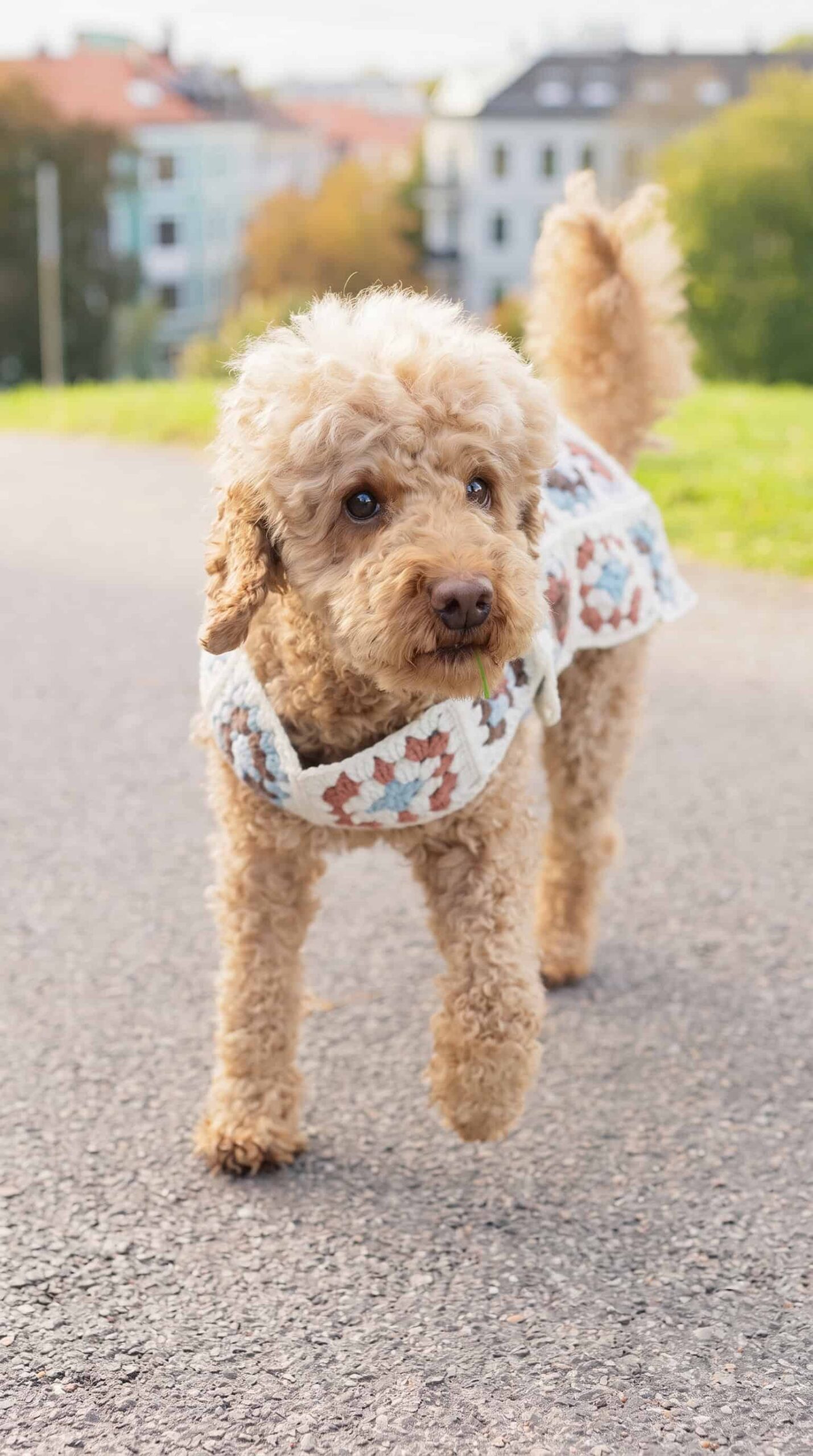
The main rectangle covers the back. Additional squares make the neck section and the belly strap. Buttons fasten through spaces in the granny squares, giving some placement choice without a separate buttonhole band.
That flexibility does not replace measuring. Check where the band sits behind the front legs and whether the dog can walk, sit and toilet normally. If a corner or seam rubs, change the sample layout before finishing it. Keep small buttons secure and remove the coat if it catches, shifts or bothers the dog.
Plan the colour order before joining
There are four colour recipes in each square size. The larger squares add another round, so their colour order differs from the smaller ones. Separate the finished squares into numbered groups and compare them with the chosen layout before seaming.
Use off-white for the joins and keep the seams relaxed. A tight seam can draw a square smaller even when the square itself measured correctly. Assemble the back first, then pin the chest and belly sections where they fit the actual dog.
Yarn, hook and gauge
The reference uses DROPS Merino Extra Fine and a 3.5 mm starting hook. The supplied gauge is 20 UK trebles across 10 cm and 10 rows over 10 cm. In US terms, those trebles are double crochets. The PDF keeps that distinction clear so you do not accidentally make taller US treble stitches.
Measure the actual square as well as your swatch. Check it relaxed, then sample cleaning according to the actual yarn label and measure again when dry. The prepared guide has no verified washed gauge or care result.
Measure before choosing a layout
Record the desired back coverage, neck opening and chest circumference behind the front legs. Lay out paper squares at the proposed finished size to see where the straps will land. The diagram widths describe flat assemblies; they are not a complete table of dog chest measurements.
Adding or removing a whole square changes coverage substantially. If you alter the number of squares or strap position, treat it as a new fitted sample and record the change. Decorative crochet is not restraint equipment: attach the lead to a separate appropriate harness or collar, keeping access and any release mechanism clear.
Questions before you start
Is this a pullover sweater?
It is a coat or blanket-style jumper assembled from squares, with a neck section and buttoned belly closure. It does not have fitted sleeves or the same construction as a shaped pullover.
Can I choose by dog breed?
Use measurements and the actual sample. Breed examples cannot account for an individual dog’s proportions, coat or comfort.
Does the download include every size?
Yes. One guide includes both square charts, all four assembly diagrams, colour recipes, materials and finishing. The original photos and chart markings remain visible.
Does every dog need a sweater?
No. Consider the individual dog and conditions. Only use clothing that the dog tolerates comfortably, with normal movement and toileting. This open crochet coat has no verified waterproofing or warmth rating.