
A small handmade detail can make an ordinary pet photo feel personal. That is the charm of crochet pet accessories: a little yarn can become a soft bandana, a collar cover, a bowl mat or a label for the toy basket. The project does not need to be complicated to feel special.
This list grew from real-looking home photographs rather than a perfectly matched catalogue. Some ideas are worn briefly for a portrait. Others belong in the pet’s space, where they can add colour without asking the animal to tolerate another garment. I have kept the construction notes practical and called out the places where a photo cannot prove gauge, hidden seams or fit.
Pet-first rule: Crochet wearables shown here are decorative accessories for brief, supervised use. They are not collars, leashes, harnesses or restraint equipment. Remove them before sleep, crating, rough play or unsupervised time. For cats, keep a real breakaway collar underneath and leave its release mechanism clear.
Before You Choose a Crochet Pet Accessory
Start with the pet, then choose the yarn. Smooth washable cotton is usually easier to inspect than fuzzy novelty yarn, and flat buttons are easier to secure than heavy charms. Measure the individual neck or object instead of relying on a breed label. A photo can suggest a shape, but it cannot tell you the exact stitch count, yarn stretch or hidden finishing work.
Four checks before making the full piece
- Measure: Use a soft tape and leave comfortable ease. Never make a wearable tight around the throat.
- Swatch: Wash a small sample to check shrinkage, stretch, shedding and colourfastness.
- Finish: Weave tails deeply, sew motifs through several points and remove every loose loop.
- Test: Fit a prototype on a stuffed form first, then on a relaxed pet for a short supervised check.
Materials that keep the photos practical
A smooth washable cotton or cotton blend, a hook that gives a firm swatch, a soft tape measure, scissors, a blunt yarn needle and a removable real collar cover most of these ideas. Use flat buttons only as securely sewn decoration. For a cat, keep the functioning breakaway collar underneath and never cover its release point.
15 Crochet Pet Accessories to Save for Later
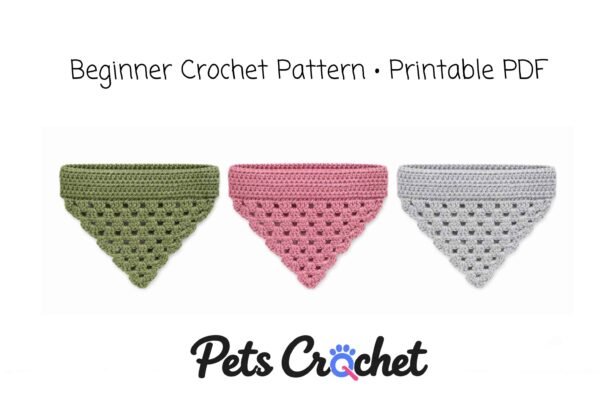
1. Dusty-Rose Crochet Pet Bandana
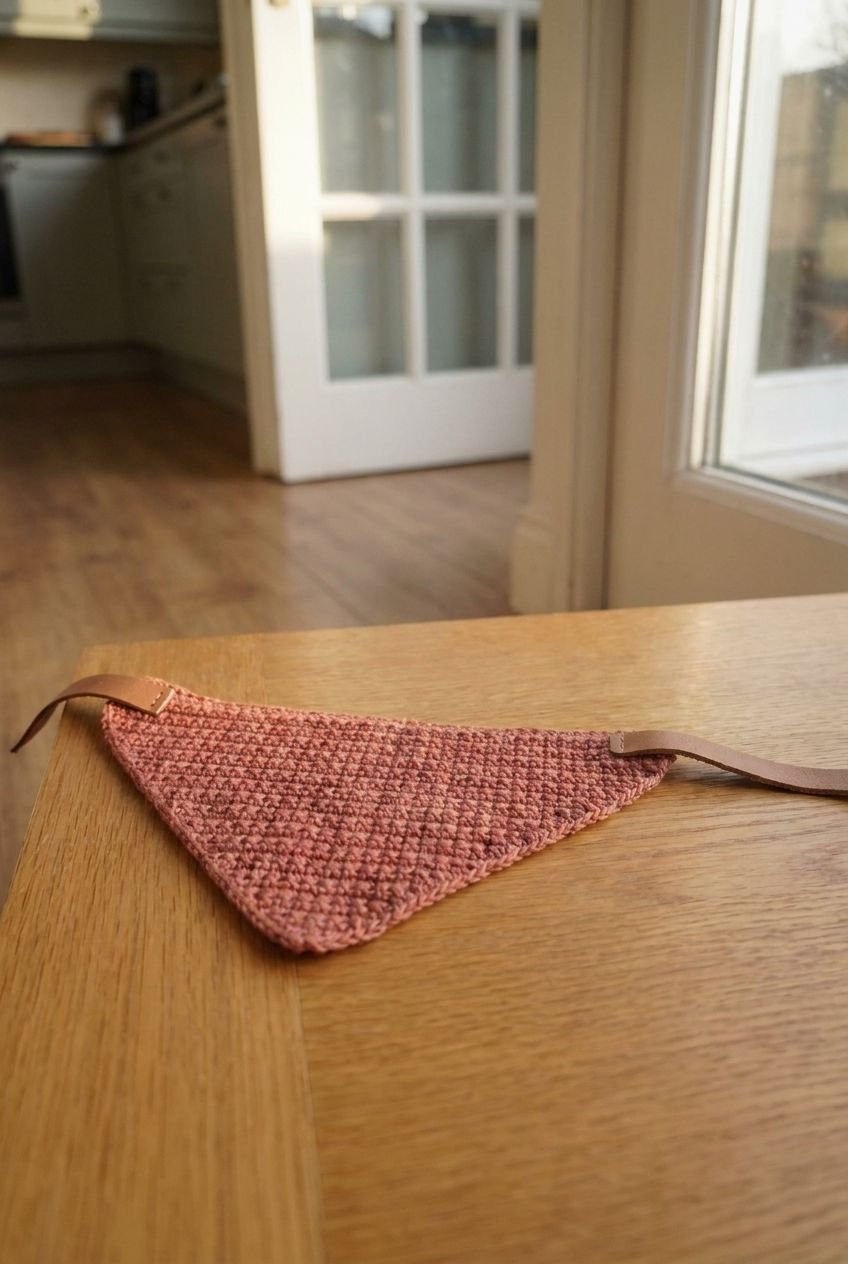
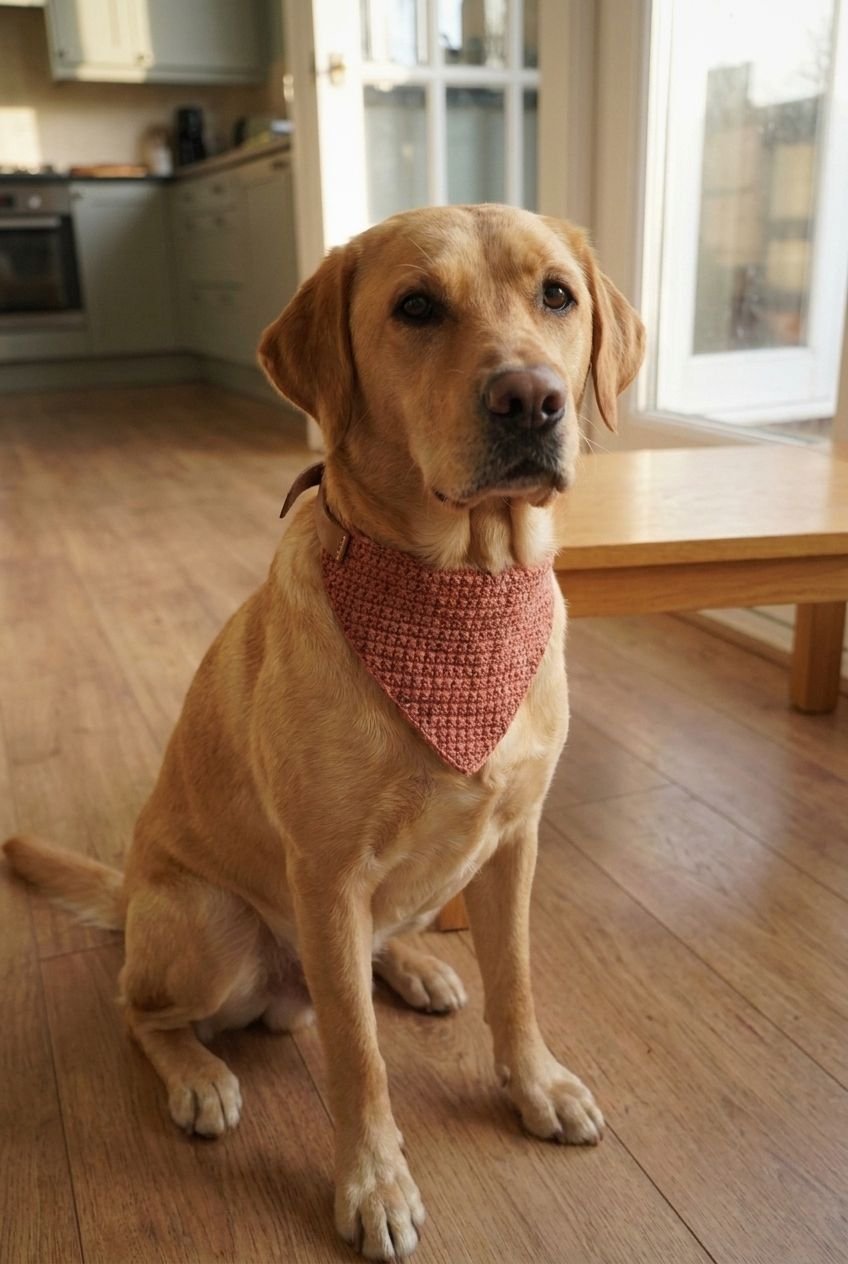
A small triangle bandana is one of the easiest ways to add handmade color without covering much of the body. Use smooth cotton, keep the ties short and choose a shallow point that cannot reach the pet’s mouth.
Photo-matched construction
Measure the dog’s neck where the top edge will sit. Swatch a dense single-crochet or half-double-crochet fabric, work a flat triangle with controlled edge shaping, then add a firm border and short sewn tabs or a slide-through collar channel.
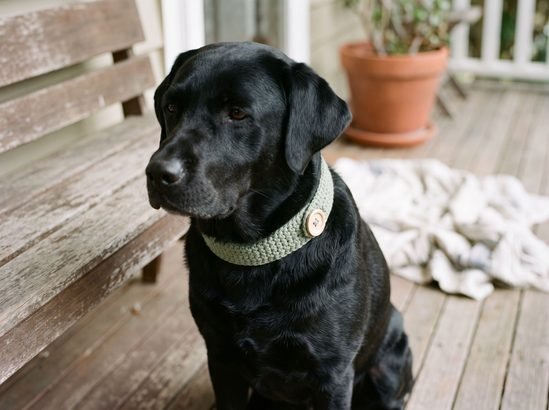
2. Sage Crochet Collar Cover
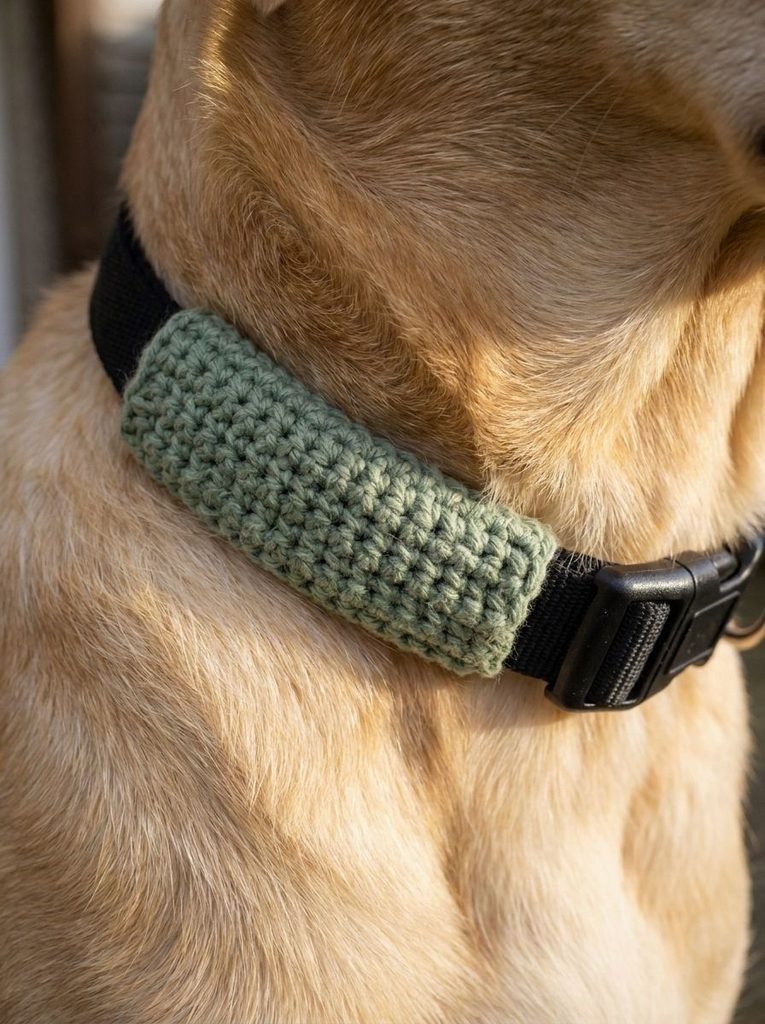
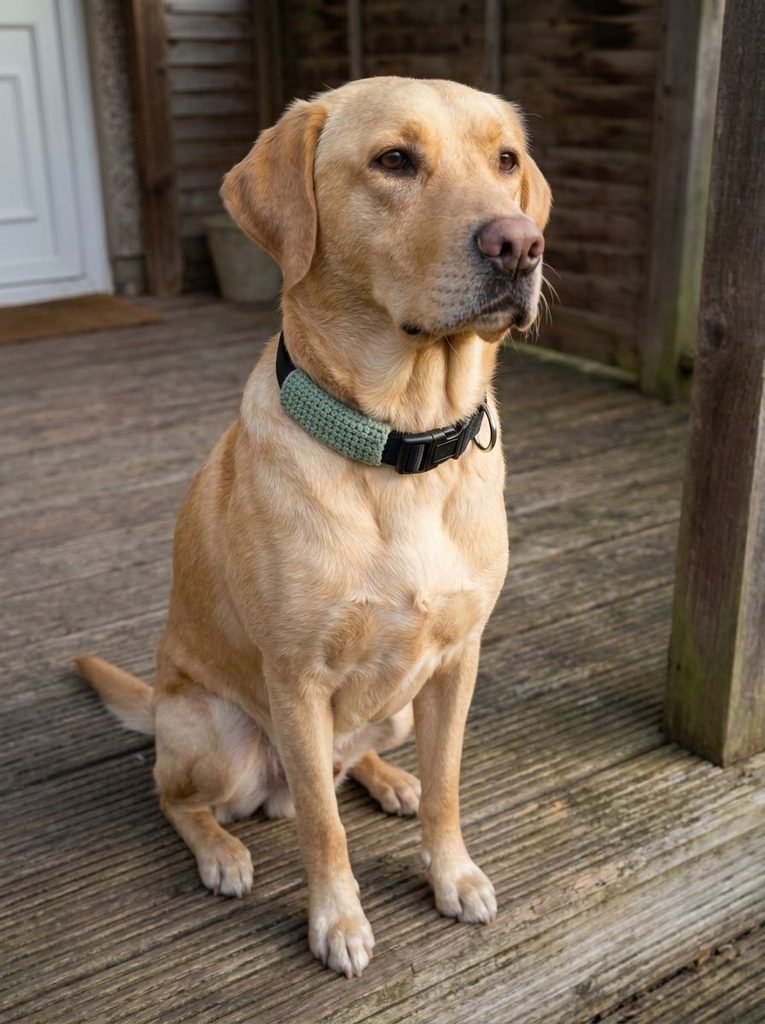
Instead of replacing a safety collar, crochet a narrow sleeve that slides over part of it. Leave the buckle, adjustment slider, D-ring and cat breakaway mechanism completely uncovered.
Photo-matched construction
Measure the real collar’s length and width. Crochet a narrow rectangle in tight single crochet, join the short ends into a sleeve and slide the real collar through before trimming any ends.
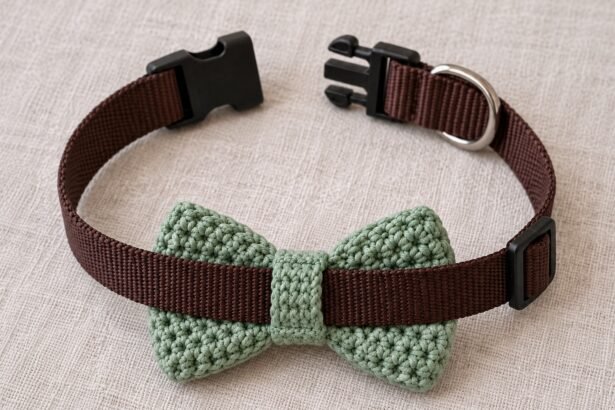
3. Navy Crochet Bow Tie
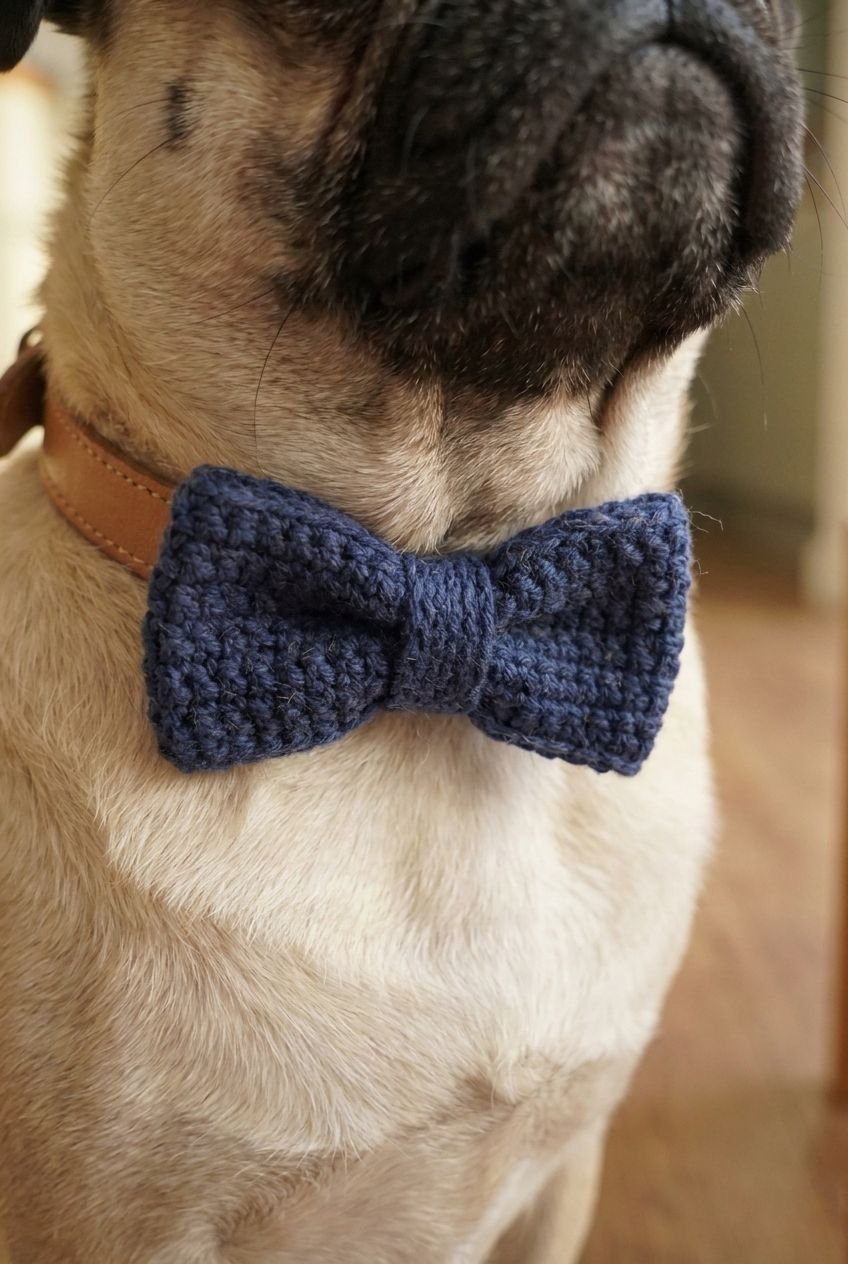
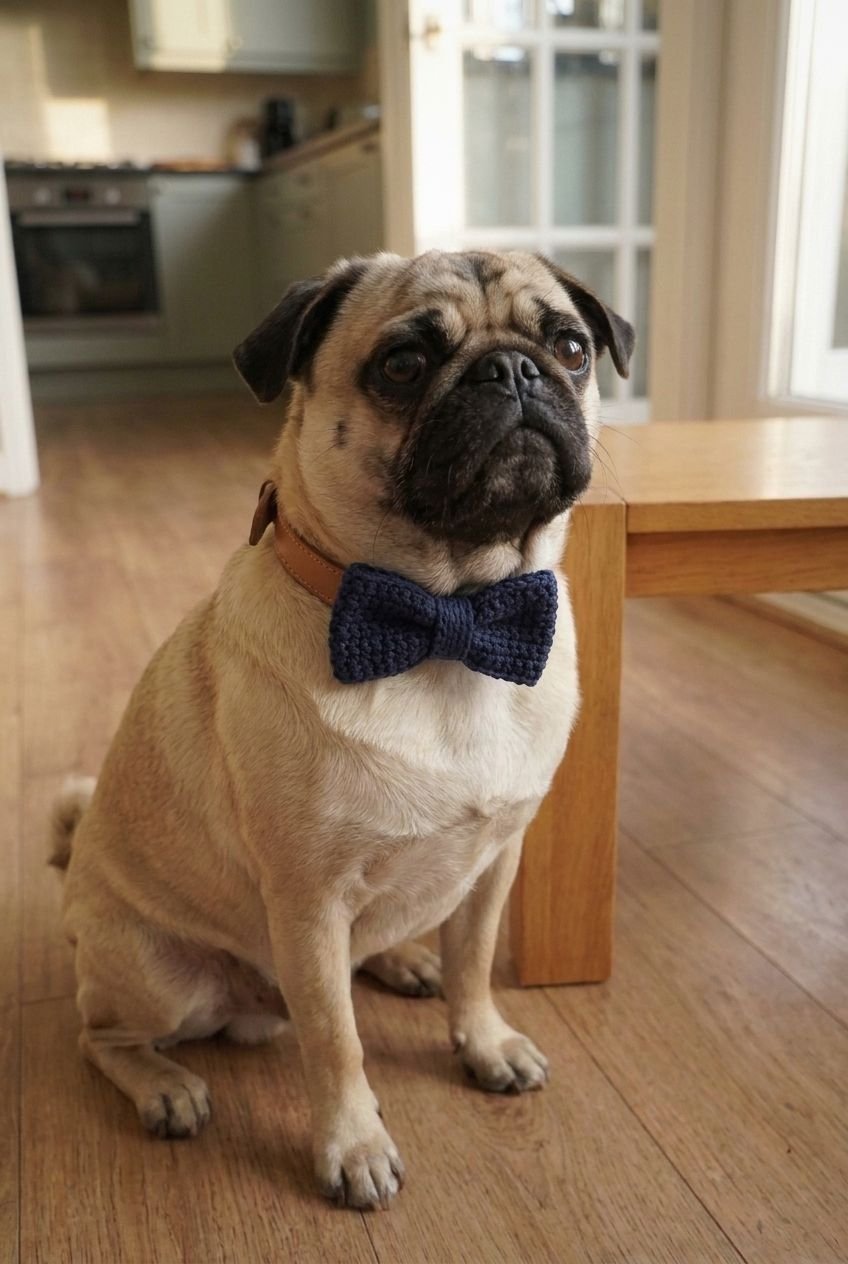
A compact bow tie can attach to a real collar with two snug elastic loops. Dense stitches hold the shape better than loose lace, and a soft center wrap keeps the back flat.
Photo-matched construction
Crochet one dense rectangle for the bow, pinch the centre and wrap it with a second small rectangle. Sew two flat loops to the back so it slides over a real collar.
4. Aqua Flower Collar Cover for a Cat
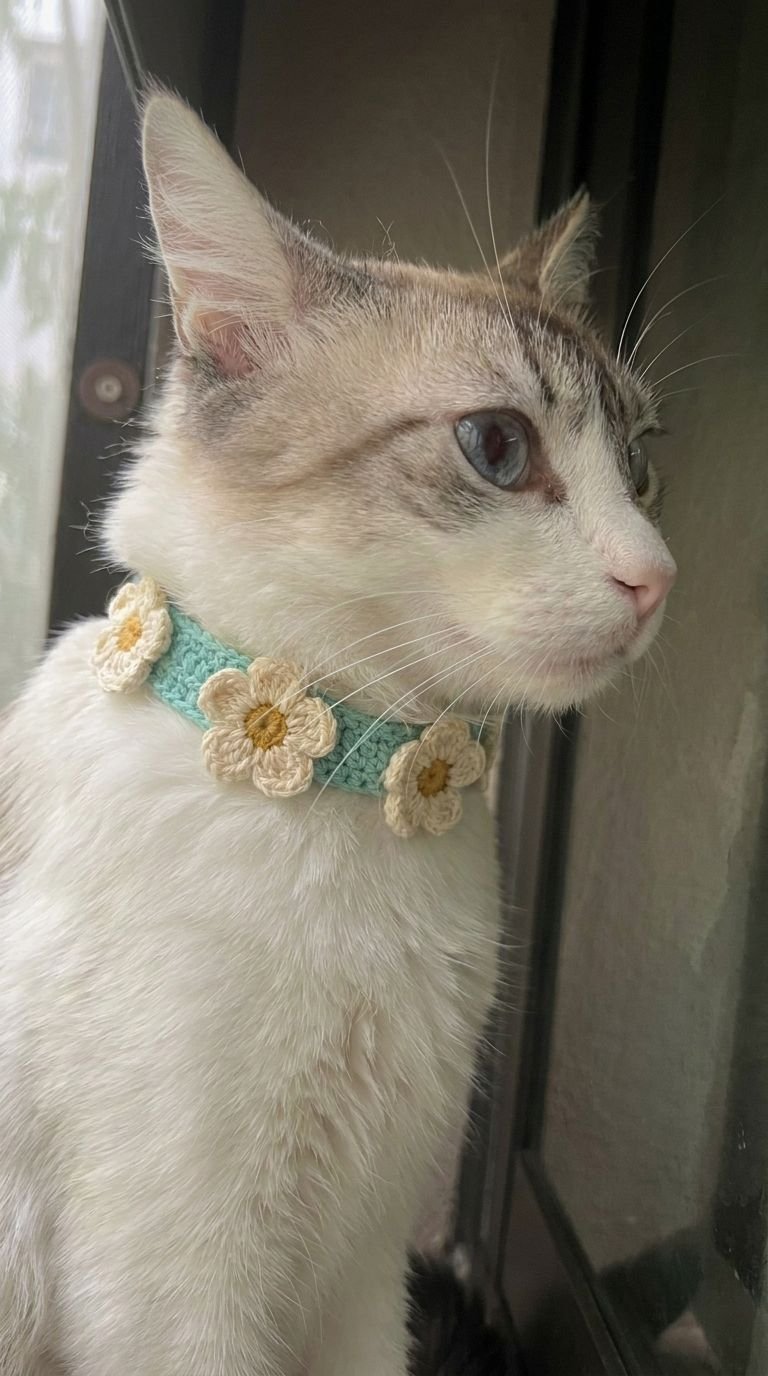
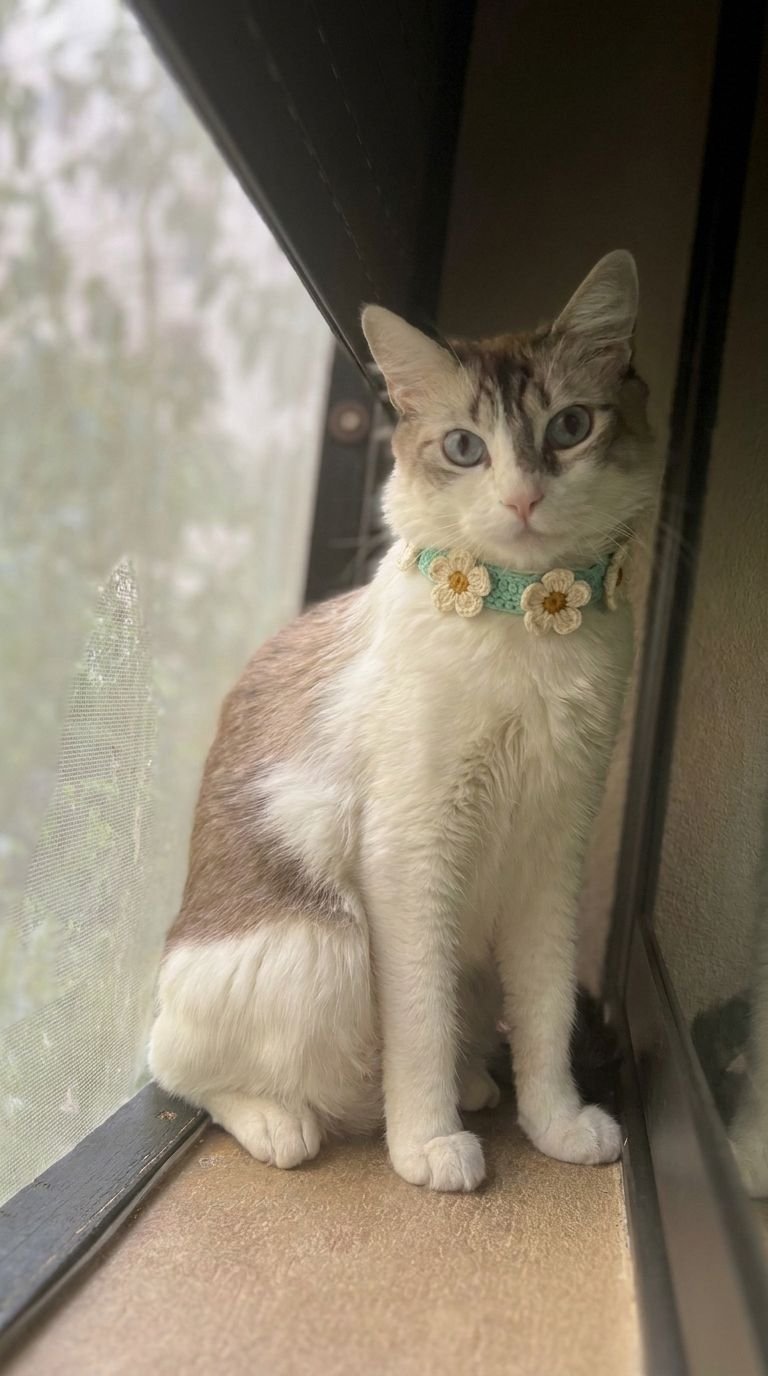
A flat five-petal flower adds a gentle spring detail to a collar cover or bandana. Sew through the center and every petal rather than relying on one loose attachment point.
Photo-matched construction
Work a narrow mint sleeve in dense single crochet. Make small flat five-petal flowers, then sew each flower through its centre and petals so no motif can lift or rotate.
Cat note: Keep the functioning breakaway collar underneath and leave its release mechanism clear.
5. Cranberry-and-Cream Winter Dog Snood
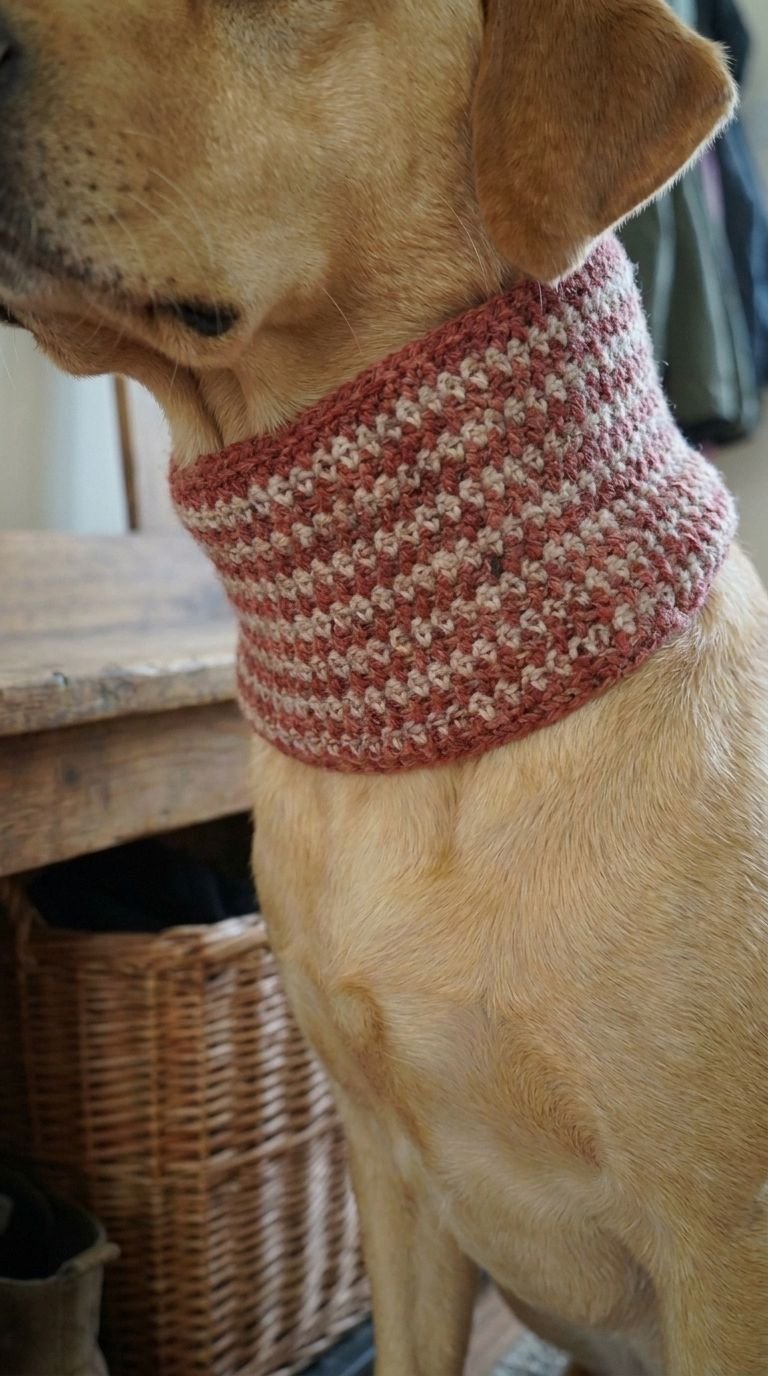
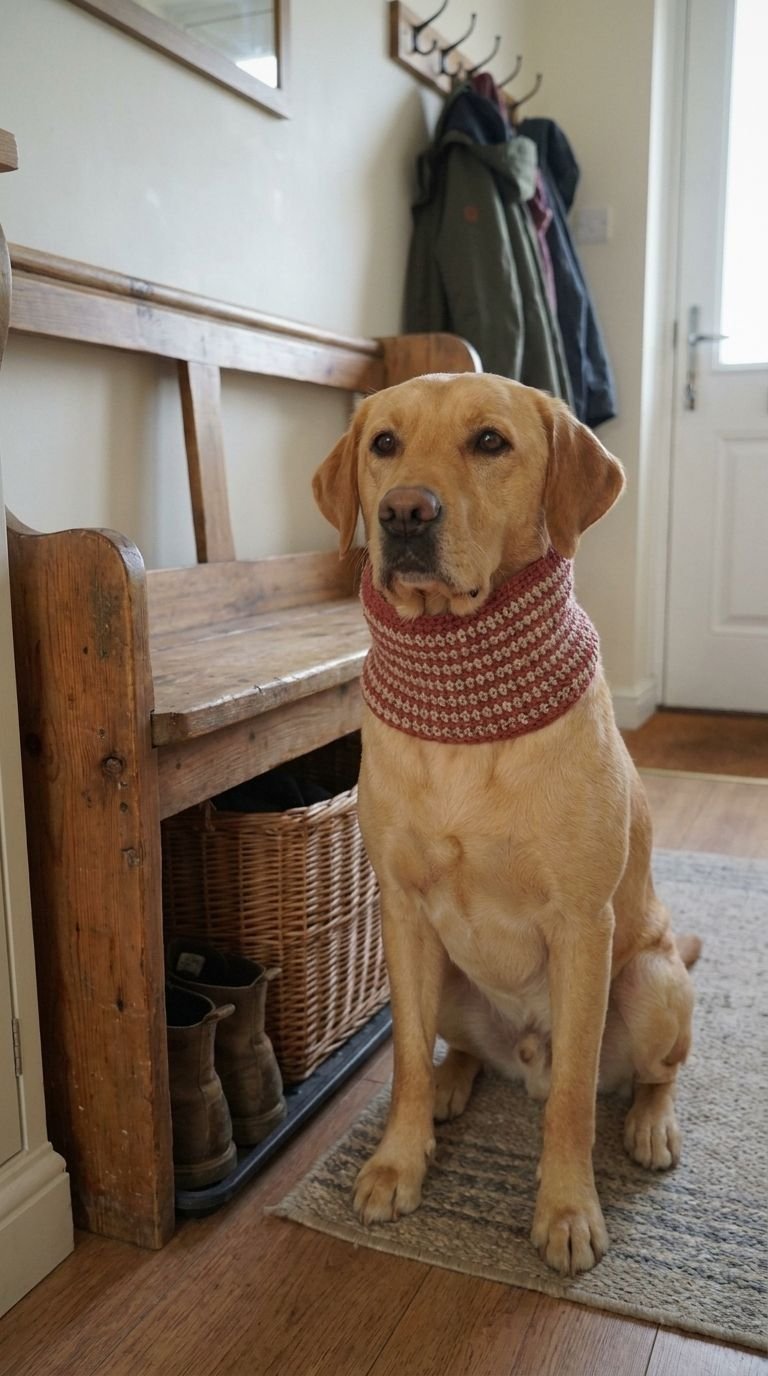
A short snood can warm the neck and help hold long ears back during a quick meal. Choose soft, washable yarn and build enough stretch to pass over the head without compressing the throat.
Photo-matched construction
Swatch the stripe sequence, then work a soft tube or shallow bib in flexible half double crochet. Shape the front point gradually and leave a loose, comfortable neck opening.
6. Aqua Openwork Summer Bandana
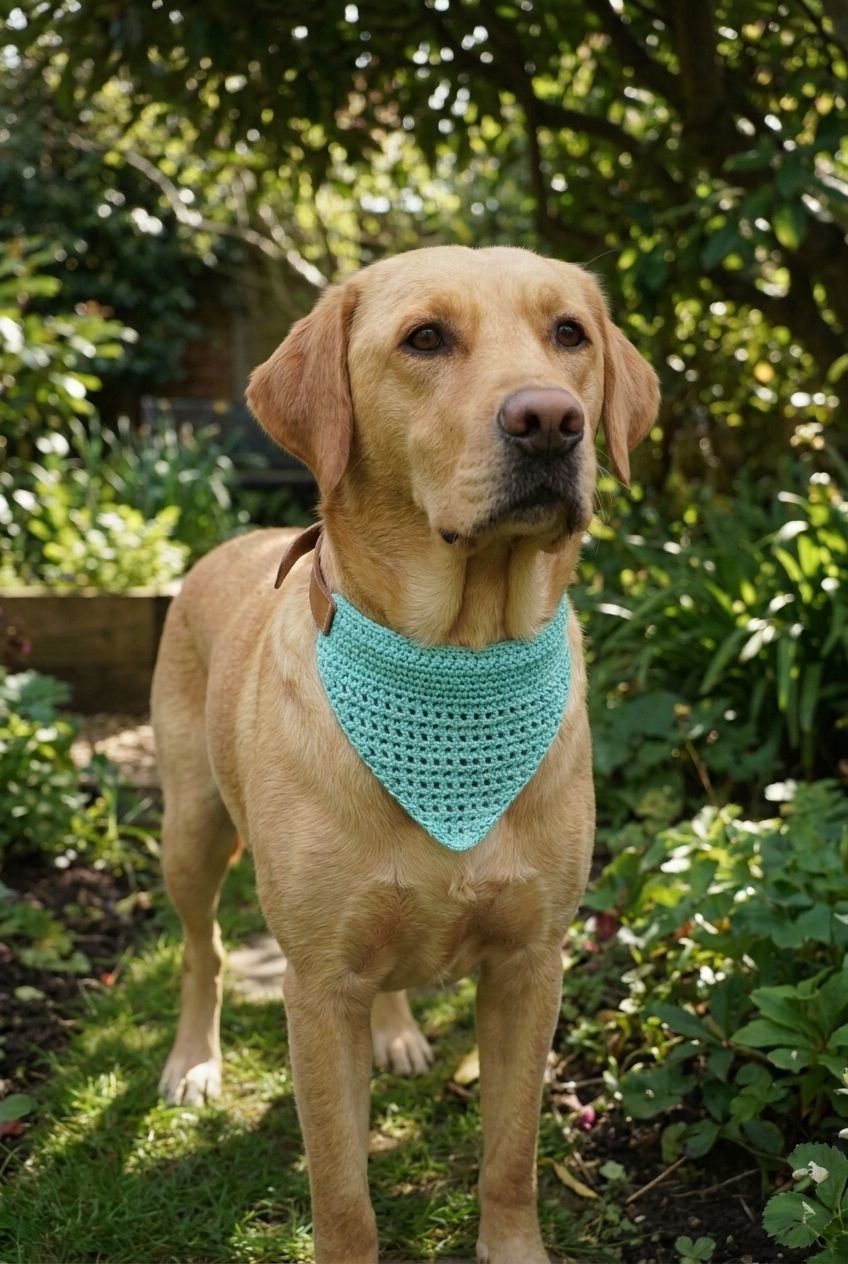
A lightly textured cotton bandana can create a summer look, but it does not cool a pet by itself. Keep the fabric small and breathable, and never soak it unless a veterinarian has advised an appropriate cooling method.
Photo-matched construction
Use smooth cotton and keep the top edge dense for stability. Add restrained chain-space rows only in the lower triangle, then finish with a firm border and short secured tabs.
7. Terracotta-and-Cream Striped Pet Scarf

A short scarf makes leftover yarn useful and photographs well when the stripes are broad and calm. Secure it with a flat loop or buttoned tab rather than dangling ends.
Photo-matched construction
Work a dense triangular or bib-shaped piece in alternating terracotta and cream rows. Add one flat button and a short loop at the side, keeping the lower point rounded.
8. Neutral Textured Pet Blanket
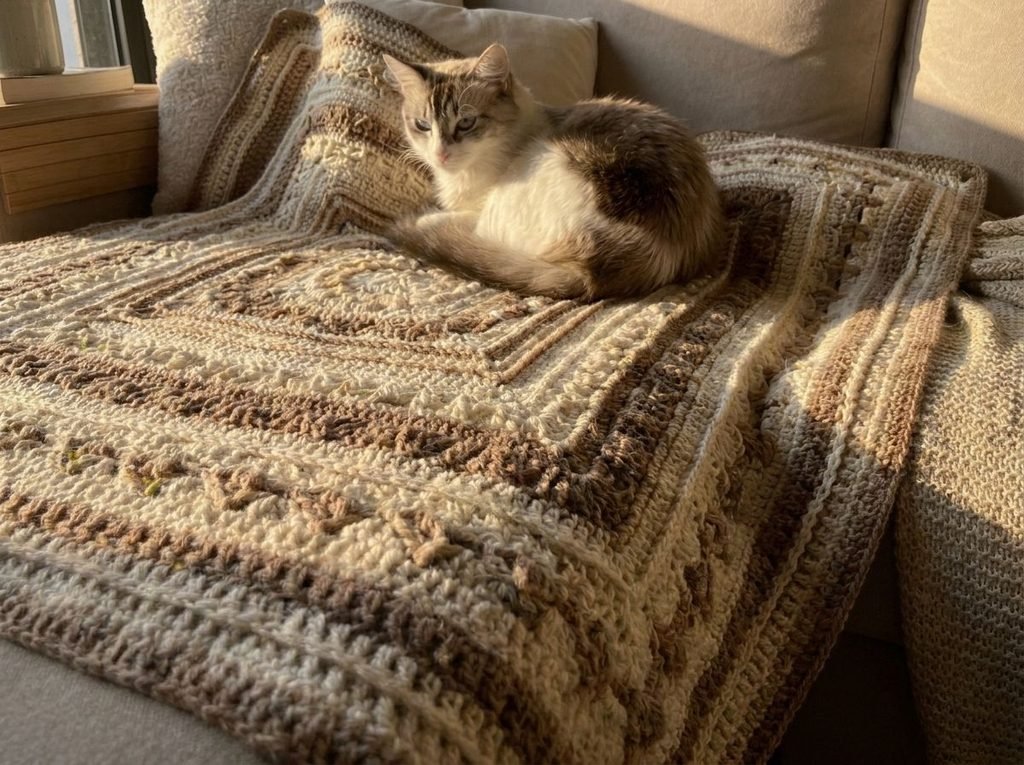
A blanket is an accessory for the pet’s space rather than the pet’s body. The cat photograph shows why this is often the most comfortable option: texture, colour and warmth without a wearable closure.
Photo-matched construction
Choose washable yarns of similar weight and work a flat rectangle in alternating textured rows. Finish with a dense border, weave every end deeply into the fabric and wash before use.
9. Mustard Crate-Corner Crochet Set
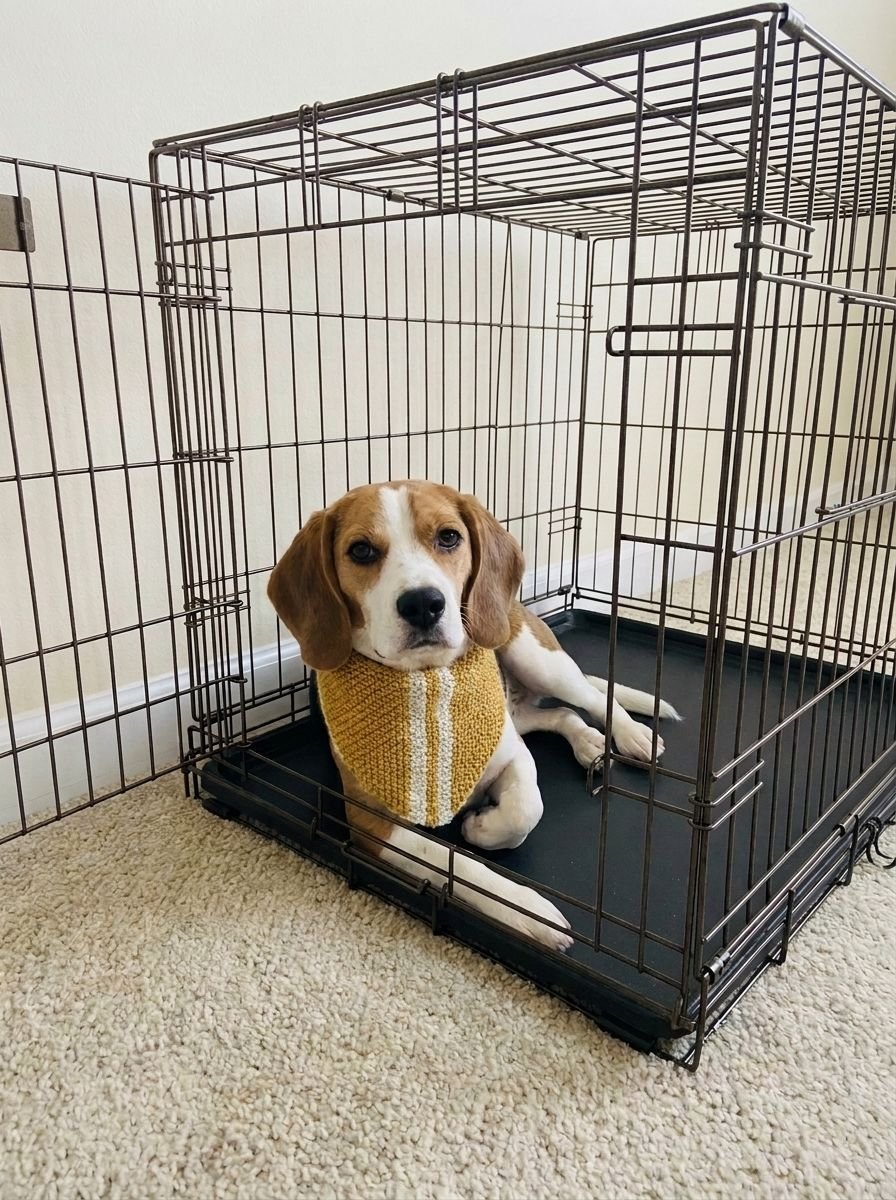
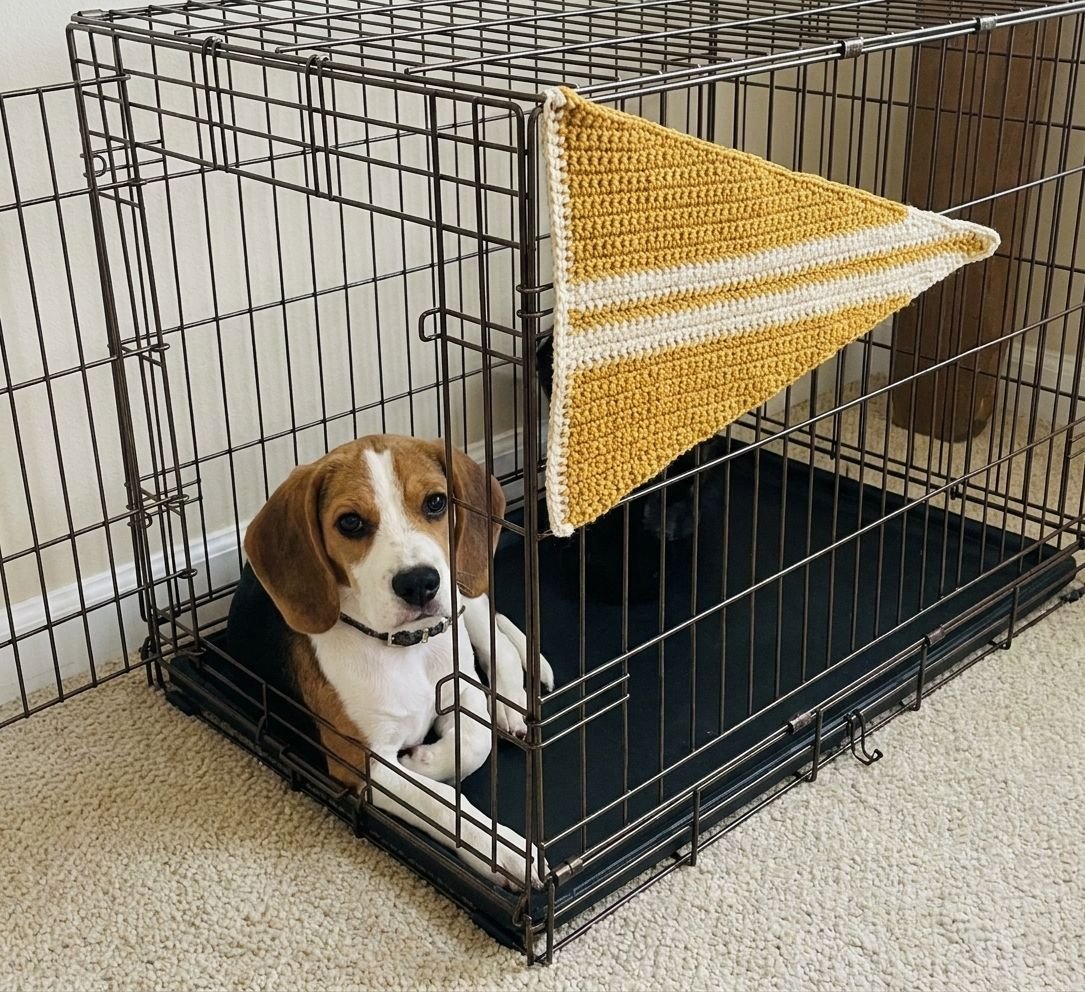
These two photographs work as a colour story for a crate corner: a mustard-and-cream pennant outside the crate and a matching bandana shown only in a supervised portrait. The external pennant is the safer everyday decor choice.
Photo-matched construction
Crochet a dense triangle with a cream border for the pennant and sew it securely to the crate exterior, beyond teeth and paws. If making the matching bandana, measure it separately over a real collar and remove it before crating.
Important crate note: The external pennant may decorate the crate, but any bandana shown on a dog must be removed before unattended crating.
10. Sage Oval Bowl Mat
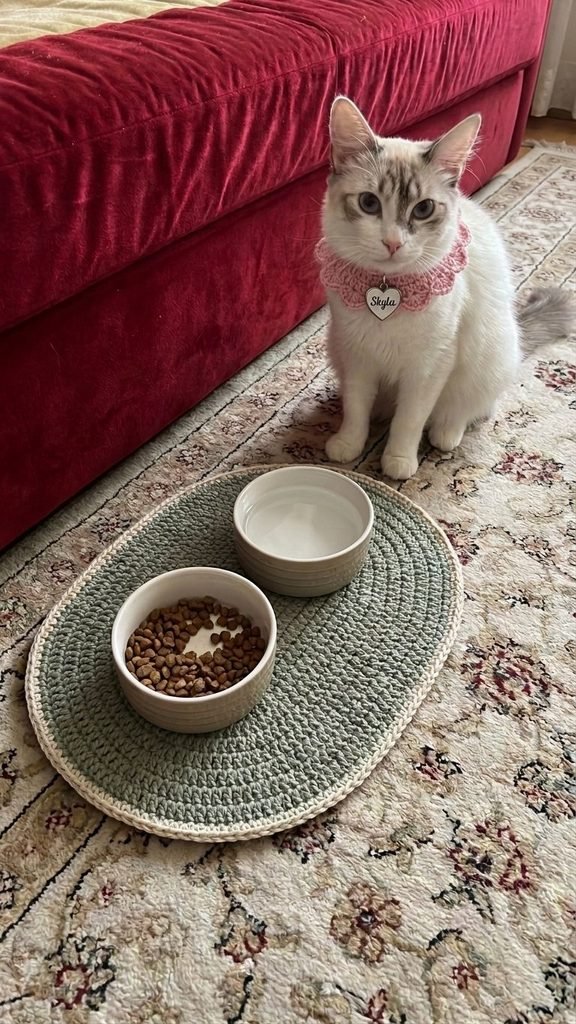
A flat cotton mat catches small splashes and gives a feeding corner a softer look. Dense single crochet and a plain border make washing easier than thick fringe or open motifs.
Photo-matched construction
Begin with a central chain and work an oval in dense single crochet or half double crochet, adding increases at both rounded ends. Finish with one contrasting border round and block flat.
11. WOOF Toy-Basket Label
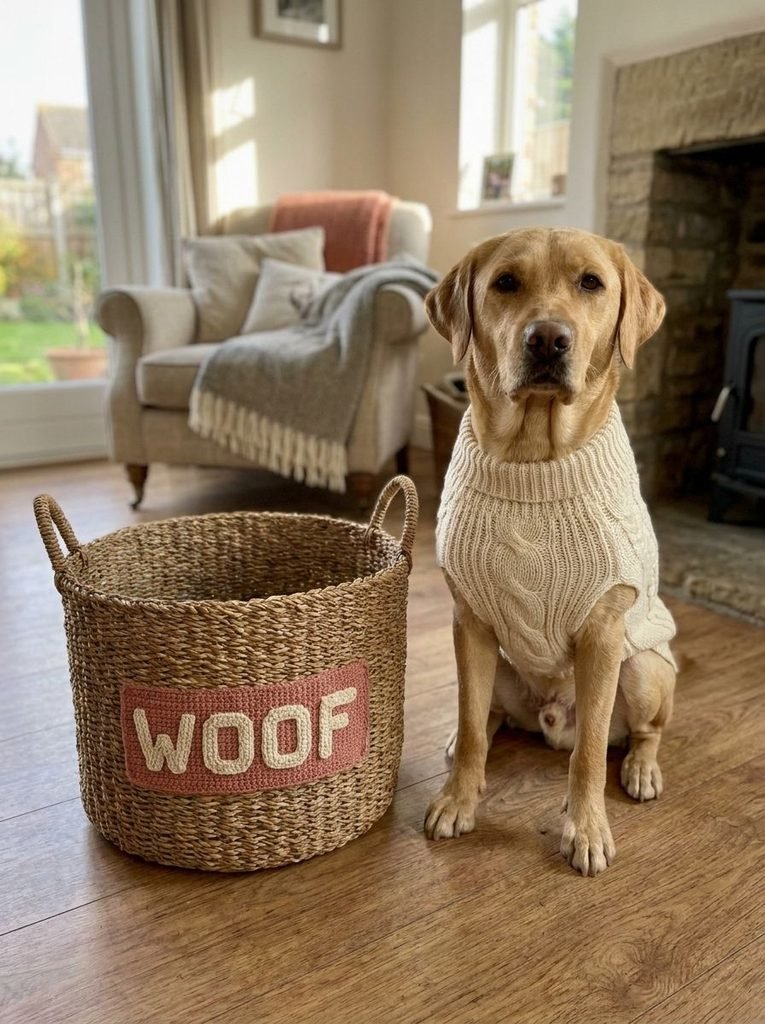
A crochet label or applique can turn a plain storage basket into a pet-toy station. Attach it to the outside and keep the basket itself sturdy and easy to clean.
Photo-matched construction
Crochet a flat dusty-rose rectangle in dense single crochet. Add simple cream block letters with surface crochet or embroidery, then sew the label around every edge to the basket exterior.
12. Green Blanket Storage Strap
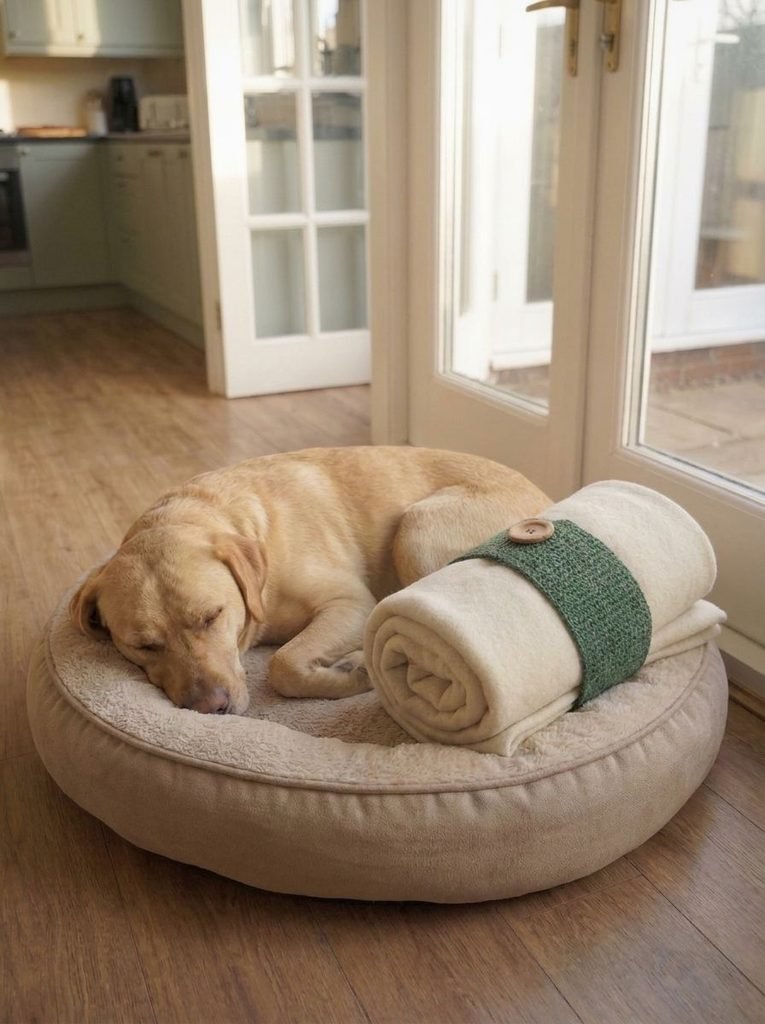
A wide crochet strap can bundle a clean pet blanket for the car or a visit. Use a large flat button or hook-and-loop tape and remove the strap before giving the blanket to the pet.
Photo-matched construction
Crochet a wide dense strip to the measured circumference of the rolled blanket. Add a short button loop and one flat button, test the strap on the roll, then remove it before the pet uses the blanket.
13. Soft Photo-Day Crown Band
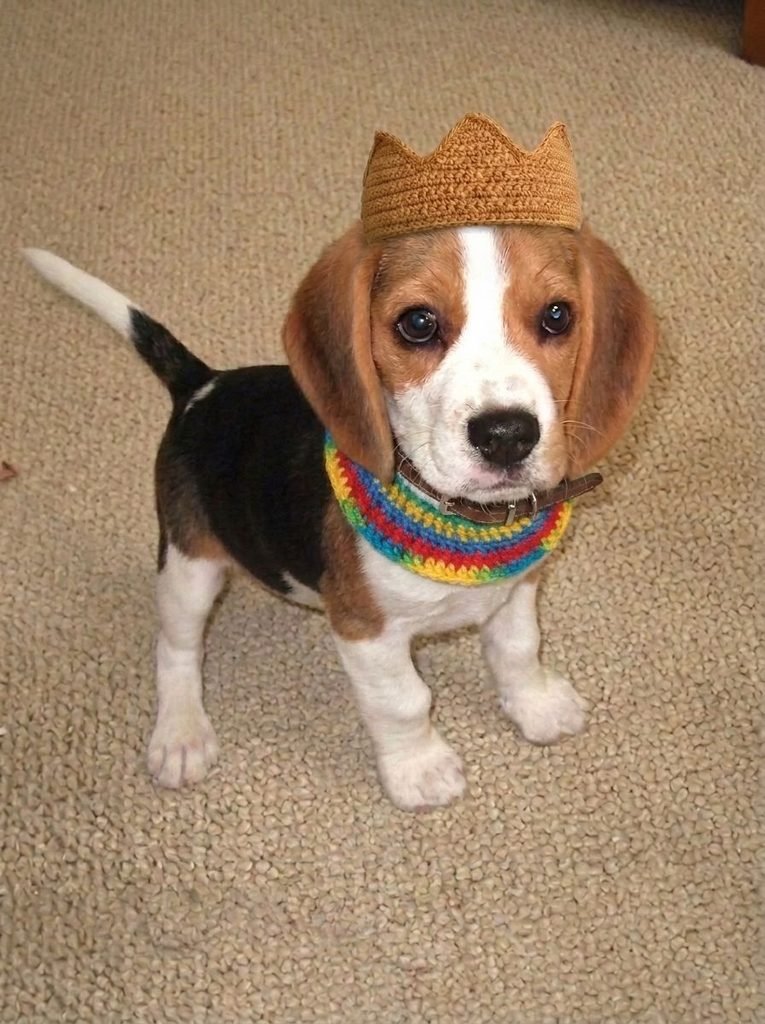
A tiny crown-shaped band is whimsical for one carefully supervised photograph. Work it in soft yarn, avoid wire or stiffener and keep every point low and rounded.
Photo-matched construction
Crochet a short dense head band that stays clear of the eyes and ears. Add three low rounded points along the top edge and use no wire, beads, glue or long chin cord.
14. Cream Neck Warmer with Cranberry Ruffle
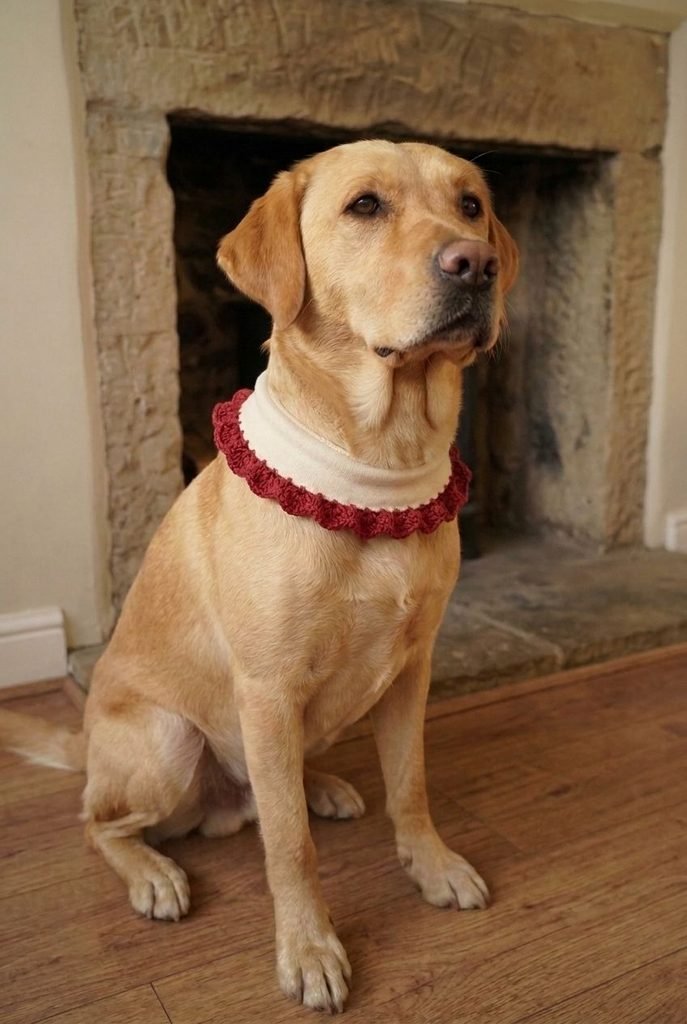
A restrained ruffle can sit on a collar cover and bring in festive color without bells or glitter. Use one shallow row of shells so the piece stays light.
Photo-matched construction
Work a smooth cream tube or bib first, then add one shallow cranberry shell row along the lower edge. Keep shells compact and stop the ruffle before any real collar hardware.
15. Matching Pet Bandana and Human Headband
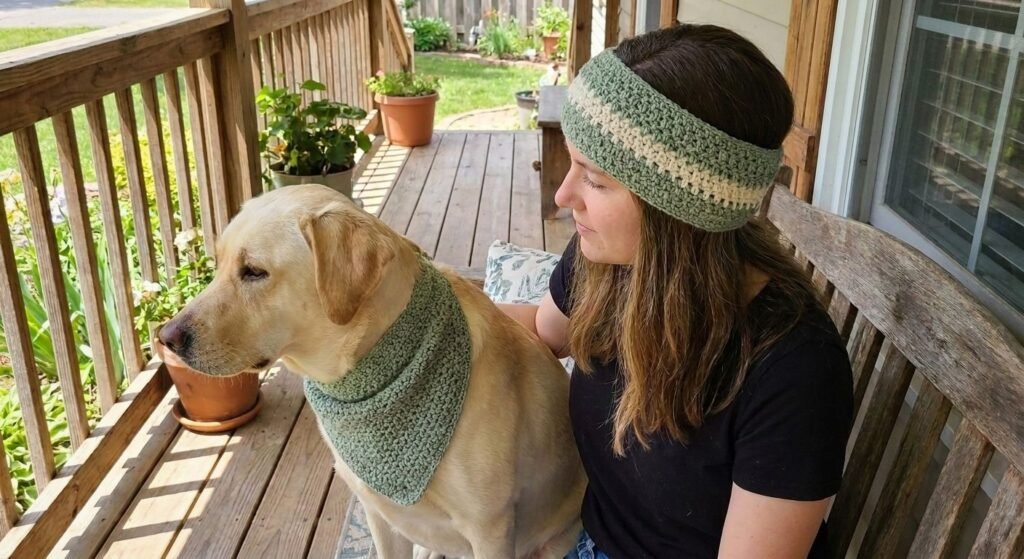
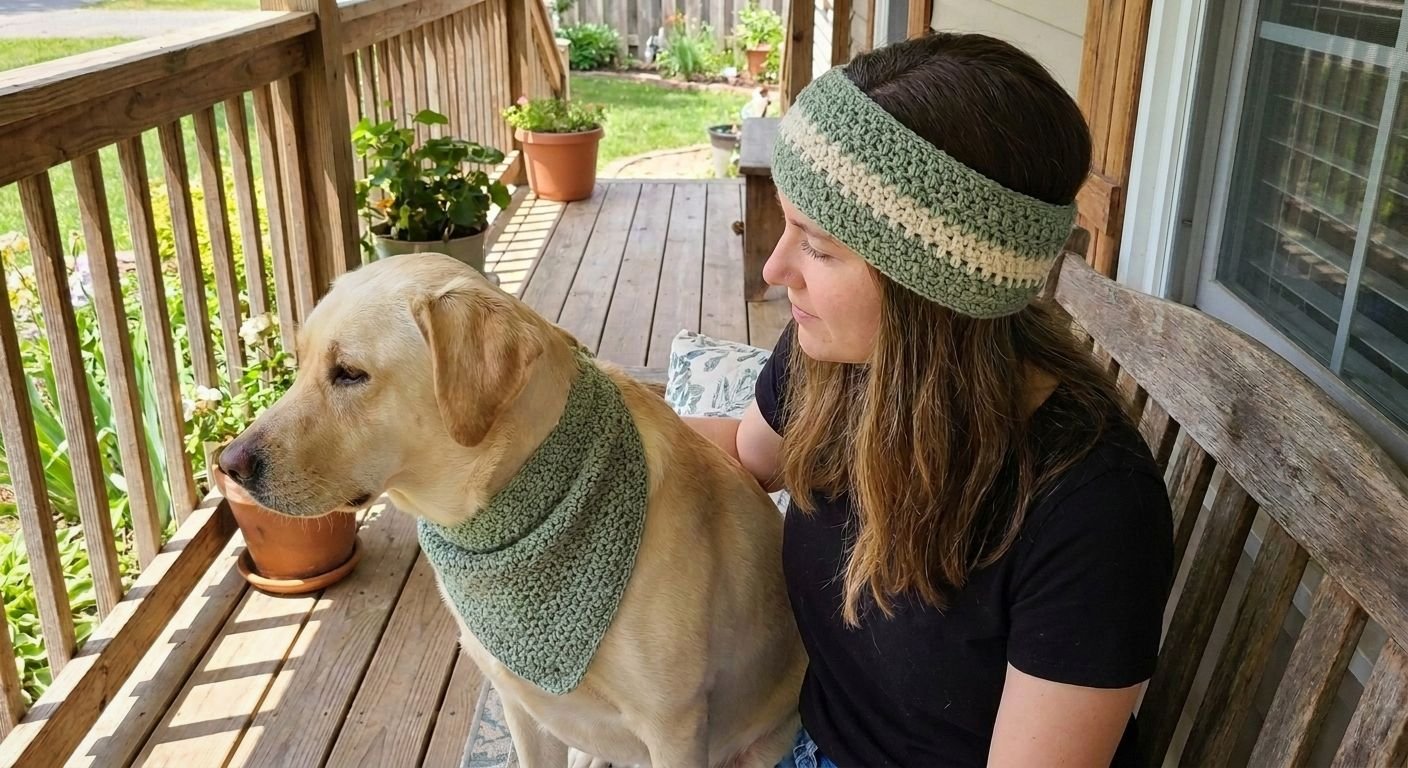
Matching colours tell a stronger story than identical garments. The dog has a sage crochet bandana, while the person wears a separate sage-and-cream headband designed for a human head.
Photo-matched construction
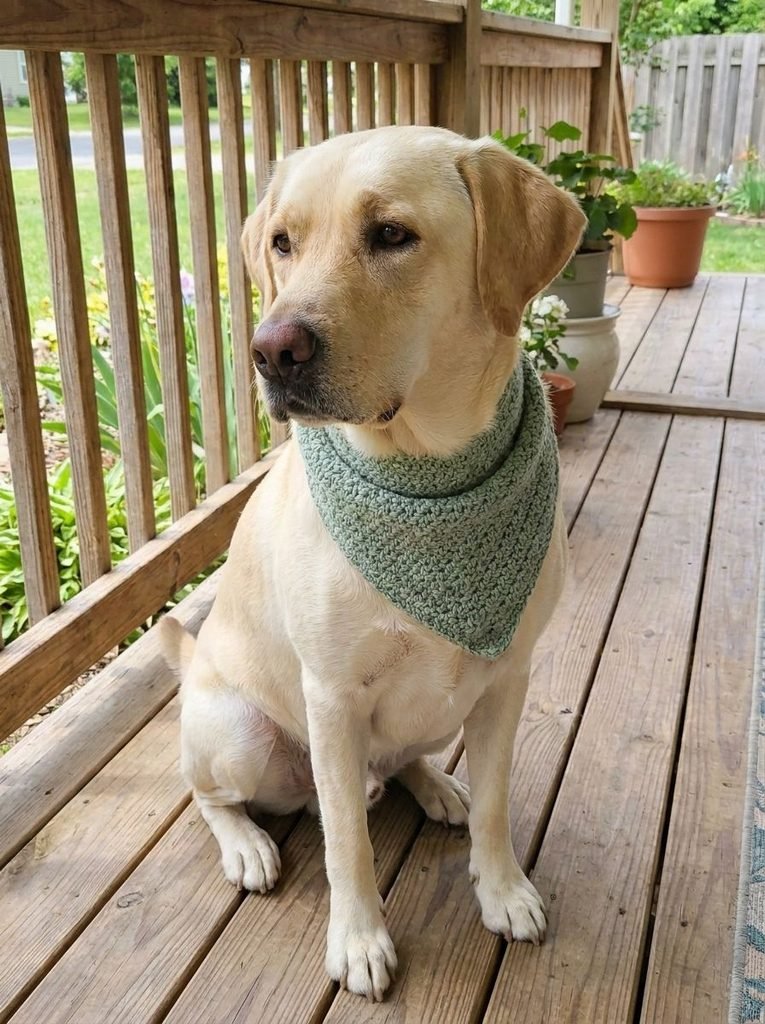
Make the pet bandana as a measured flat triangle with a dense top edge. Crochet the human headband separately as a stretchy ribbed rectangle, using the same colours but a different size and construction.
How to Turn a Photo Idea into a Reliable Crochet Guide
Use the photographs as a design reference, not as proof of a finished pattern. Record the visible yarn weight, stitch direction, colour changes, closure and approximate proportions. Then make a swatch, write down the gauge and crochet a sample at the measured size. For anything worn by a pet, check the sample on a stuffed form before a calm, brief fitting. Revise the edge, closure or width if anything catches, twists or changes the pet’s movement.
Care and troubleshooting
- It curls: Try a larger hook, a looser tension or a firm border. Do not pull it flat with a tight closure.
- It stretches: Recheck the washed swatch and shorten the finished length rather than relying on a knot.
- It catches fur: Replace open loops with a denser stitch and inspect the edge with a fingertip.
- The pet dislikes it: Remove it. A bowl mat, blanket or basket label may be the better accessory.
Frequently Asked Questions
Can I use crochet as my pet’s actual collar?
No. Use a tested real collar underneath, and treat crochet as a removable decorative cover or accessory. Never attach a leash or tether to crochet.
Are crochet pet accessories safe for cats?
Only with extra care. Keep a functioning breakaway collar underneath, leave its clasp clear and supervise the entire photo. Remove the crochet immediately if the cat paws, chews or seems unsettled.
What yarn is easiest for these projects?
A smooth washable cotton or cotton blend is a practical starting point because the stitches are easy to inspect and the finished piece is easier to clean. Always follow the yarn label and test a swatch before committing to the full project.
PetsCrochet shares educational crochet inspiration, not veterinary or professional safety advice. When in doubt, ask your veterinarian what is appropriate for your pet.