A crochet pet bow tie is a small project with a very visible finish. A soft sage bow can blend into an everyday collar, while a mustard stripe or navy outline makes the same simple shape feel ready for a photo. These eight ideas keep the details in the yarn and leave the standard collar doing its usual job.
You will find plain, ribbed, striped and color-block looks below, each with its own free pattern PDF. The guides cover the rectangle, gathered middle and measured rear keeper. They are original prototype-ready drafts based on the supplied images, so crochet and check a sample before treating their measurements as tested.
Choose your crochet pet bow tie
Pick a palette first, then check the collar. A closed keeper needs a compatible strap with an accessible end. Simply opening a snap buckle may not let you slide it through. The fit notes after the ideas explain this small but important detail.
- Sage Everyday Bow
- Navy Ribbed Bow
- Mustard-and-Cream Striped Bow
- Terracotta Color-Block Bow
- Cream Bow With a Navy Outline
- Cranberry Holiday Bow
- Oatmeal Mini Bow
- Lilac Textured Bow
1. Sage Everyday Bow
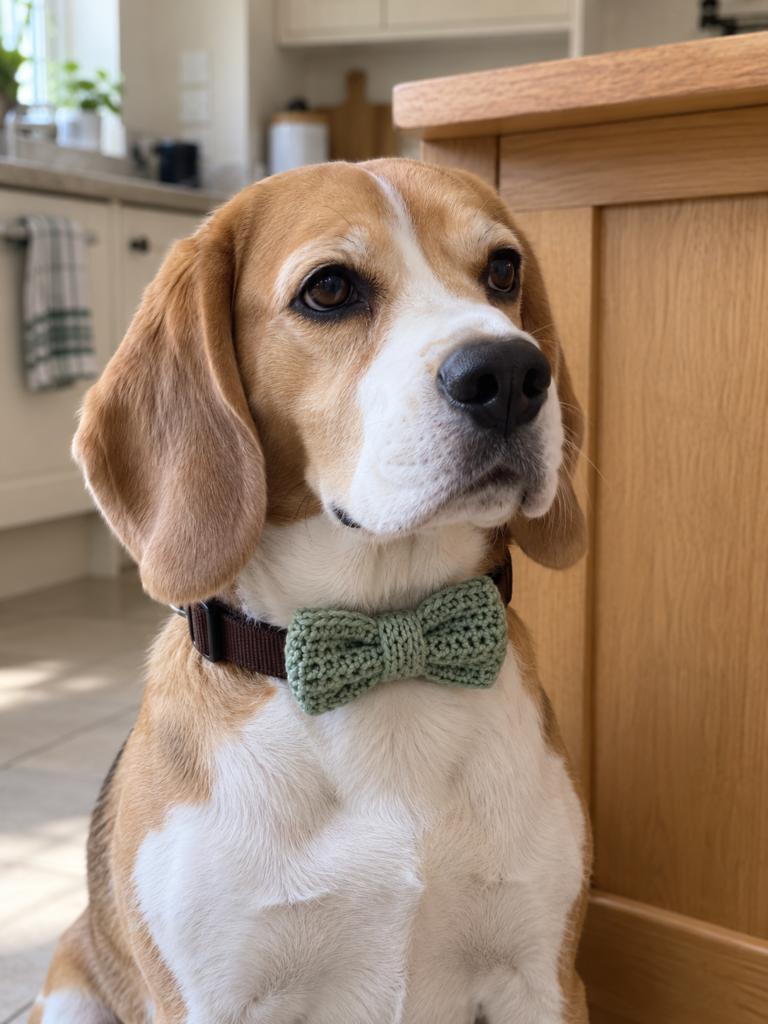
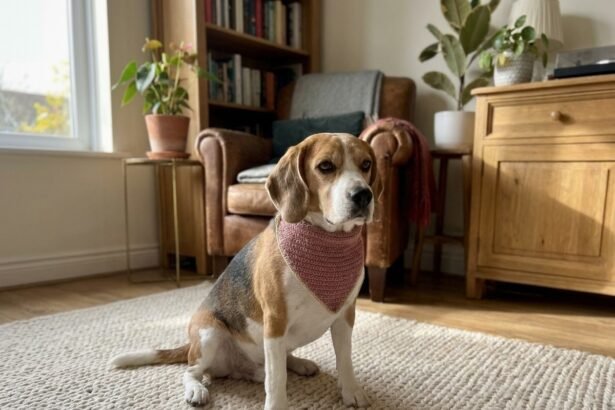
The sage bow is the quiet starting point in this collection. Against the beagle’s white chest, you can see the two wings, the gathered middle and the brown collar continuing behind it. There is enough texture to feel handmade without adding another decoration.
A detail worth keeping
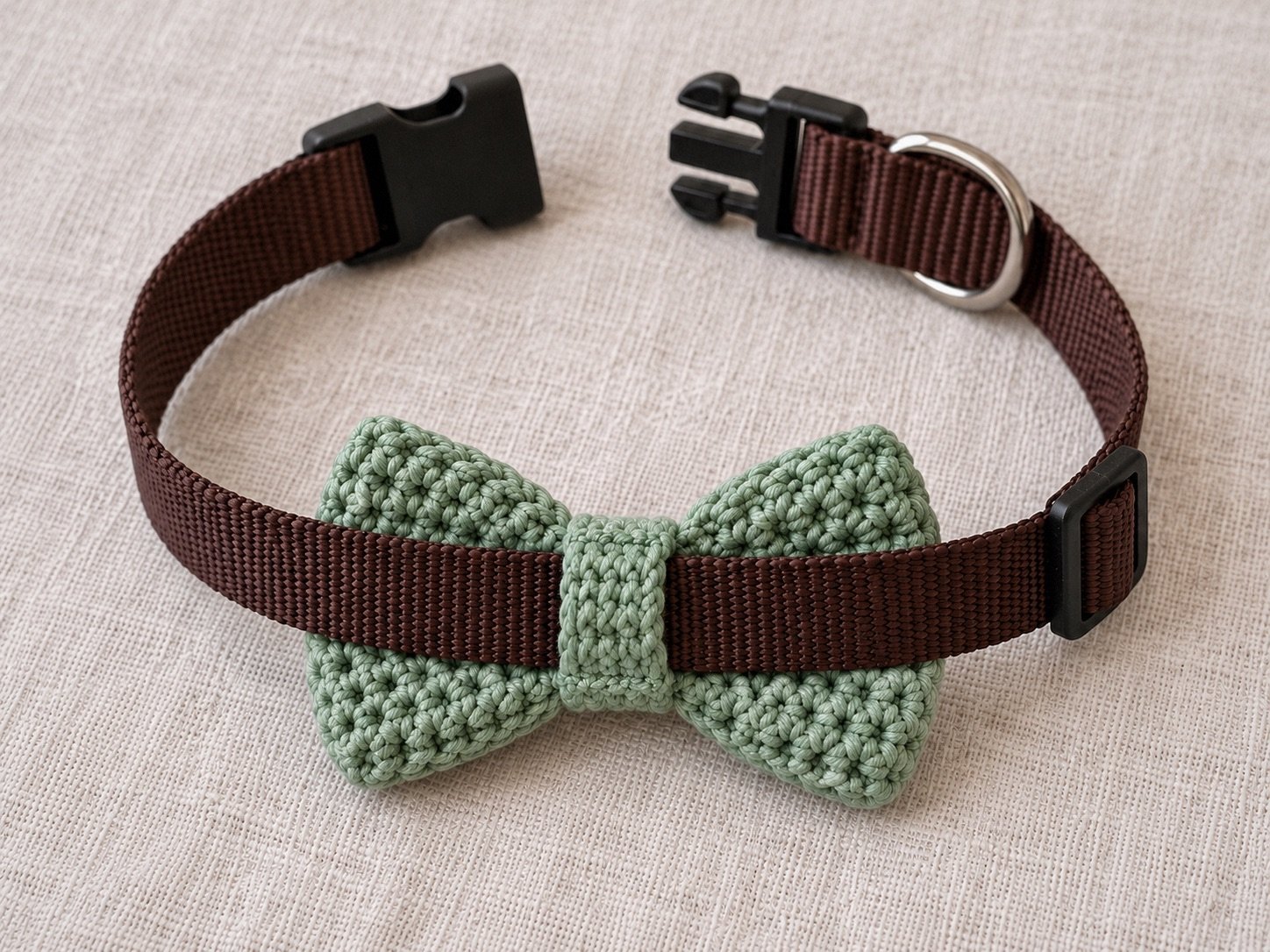
Start here if you want to learn the rectangle, center band and keeper before adding color changes. The matching rear view is useful for understanding where the strap goes.
The printable includes materials, draft measurements, row instructions, finishing and a keeper fitted to your own collar.
2. Navy Ribbed Bow
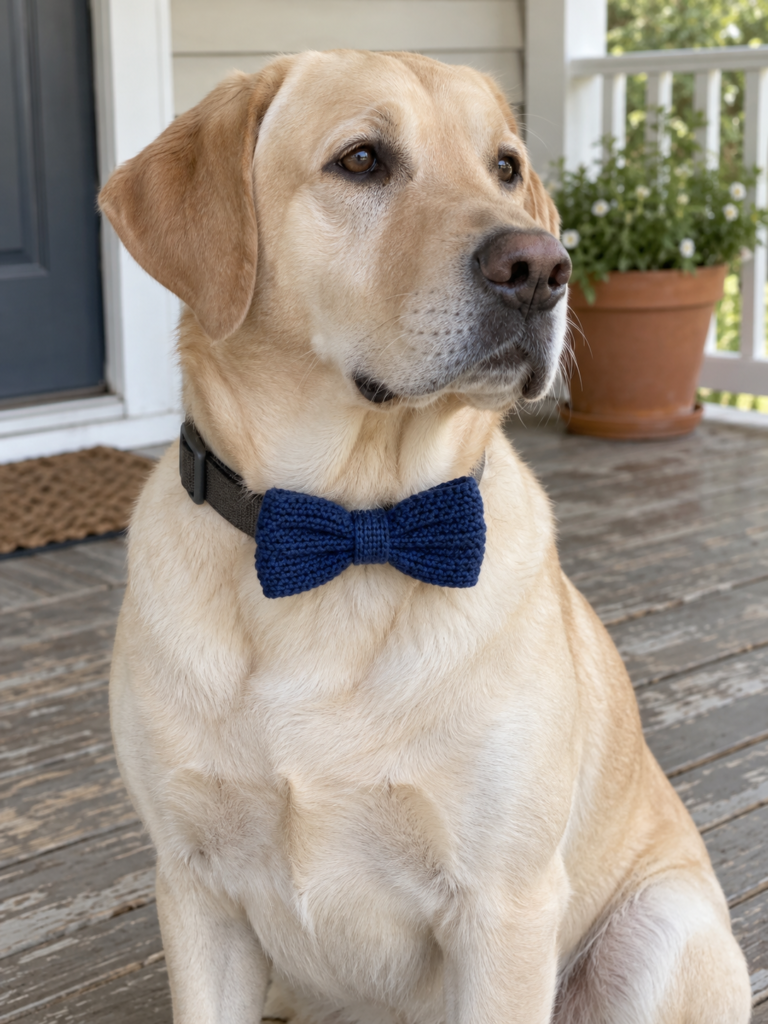
Navy gives this bow a crisp outline against the Labrador’s pale coat. The ridges run across the wings and draw the eye toward the center. A matching band keeps the whole piece simple.
A detail worth keeping
The companion pattern uses back-loop single crochet to create a ribbed effect. Let the washed fabric relax before measuring it, because stretching the ridges changes the size.
The printable includes materials, draft measurements, row instructions, finishing and a keeper fitted to your own collar.
3. Mustard-and-Cream Striped Bow
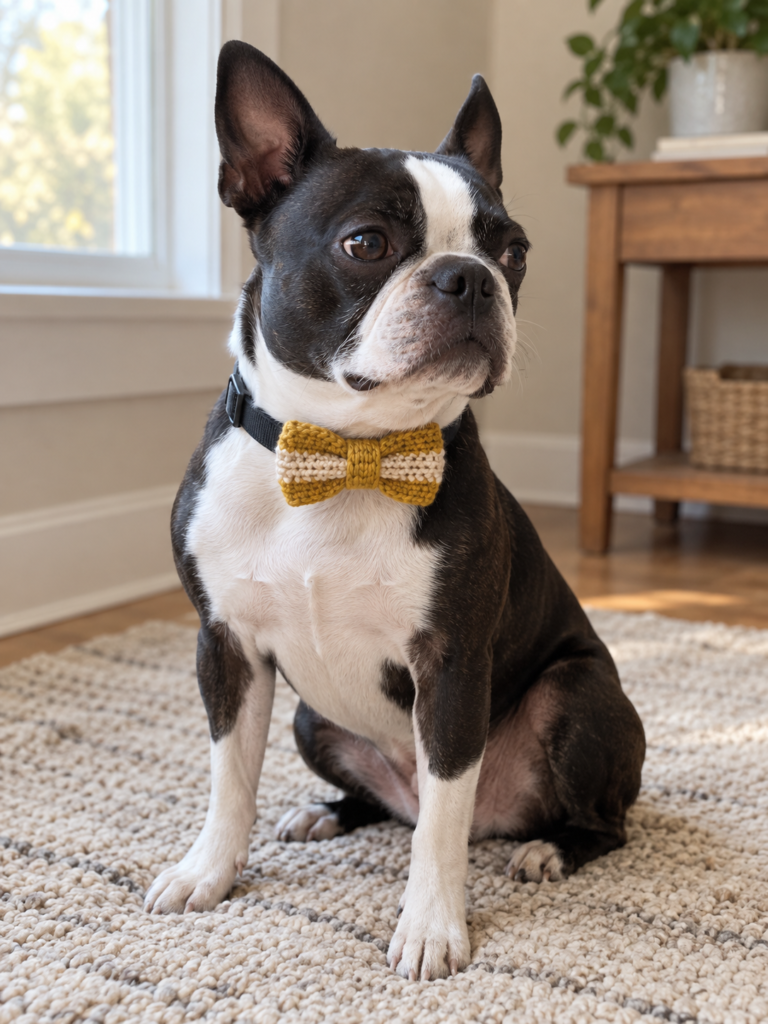
One cream stripe is enough to make this little bow stand out. Mustard frames it above and below, and the center band brings that warm color back across the middle. It is an easy way to use two shades without filling the bow with tiny joins.
A detail worth keeping
Keep the stripes in complete rows. The PDF gives a three-part row schedule, so both wings share the same stripe placement.
The printable includes materials, draft measurements, row instructions, finishing and a keeper fitted to your own collar.
4. Terracotta Color-Block Bow
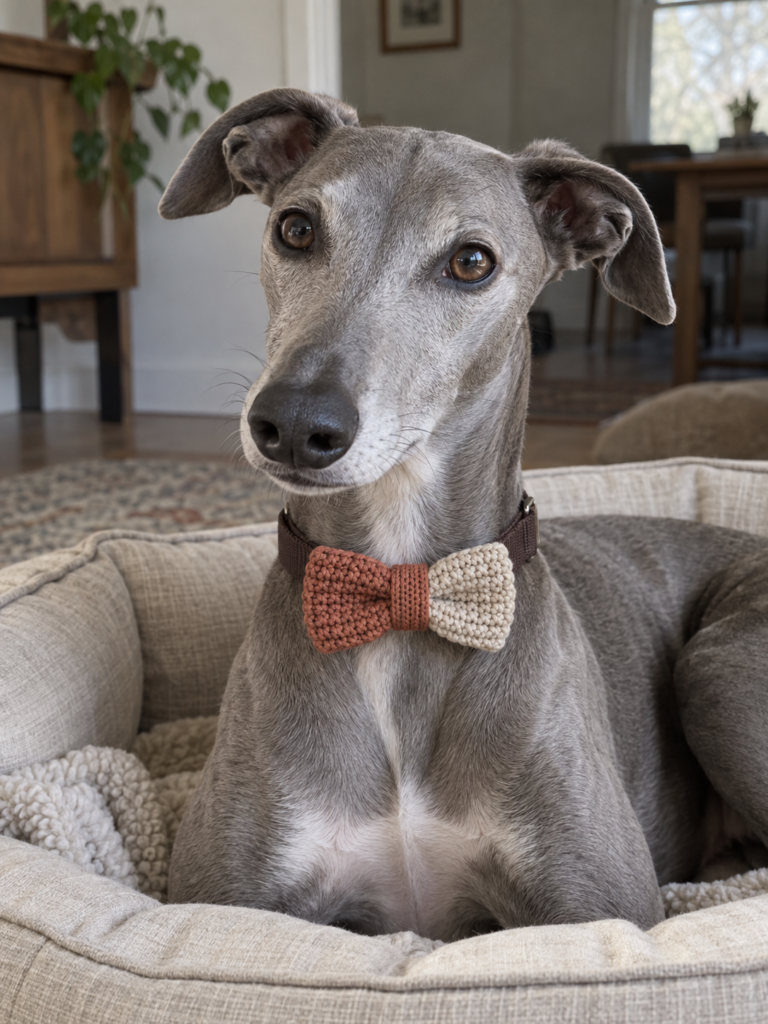
This is the bolder two-color option. Terracotta sits on one side and oatmeal on the other, with the join tucked beneath the center band. The asymmetry works well against the whippet’s grey coat and the plain linen bed.
A detail worth keeping
Use two small yarn supplies and change color at the center of every row. The written directions reverse the working order on alternate rows, keeping each color on the same physical side.
The printable includes materials, draft measurements, row instructions, finishing and a keeper fitted to your own collar.
5. Cream Bow With a Navy Outline
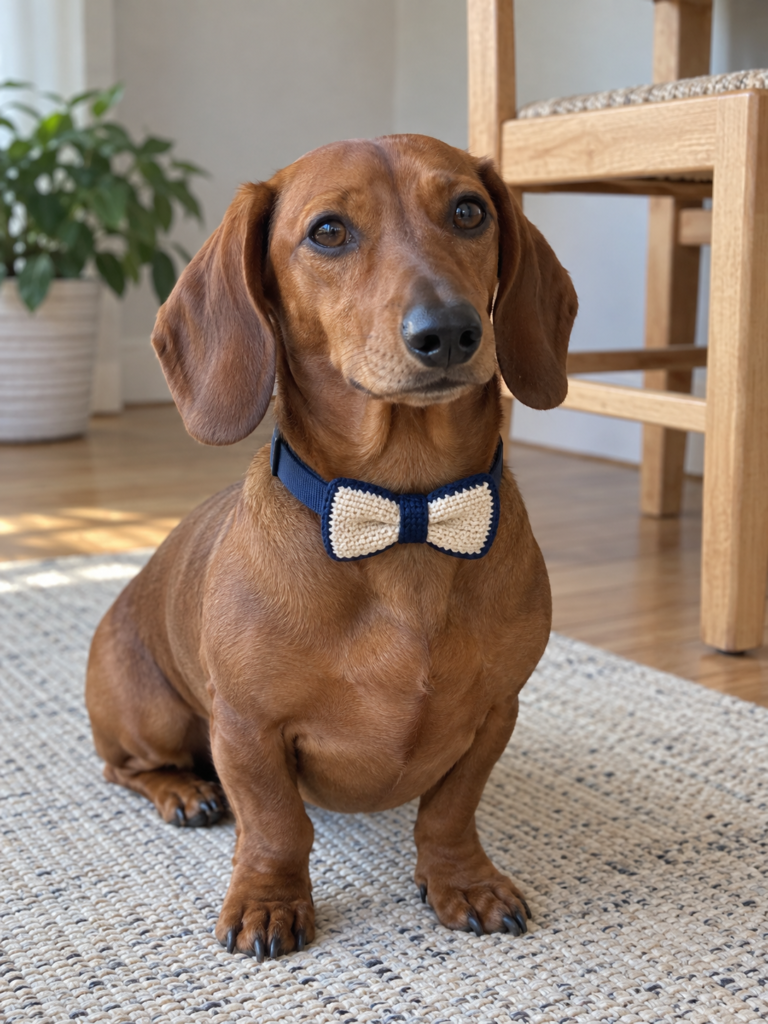
The navy outline does most of the work here. It picks up the color of the collar and frames the pale stitches, giving a small bow a clear shape. There is no need for scallops, beads or an extra layer.
A detail worth keeping
Work the border while the rectangle is still flat. Check each corner before gathering the middle. A border that cups or ripples is much easier to fix at that stage.
The printable includes materials, draft measurements, row instructions, finishing and a keeper fitted to your own collar.
6. Cranberry Holiday Bow
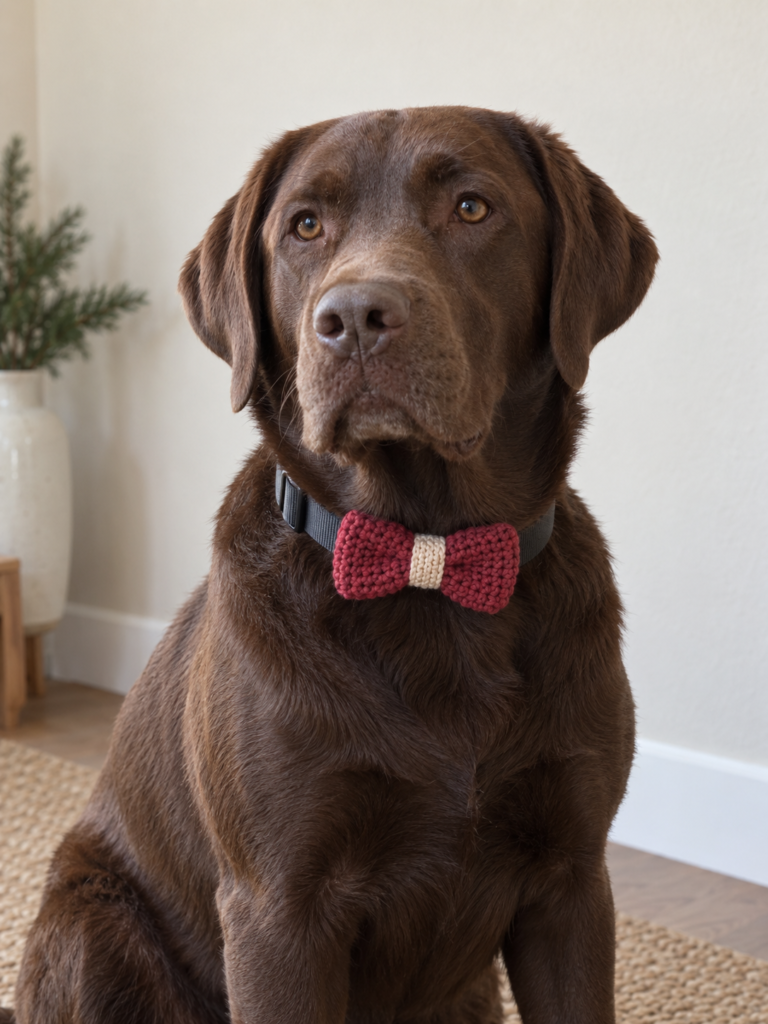
Cranberry and oatmeal give this bow a seasonal feel without turning it into a costume. The pale center breaks up the red, while the two compact wings stay close to the collar. It would suit a short holiday photo session in an ordinary room.
A detail worth keeping
The instructions keep the holiday detail in the yarn colors. Leave off bells, loose ribbon tails and small glued decorations.
The printable includes materials, draft measurements, row instructions, finishing and a keeper fitted to your own collar.
7. Oatmeal Mini Bow
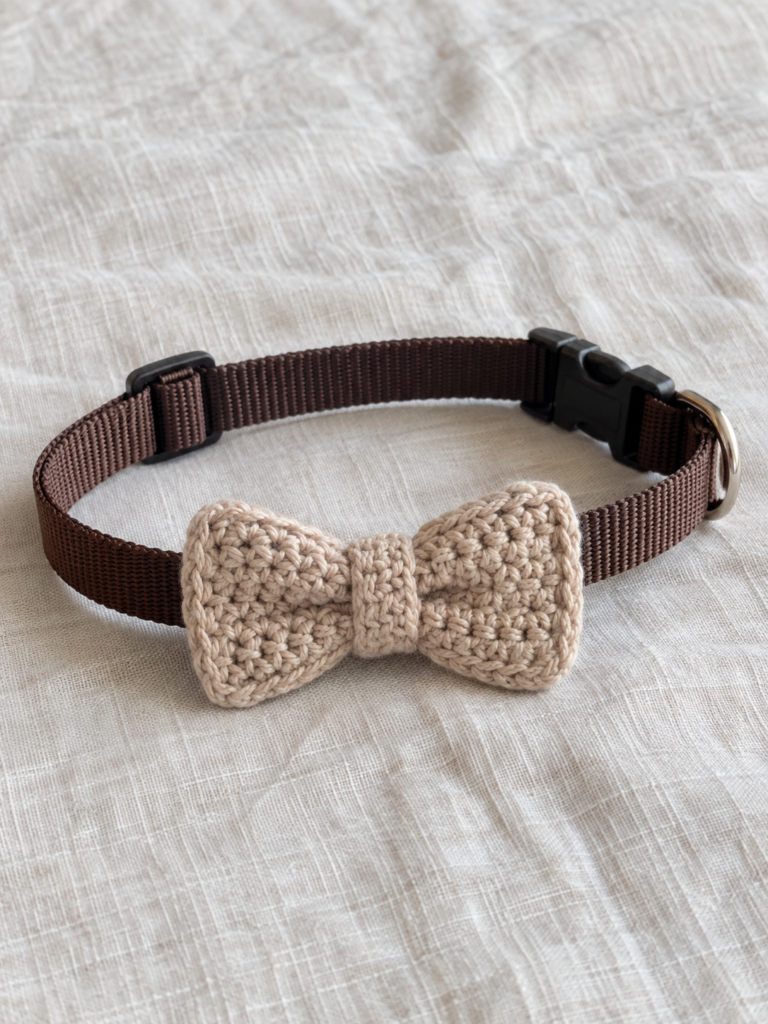
The flat-lay makes this oatmeal design easy to inspect. You can see the plain brown strap, the narrow center and the defined edge around each wing. The neutral color puts the shape first.
A detail worth keeping
The PDF offers a mini target, but the photograph has no scale marker and cannot confirm its dimensions. Measure your own collar and finished bow rather than judging size from the image.
The printable includes materials, draft measurements, row instructions, finishing and a keeper fitted to your own collar.
8. Lilac Textured Bow
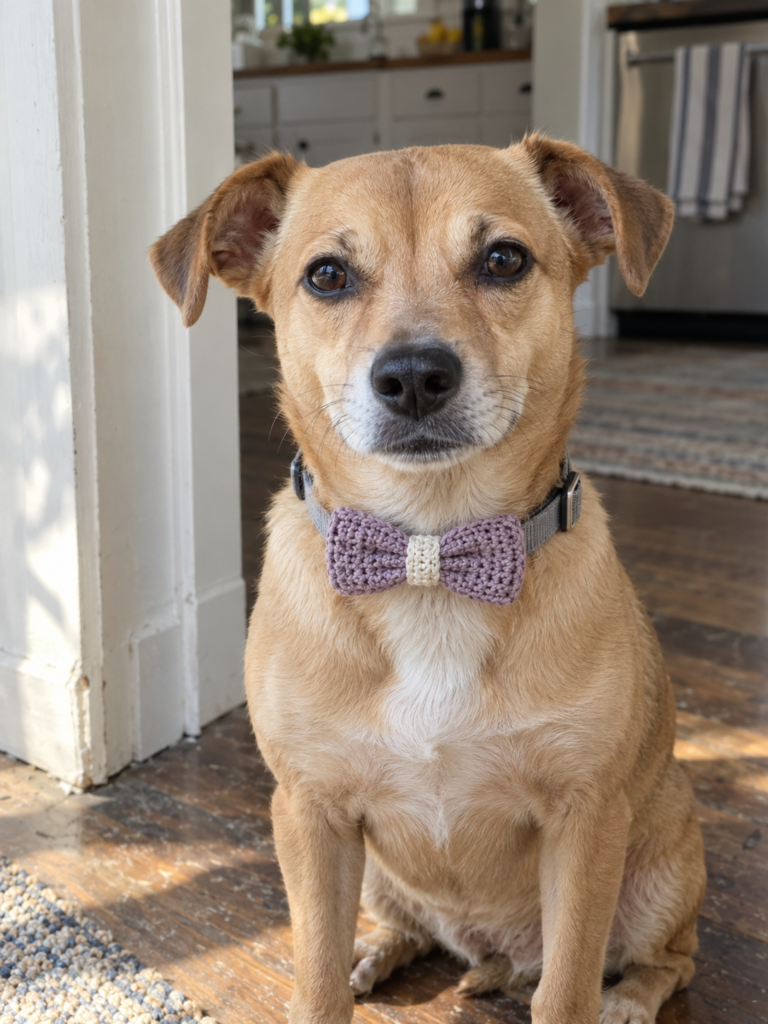
Dusty lilac and cream make a softer pairing than the navy and mustard options. The grey collar recedes behind the bow, so the gathered wings remain the focus. It is a useful palette to save if you like color without a bright contrast.
A detail worth keeping
This version uses a back-loop single-crochet approximation of the visible texture. Keep the cream band narrow enough to leave both lilac wings clearly visible.
The printable includes materials, draft measurements, row instructions, finishing and a keeper fitted to your own collar.
How does the bow attach to a standard collar?
The collar passes through a short keeper on the back of the bow. That keeper is separate from the band gathering the middle. The rear view below shows the intended strap route; the PDF diagram explains the sewing where the image cannot.
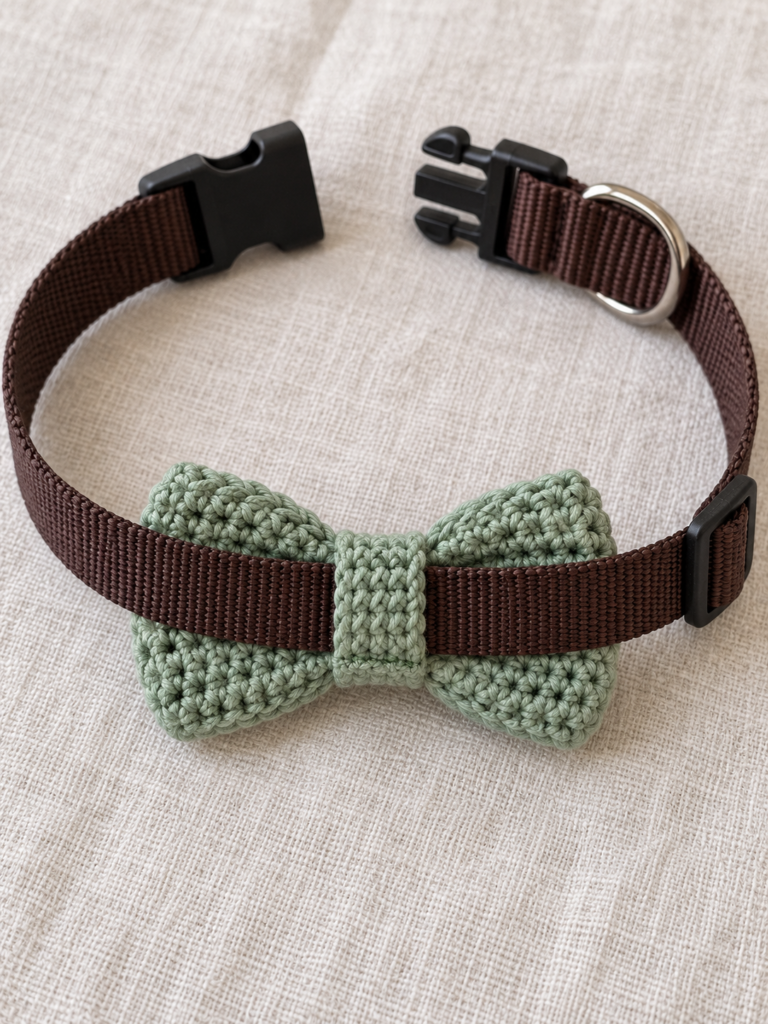
Check the strap before you start
Measure both its width and thickness. Confirm that an end can be unthreaded and rethreaded according to the collar maker’s instructions. Do not cut the collar, remove sewn hardware or make the keeper excessively loose to pass it over a buckle. If the strap cannot be safely unthreaded, choose a compatible collar for this version.
Keep the working parts clear
Position the bow away from the buckle, adjuster and leash ring. Check that the strap lies flat inside the keeper and that the bow stays clear of the mouth and jaw. The crochet is an accessory, not a leash attachment. Remove it for sleep or rough play, and stop using it if your pet chews it or seems uncomfortable.
Yarn and finishing make a difference
The draft guides use smooth DK cotton as a starting point. Smooth yarn makes small stitches easier to see and ends easier to weave in. Check the label for care instructions and wash a swatch before choosing the final hook or keeper length.
Spend a little extra attention on the center band. It should hold the folds without forming a hard lump. Secure it against rotation, weave every end into sound stitches and check the seams after washing. A neat front is only half the job; the back needs the same care.
Questions before you pick a bow
Will this fit every standard collar?
No. Collar width, thickness and hardware arrangement all matter. These PDFs use a measured closed keeper for a compatible flat strap. They do not claim a universal fit.
Can I make the bow smaller?
Yes. Each PDF includes a flat-panel sizing formula using your washed gauge. Size the keeper separately for the collar. A smaller bow does not automatically need a narrower keeper.
Are these suitable for cats?
This collection is written for dog collars. A cat adaptation would need a lightweight bow, a functioning quick-release collar and a release check after fitting. Blue Cross guidance on cat collarsexplains why attachment weight and release matter.
Are the patterns physically tested?
Not yet. The PDFs are complete drafting instructions with stated gauge and sizing assumptions. The supplied images guide the look, but they cannot establish exact stitch counts, fiber, yardage or tested fit. Each guide includes a sample record for those checks.
Save a favorite and start with its PDF
If you are undecided, the sage bow is a useful first project because it has both a wearing view and a rear attachment view. Download its guide above, measure your collar, and make one sample before moving on to stripes or a contrasting border.