
The best pet blanket is usually the one you stop worrying about. It lies flat, washes without becoming a mystery shape and does not invite every claw into a large decorative loop. This crochet pet blanket collection focuses on ten dense constructions with simple edges and practical measurements for cats and dogs.
I started with Skyla’s oatmeal chair blanket because it shows the idea clearly. She gets a warm place to curl, while the stitch stays compact enough to inspect quickly. Still, “snag-resistant” is a design goal, not a guarantee. Any crochet blanket can catch a rough claw, loosen after washing or become unsafe if a pet chews it.
Publishing status: The supplied images are visual references, not proof of physically tested patterns. Every PDF is a photo-matched prototype-ready draft. Make one sample, wash it, inspect both sides and supervise the first pet-use sessions before replacing estimates with tested measurements.
10 dense crochet pet blanket ideas at a glance
| # | Blanket | Photo-matched stitch | Starting target |
|---|---|---|---|
| 1 | Oatmeal Thermal Blanket | single-crochet thermal stitch | Photo-style starting target: 55 x 70 cm. Suggested cat range: 50-60 cm wide by 65-80 cm long. |
| 2 | Sage Labrador Blanket | dense seed stitch worked as alternating sc and hdc | Photo-style starting target: 85 x 110 cm. Adjust from the dog’s relaxed resting footprint. |
| 3 | Charcoal Chunky Mat | tight single crochet through both loops | Photo-style starting target: 65 x 85 cm. |
| 4 | Tapestry Checker Blanket | tapestry single crochet | Photo-style starting target: 70 x 90 cm, arranged as three columns by four rows of large blocks. |
| 5 | Navy Stripe Cat Blanket | back-loop-only single crochet worked lengthwise | Photo-style starting target: 55 x 75 cm. |
| 6 | Terracotta Ribbed Blanket | back-loop-only single crochet with stabilizing full-loop rows | Photo-style starting target: 55 x 80 cm. |
| 7 | Dusty-Rose Pet Blanket | lemon-peel stitch alternating sc and dc | Photo-style starting target: 60 x 80 cm. |
| 8 | Greige Textured Cat Blanket | herringbone single crochet | Photo-style starting target: 55 x 70 cm. |
| 9 | Reversible Whippet Blanket | two single-crochet panels joined as a reversible double layer | Photo-style starting target: 70 x 100 cm. |
| 10 | Aqua Cotton Blanket | single crochet through both loops | Photo-style starting target: 85 x 110 cm. |
What makes a crochet stitch more snag-resistant?
Look for a fabric with close stitch tops, short working loops and no decorative chains floating above the surface. Thermal single crochet, tight ordinary single crochet, carefully worked tapestry crochet and low back-loop ribs can all reduce exposed loops. The final answer comes from the washed swatch, not the stitch name alone.
- Use a smooth washable yarn: avoid loosely spun roving, fuzzy novelty fibers and yarn that sheds when rubbed.
- Test the gauge: a stitch can look dense in a photograph and open after washing.
- Inspect both sides: color carries, skipped loops and poorly woven tails often hide on the reverse.
- Keep borders simple: fringe, tassels, picots and surface chains create avoidable catch points.
- Watch the pet: no crochet blanket is suitable for unsupervised chewing or nesting that forms tight loops.
1. Skyla’s Oatmeal Thermal-Stitch Blanket
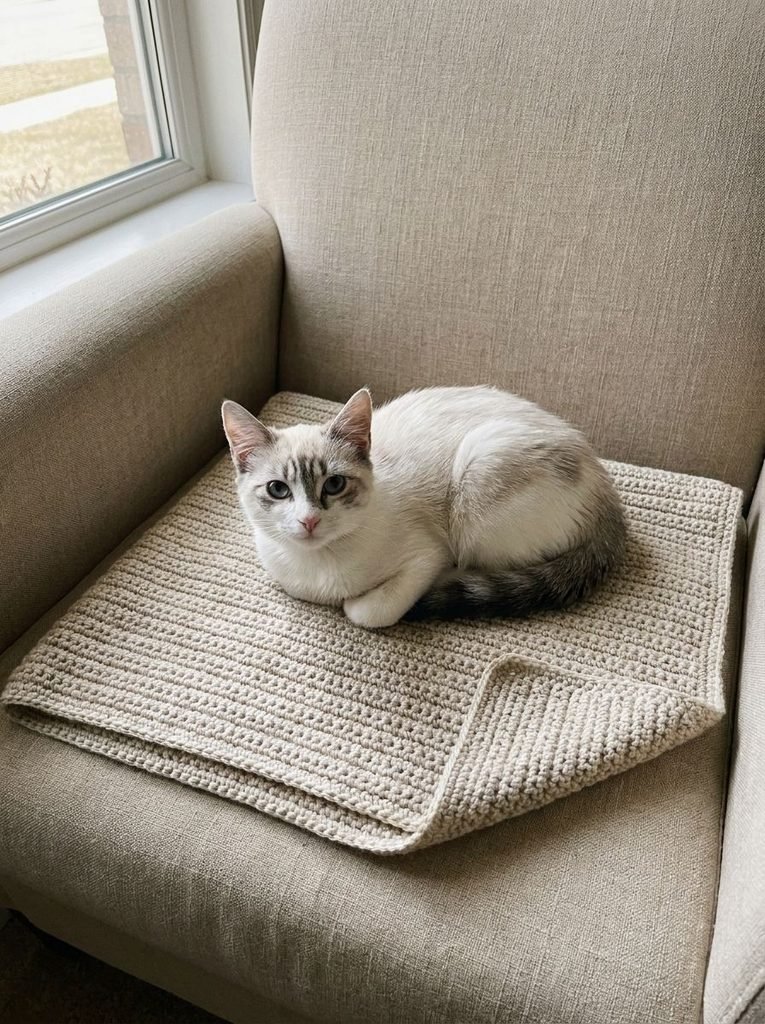
This is the blanket I would start with for Skyla when warmth matters more than speed. The folded edge looks substantial, but the surface stays quiet and simple.
Why this dense stitch works
The photo-matched starting stitch is single-crochet thermal stitch. Cats that like a warm, substantial chair blanket with very little open space between stitches. The goal is a low-gap fabric with fewer exposed loops, not a promise that claws can never catch.
Starting size and care
Photo-style starting target: 55 x 70 cm. Suggested cat range: 50-60 cm wide by 65-80 cm long. Follow the yarn label. Support the dense wet fabric, press out water without twisting and dry completely before returning it to the chair.
This is a photo-matched, prototype-ready draft. Crochet, wash and pet-test a physical sample before publishing it as tested.
2. Sage Dense-Seed Blanket for a Labrador
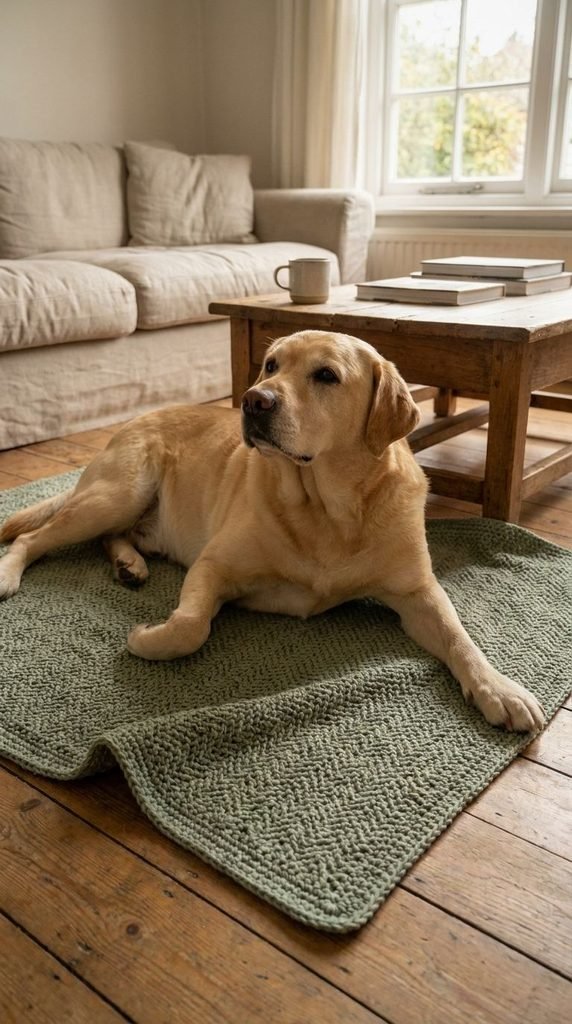
Large-dog blankets often fail because they are sized like decorative throws. This sage version gives the Labrador room to settle while still reading as a practical floor layer.
Why this dense stitch works
The photo-matched starting stitch is dense seed stitch worked as alternating sc and hdc. Large dogs that need a washable floor layer rather than a bulky stuffed bed. The goal is a low-gap fabric with fewer exposed loops, not a promise that claws can never catch.
Starting size and care
Photo-style starting target: 85 x 110 cm. Adjust from the dog’s relaxed resting footprint. Shake off loose hair, wash according to the yarn label and dry fully. Heavy wet fabric must be supported rather than hung from one edge.
This is a photo-matched, prototype-ready draft. Crochet, wash and pet-test a physical sample before publishing it as tested.
3. Charcoal Chunky Single-Crochet Mat
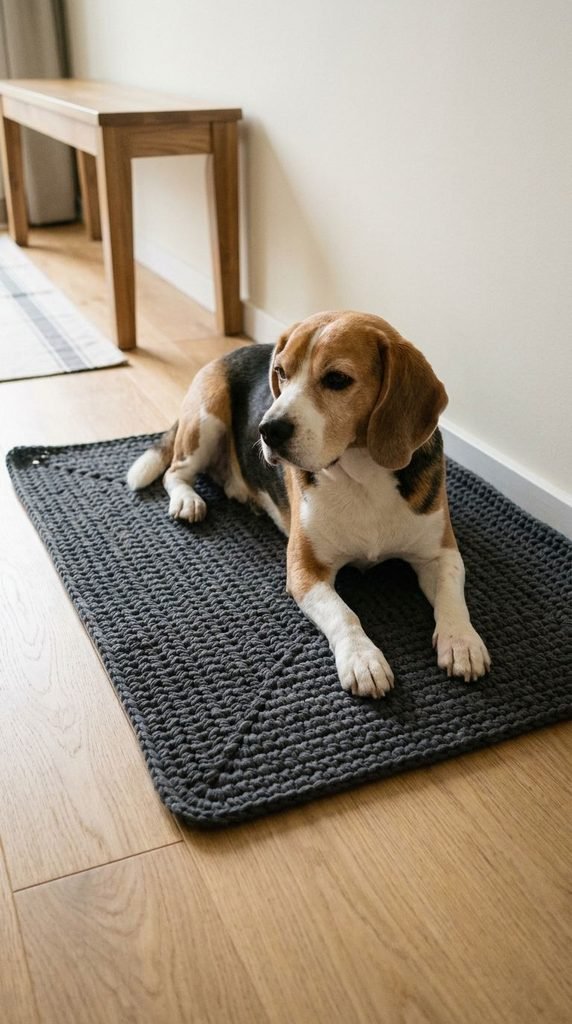
The charcoal mat is the outlier in this collection. Its yarn is chunkier and the texture is more pronounced, which makes the swatch inspection especially important.
Why this dense stitch works
The photo-matched starting stitch is tight single crochet through both loops. Medium dogs that prefer a clearly defined mat on a hard floor. The goal is a low-gap fabric with fewer exposed loops, not a promise that claws can never catch.
Starting size and care
Photo-style starting target: 65 x 85 cm. Follow the tube-yarn label. Reshape flat and rotate during drying so the thick fabric does not hold moisture.
Extra inspection: The supplied charcoal image shows more pronounced surface loops than the other blankets. The pattern intentionally starts with a tight swatch and requires a claw-tip check before the full mat is made.
This is a photo-matched, prototype-ready draft. Crochet, wash and pet-test a physical sample before publishing it as tested.
4. Mustard-and-Cream Tapestry Checker Blanket
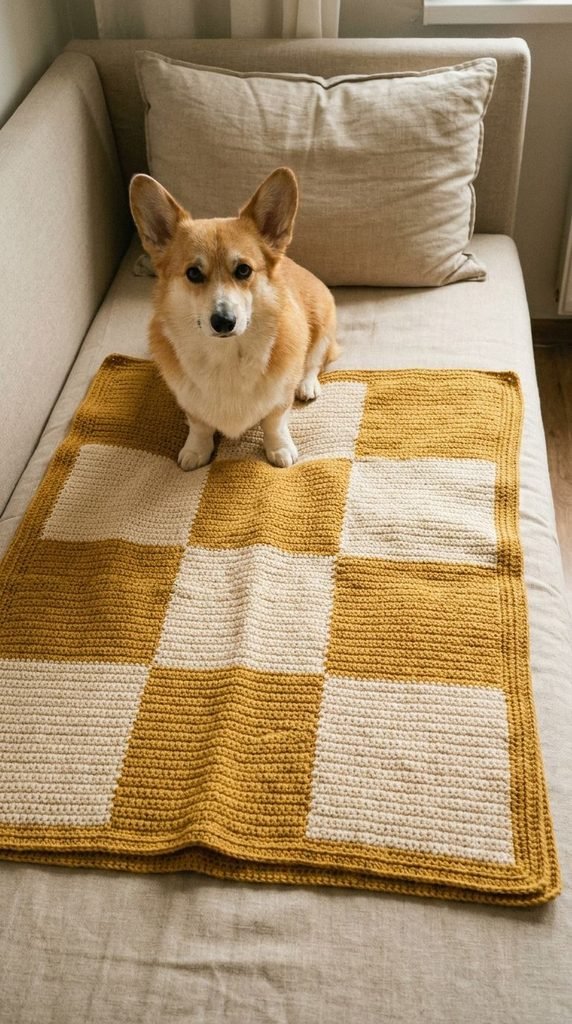
The checker pattern brings color without relying on separate motifs. That matters around paws because there are no open granny-square joins running across the surface.
Why this dense stitch works
The photo-matched starting stitch is tapestry single crochet. Makers who want a graphic color pattern without motif seams or open granny-square holes. The goal is a low-gap fabric with fewer exposed loops, not a promise that claws can never catch.
Starting size and care
Photo-style starting target: 70 x 90 cm, arranged as three columns by four rows of large blocks. Wash cool and separately at first. Confirm that mustard dye does not transfer to the cream blocks.
This is a photo-matched, prototype-ready draft. Crochet, wash and pet-test a physical sample before publishing it as tested.
5. Navy Ribbed Stripe Cat Blanket
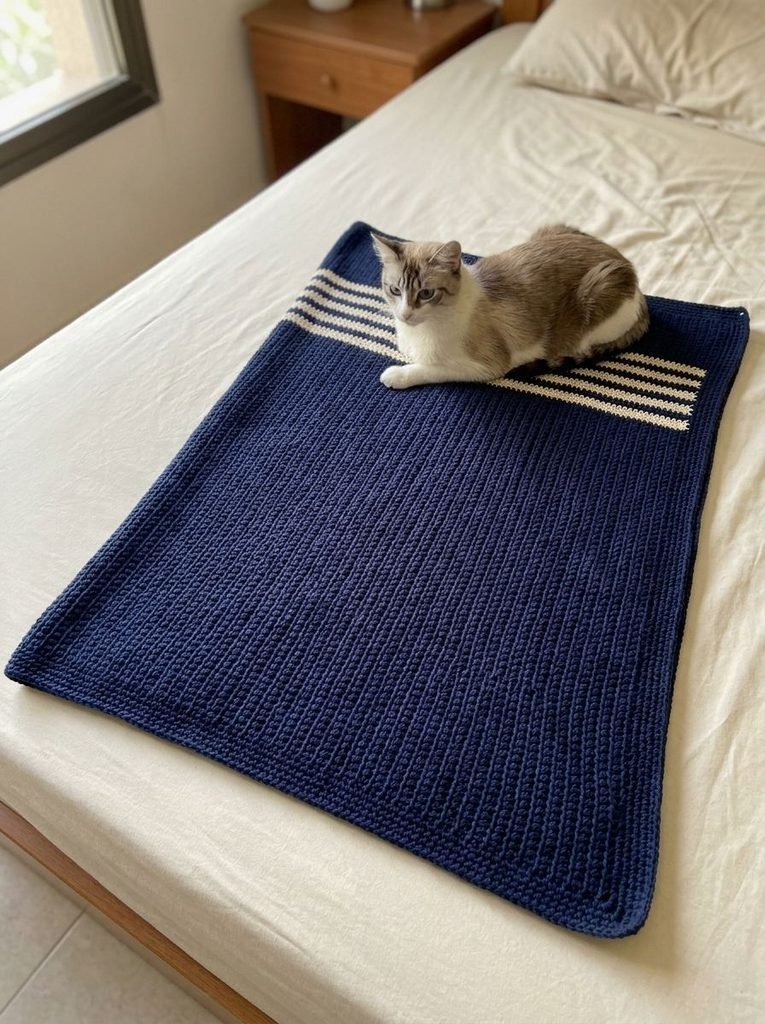
The navy blanket feels crisp and calm, and the three cream stripes give it enough detail without adding appliques or loose decoration.
Why this dense stitch works
The photo-matched starting stitch is back-loop-only single crochet worked lengthwise. Cats that like a smooth, defined bed-top blanket with low ribs and a dark practical color. The goal is a low-gap fabric with fewer exposed loops, not a promise that claws can never catch.
Starting size and care
Photo-style starting target: 55 x 75 cm. Wash according to the yarn label and test the navy dye separately before combining it with cream.
This is a photo-matched, prototype-ready draft. Crochet, wash and pet-test a physical sample before publishing it as tested.
6. Terracotta Low-Rib Dachshund Blanket
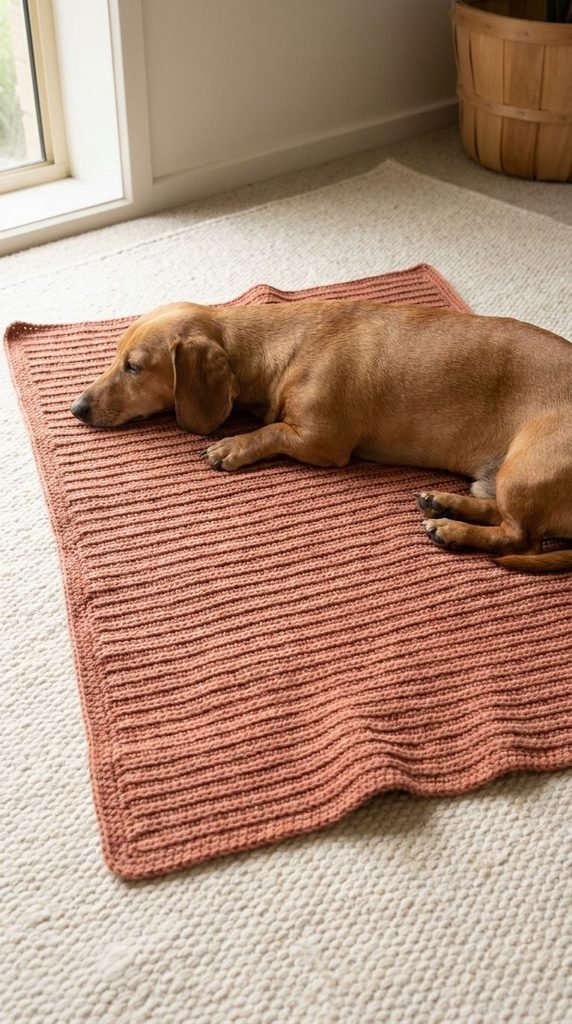
A dachshund makes blanket proportions obvious. The long rectangle suits the dog’s resting shape, while the interrupted ribs stay lower than a deep corded texture.
Why this dense stitch works
The photo-matched starting stitch is back-loop-only single crochet with stabilizing full-loop rows. Long-bodied small dogs that settle more naturally on a narrow rectangular blanket. The goal is a low-gap fabric with fewer exposed loops, not a promise that claws can never catch.
Starting size and care
Photo-style starting target: 55 x 80 cm. Machine wash only if the yarn label permits it; otherwise wash gently and dry flat.
This is a photo-matched, prototype-ready draft. Crochet, wash and pet-test a physical sample before publishing it as tested.
7. Dusty-Rose Lemon-Peel Pet Blanket
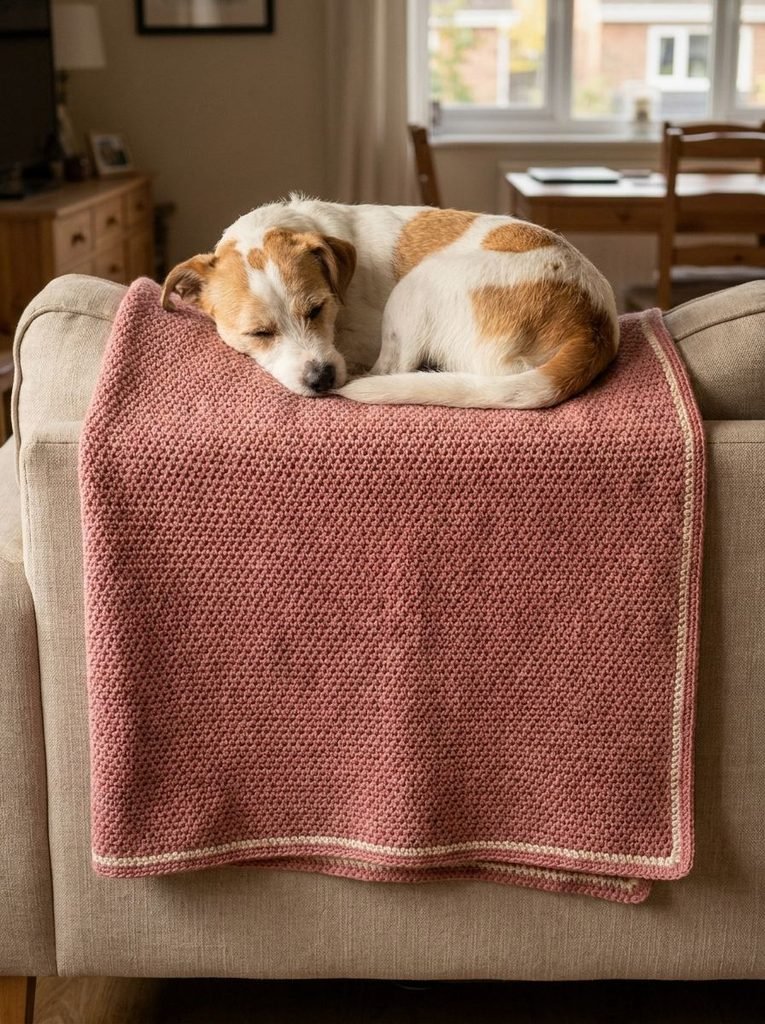
This dusty-rose blanket is the easiest one to imagine living on a sofa every day. The pebbled stitch hides minor wear and the narrow cream edge keeps the finish polished.
Why this dense stitch works
The photo-matched starting stitch is lemon-peel stitch alternating sc and dc. Small dogs that nap on furniture and need a washable barrier with a polished edge. The goal is a low-gap fabric with fewer exposed loops, not a promise that claws can never catch.
Starting size and care
Photo-style starting target: 60 x 80 cm. Wash according to the yarn label, reshape flat and do not return a damp blanket to upholstered furniture.
This is a photo-matched, prototype-ready draft. Crochet, wash and pet-test a physical sample before publishing it as tested.
8. Greige Compact-Texture Cat Blanket
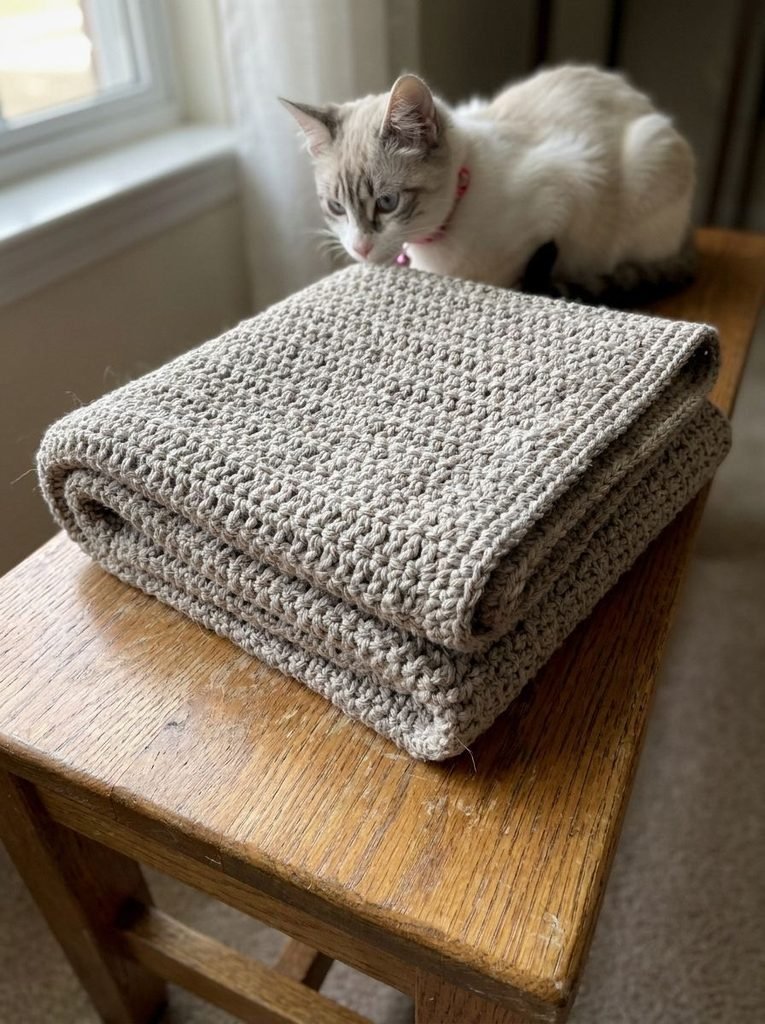
The folded photograph is useful because it shows what a dense blanket should do off the pet: stack neatly, bend naturally and keep its edges under control.
Why this dense stitch works
The photo-matched starting stitch is herringbone single crochet. A neutral cat blanket that can move between a chair, bench and pet bed. The goal is a low-gap fabric with fewer exposed loops, not a promise that claws can never catch.
Starting size and care
Photo-style starting target: 55 x 70 cm. Follow the yarn label and dry flat. Do not fold for storage until the inner layers are completely dry.
Photo note: This supplied image is a folded finished-detail view. It supports the visible texture and edge, but it does not prove the final stitch, gauge or tested fit.
This is a photo-matched, prototype-ready draft. Crochet, wash and pet-test a physical sample before publishing it as tested.
9. Cranberry-and-Oat Reversible Blanket
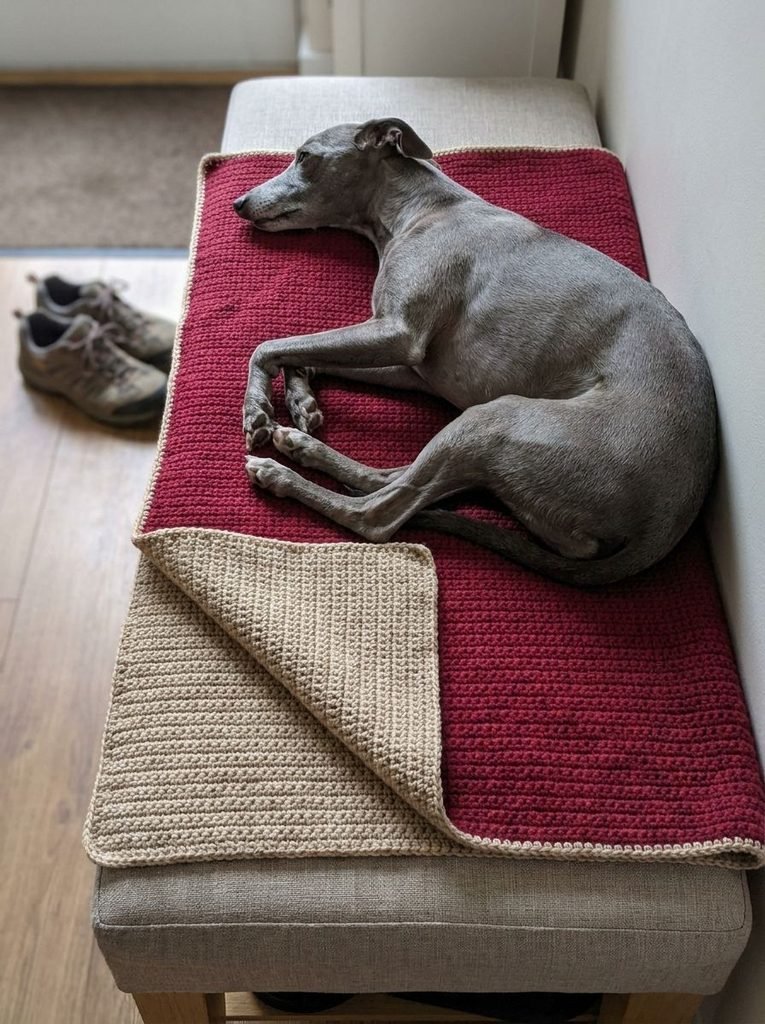
The turned corner tells the whole story here. Two matching crochet panels create a warmer reversible blanket without stuffing, ties or an open pocket between the layers.
Why this dense stitch works
The photo-matched starting stitch is two single-crochet panels joined as a reversible double layer. Slender dogs that like a warmer bench blanket without loose fringe or stuffing. The goal is a low-gap fabric with fewer exposed loops, not a promise that claws can never catch.
Starting size and care
Photo-style starting target: 70 x 100 cm. Wash on a gentle cycle only if both yarns allow it. Dry flat and turn the blanket during drying so moisture does not remain between layers.
This is a photo-matched, prototype-ready draft. Crochet, wash and pet-test a physical sample before publishing it as tested.
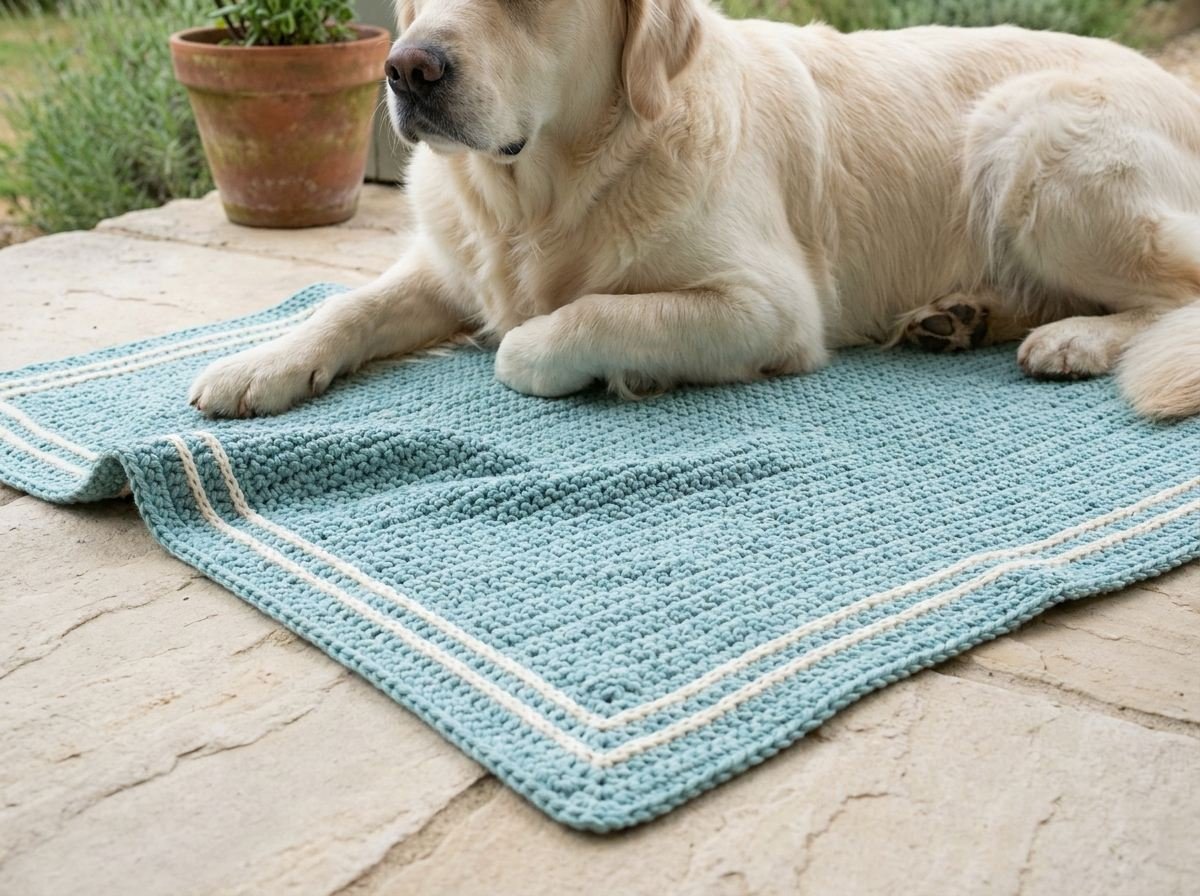
10. Aqua Dense-Cotton Stripe Blanket
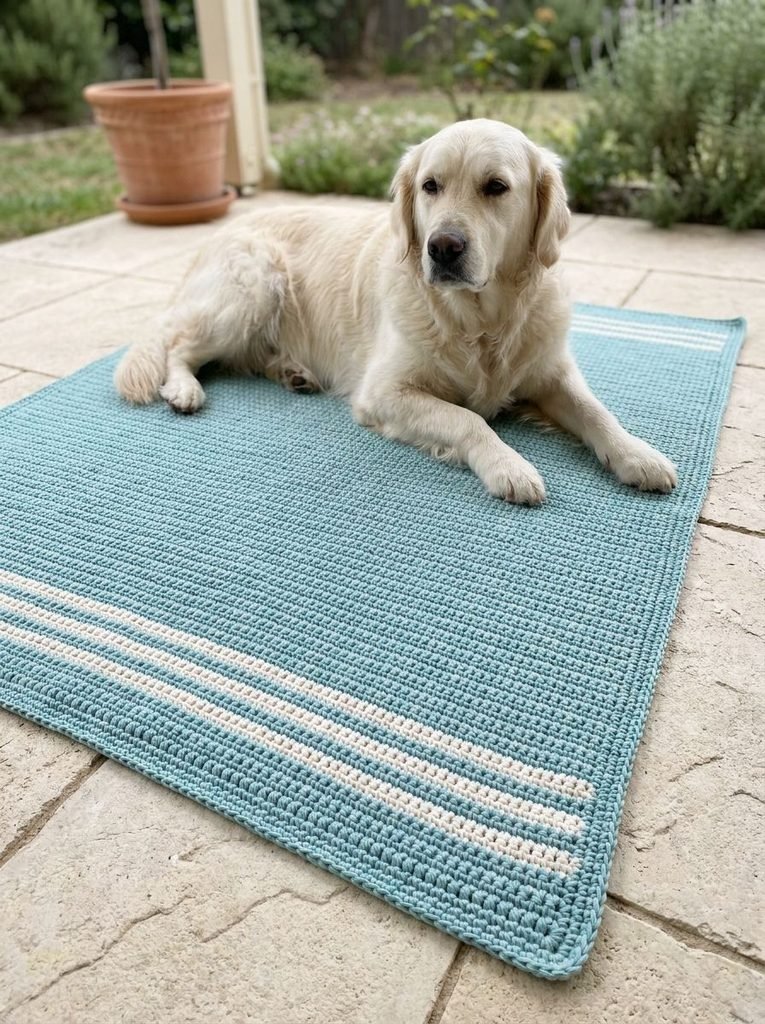
The aqua blanket looks light because of its color and cotton-style yarn, not because it uses holes. It remains a dry comfort layer rather than a cooling product.
Why this dense stitch works
The photo-matched starting stitch is single crochet through both loops. Large dogs needing a dry washable patio or indoor floor layer in a lighter color. The goal is a low-gap fabric with fewer exposed loops, not a promise that claws can never catch.
Starting size and care
Photo-style starting target: 85 x 110 cm. Follow the cotton label. Dry completely before use; this is not a wet or evaporative cooling blanket.
This is a photo-matched, prototype-ready draft. Crochet, wash and pet-test a physical sample before publishing it as tested.
How to size a crochet pet blanket
Measure the pet in the position it uses most often. For a curled cat or small dog, add 15-20 cm to the widest part of the resting body. For a medium or large dog lying on one side, add 20-25 cm to the width and 25-30 cm to the nose-to-rump length. Furniture coverage can be larger, but the blanket should not hang where a pet can pull it down or become wrapped in it.
| Starting category | Approximate blanket | Measure before using |
|---|---|---|
| Cat | 50-60 x 65-80 cm | Curled width and resting length |
| Small dog | 55-65 x 75-90 cm | Curled width or full body length |
| Medium dog | 65-75 x 85-105 cm | Side-lying footprint |
| Large dog | 80-95 x 105-125 cm | Shoulder, rump and extended paws |
Wash and safety checklist
- Wash a 15 cm swatch first and record the dry dimensions before and after washing.
- Support heavy wet fabric instead of hanging it from one edge.
- Dry every layer completely, especially the reversible double-layer blanket.
- Run fingertips across both sides and every border to find raised or loose loops.
- Trim only after tails are woven through dense fabric in more than one direction.
- Remove the blanket if the pet chews yarn, catches a claw, pulls at an edge or bunches the fabric into a tight loop.
- Keep blankets away from open flames, heaters and wet “cooling blanket” use.
Crochet pet blanket FAQs
Is any crochet stitch completely snag-proof?
No. Dense stitches can reduce open spaces and surface loops, but yarn can still catch on a split claw or loosen with wear. Inspect the blanket regularly and remove it at the first sign of damage.
What is the easiest dense stitch for a pet blanket?
Ordinary single crochet through both loops is the simplest place to start. Thermal stitch is denser and warmer but slower, while tapestry colorwork and joined double layers need more finishing attention.
Which yarn is easiest to wash?
A smooth machine-washable cotton blend or acrylic blend is practical for many homes. The label matters more than the fiber name alone, so wash a swatch before committing to a large blanket.
Can I add fringe to a crochet dog blanket?
Not for this collection. Fringe and tassels introduce long loose pieces that may catch, be chewed or be swallowed. A flat single-crochet border is the safer finishing direction.
How often should I inspect the blanket?
Check it before each use during the prototype stage, after every wash and anytime you notice chewing, scratching or a damaged claw. Once the pattern and pet behavior are familiar, keep inspections part of the normal wash routine.
Choose the blanket that matches how your pet rests
Skyla’s compact oatmeal blanket, the Labrador’s roomy sage layer and the whippet’s reversible bench blanket solve different problems. Start with the pet’s resting shape and the surface you want to protect, then choose the simplest stitch that remains dense after washing. The right PDF is the one you can test honestly, adjust easily and inspect without guessing.