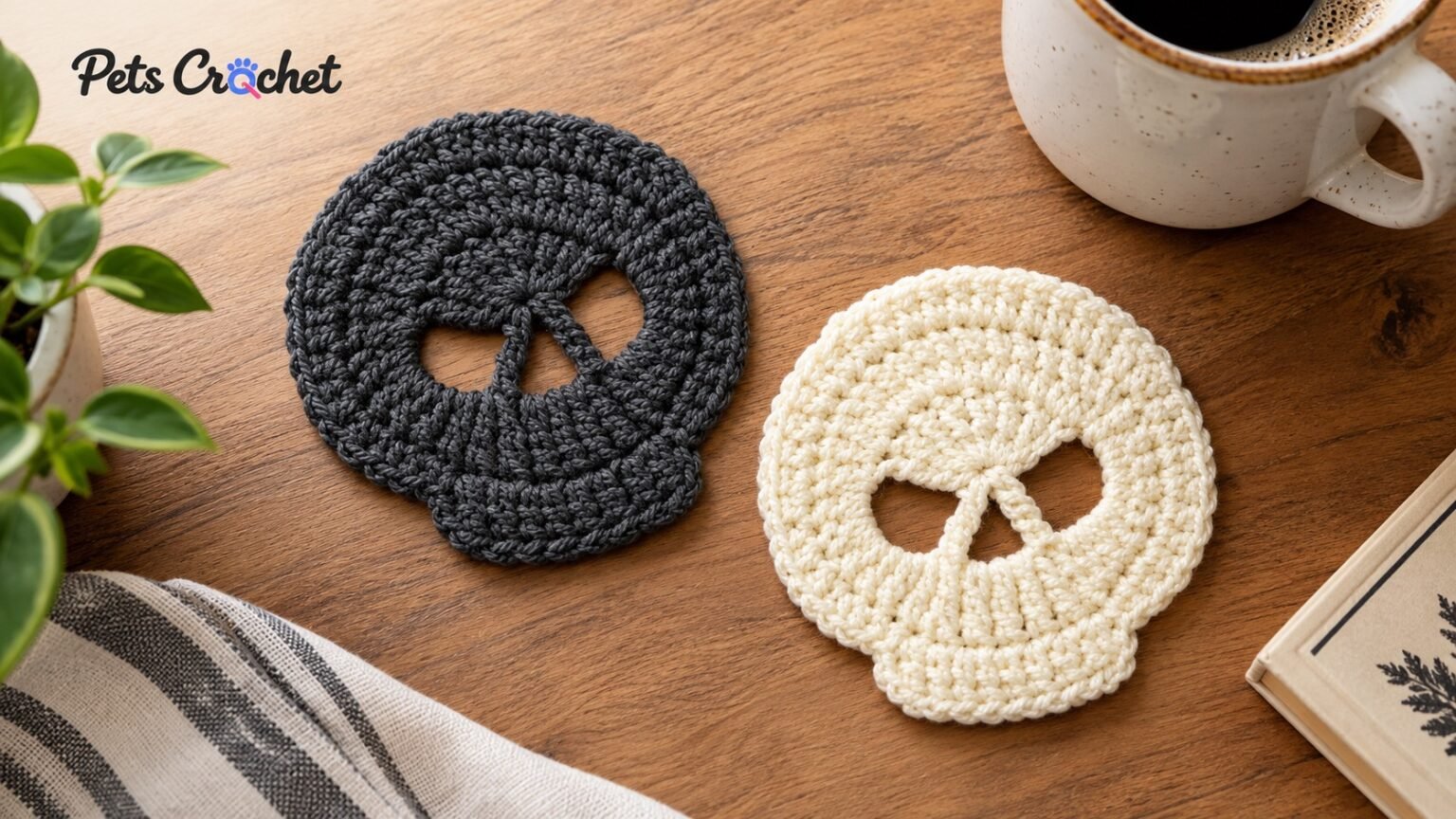
Two open eyes, a little nose gap and a short curved jaw make this crochet skull coaster easy to recognise. The shape is worked into the fabric, so there are no separate eyes to sew on. In charcoal it looks understated; the cream example makes the openings stand out against a darker surface.
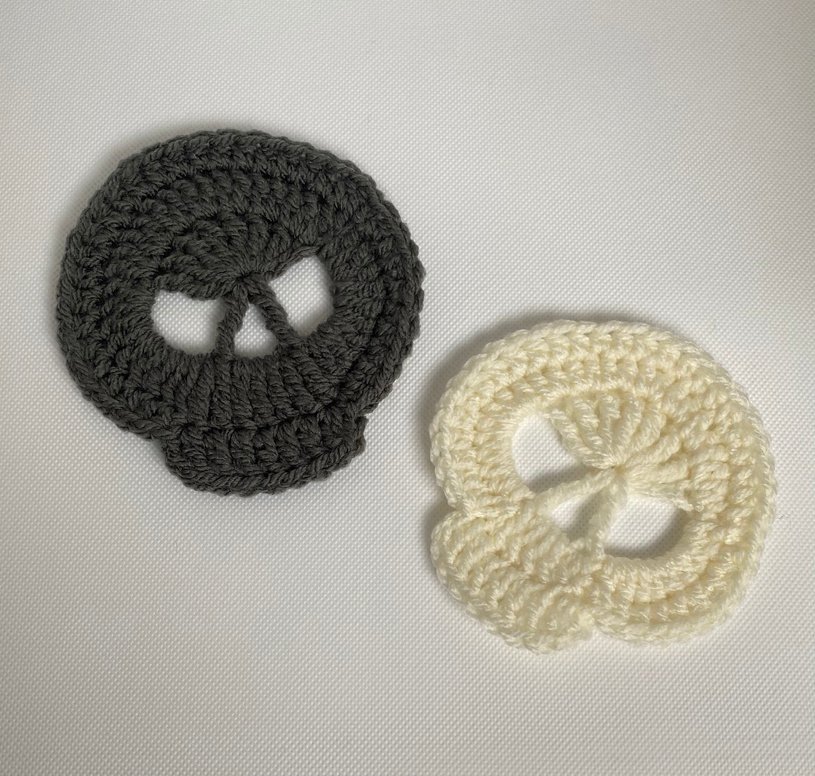
The original design is by Mumsy Makes / Loralie Hayes. Its photos show one design in two colours, followed by the stages that build the face. Here is what to look at before making a sample for your Halloween table or everyday skull-themed decor.
Private editorial review: The linked adaptation contains proposed stitch clarifications and has not been physically tested. Source-image and pattern reuse permission is not established. Its download CTA is prepared for a cleared edition, not a current public offer.
1. An openwork crochet skull coaster
The rounded crown keeps the outline compact, while two larger openings create the eye sockets. A much smaller opening sits between them. The jaw projects just below the face, which gives the skull its shape without a separate piece.
Both photographed colours use that same construction. Choose charcoal for a darker table detail or cream for more contrast, but check your yarn and finished size rather than assuming the two examples establish identical measurements.
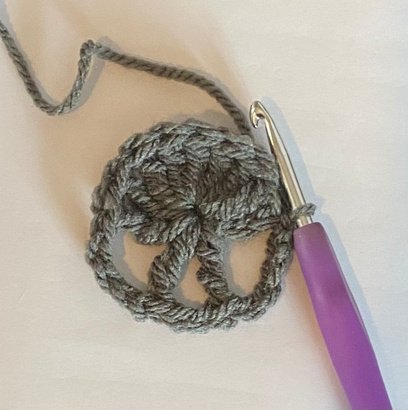
The face starts with open spaces
The first round combines a fan of tall treble stitches with two chain loops. Those loops leave room for the eyes instead of filling the whole shape with stitches. Keep the central anchors distinct as you work; they become useful landmarks when the jaw is added.
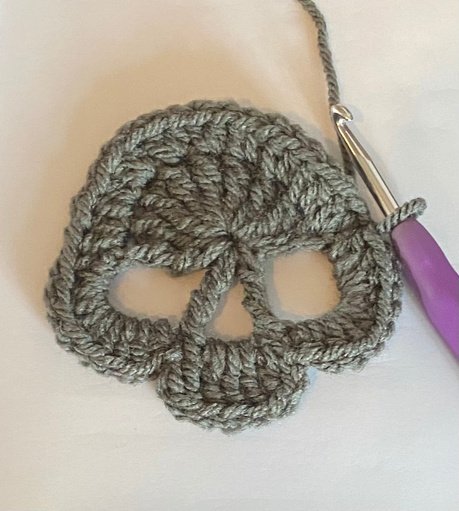
The next round gives the eyes their outline
Half double crochets fill out the crown and wrap around each eye loop. Double crochets form the short jaw section between the two central anchors. This is a small project, but it helps to count each area on its own rather than treating the whole perimeter as one uninterrupted circle.
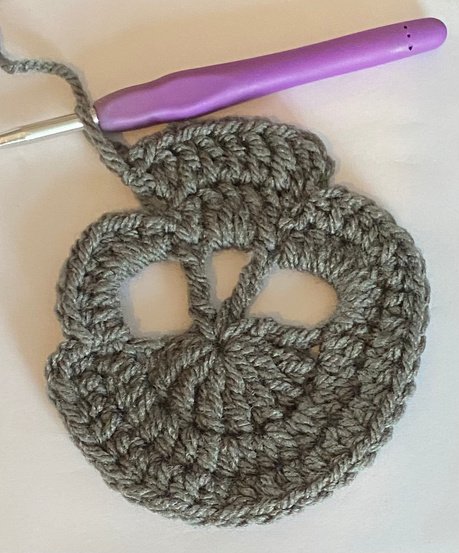
Pause before the final border
The supplied pattern has an unclear transition into the last jaw section. The private guide names the stitch groups and explains its proposed placements, including a count clarification along the crown and first eye. Those changes need a crocheted sample; the original process photos are references, not proof that the adaptation has been tested.
Charcoal or cream?
The charcoal skull suits a restrained Halloween arrangement with a plain mug and one other seasonal detail. The cream version gives a stronger outline against dark wood or a dark table mat. Try either colour against the surface where you plan to display it.
For a set, make one sample first and record its yarn, hook and dimensions. Repeat the construction in the same yarn range if you want similar sizes. The source does not identify the cream shade, so choose it by the actual yarn label rather than treating the photo as a colour chart.
Yarn and size: check these before starting
The source lists a 5 mm hook and Stylecraft Special Aran in Graphite 1063, with 10.3 metres of yarn. That amount is source information, not a measured requirement for the clarified guide. Keep extra for the gauge swatch and finishing.
Stylecraft identifies Special Aran as acrylic in its 2023 shade book. If you prefer cotton, treat it as a substitution: it may change the size, feel and shape, and it still needs a flatness and cup-stability check.
The PDF states about 3 inches high, but its materials page carries an unrelated Sunflower heading, and the designer’s online listing gives a different size. Neither figure is a reliable promise for this draft. Measure your own sample from crown to jaw and across the widest part before deciding where to use it.
Use it as decorative openwork
The eyes and nose are holes. That is what makes the motif work, but it also leaves parts of the tabletop uncovered. This coaster cannot act as a continuous barrier against moisture, and the pattern does not establish heat protection.
Try an empty cup on the dry piece. If the base rocks, catches the jaw edge or needs protection the openwork cannot provide, use the skull as table decoration instead. Keep it away from hot pans, and follow your actual yarn label when cleaning.
For PetsCrochet, this belongs in Crochet Home Decor alongside the spider coaster and other seasonal makes. It is a project for your home, not a pet accessory. Keep it and any working yarn out of reach of pets that chew or pull at crochet.
Before you start
Is this one pattern or two?
One pattern, shown in charcoal and cream. The two colours are not separate designs, and the photos do not establish a graded size range.
Is it suitable for a beginner?
The source labels it beginner level. It uses chains, slip stitches, half double crochet, double crochet and treble crochet. Because the final-round wording needs clarification, this private edition is best approached as a sample to check carefully rather than a tested first-project tutorial.
Are the eyes sewn on?
No. The eye sockets and small nose opening are spaces in the crochet fabric. There are no beads, buttons or appliqued facial pieces in the source design.
Can I finish it with an invisible join?
The source calls for one but does not provide a usable embedded tutorial link. The adapted guide explains a needle join directly, along with securing the centre tail and checking for loose loops.
Save the colour reference while choosing your yarn. A single measured sample will tell you more about this coaster’s size and use than the conflicting source measurements can.