

If your idea of fall includes pumpkin pie and a warm drink, these fall crochet patterns bring the same colours to your yarn basket. The collection has seven dessert-inspired projects, from a pumpkin spice latte mug to a caramel apple with a little covered stick.
Burnt orange, mustard, cream and green make the pieces work together, but each has its own shape and finishing details. Make one for an autumn shelf, or build a small seasonal display with a few favourites. Each project has its own free PDF guide, so you can choose the design you want.

1. Pumpkin Spice Latte Mug

A pumpkin-shaped mug with a generous swirl of cream is the centrepiece of the set. The green handle breaks up the orange, while the tiny pumpkin and cinnamon stick make the top worth a closer look.
The pumpkin ribs are separate narrow sections attached around the mug body. That is a different construction from pulling yarn around a single stuffed ball. The guide includes the handle, cream, little pumpkin and cinnamon detail as well as the mug.
Choose this if you enjoy assembly
There is more finishing here than the small photo might suggest. The decorative handle has an internal support, and the cinnamon detail uses a concealed wooden support. This is a stuffed display figure, not a cup for hot drinks.
2. Pumpkin Pie Slice
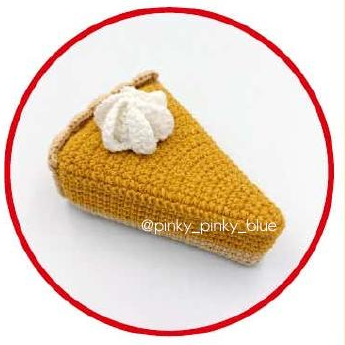
The pumpkin pie slice keeps the palette simple: mustard filling, beige crust and a white cream rosette. Its triangular shape makes a good contrast beside the round mug and cupcakes.
The slice is built from matching triangles with sides between them. A foam insert gives the pictured pie its depth, while a separate crust panel finishes the wider back edge. The cream on top is a small shaped piece with curled petals.
Pay attention to the corners
Matching the top and bottom matters more than rushing through the rows. Lay the two triangles together before assembling the slice and check the corners and edges. The guide includes the triangle schedule rather than sending you to another pattern.
3. Pumpkin Cookies

These cookies are the flattest designs in the collection. Orange or yellow icing sits on a beige base, with a scalloped edge and short embroidered sprinkles for colour.
Both pictured cookies use the same construction. The colour change gives them a different look without creating a second pattern. The base is worked closed without stuffing, then the icing is attached on top.
A smaller place to start
The cookie has fewer components than the mug or lattice pie. You will still need to count the shaping and finish the embroidery, but there is no separate liner, handle or pie wall to fit.
4. Lattice Apple Pie Slice

The apple pie slice is all about texture. Little folded apple pieces fill the top, and thick beige lattice strips cross over them. The rolled back crust makes it look quite different from the smooth pumpkin pie.
A thin sponge insert supports the slice. The apples are made in two colours and attached before the doubled lattice strips go on. Optional tinting adds warmth to the fruit pieces, as shown in the making photos.
Leave time for the topping
This is the project to choose when you enjoy making lots of small parts. Arrange the fruit and the six doubled lattice bands before fixing them down, so the top feels full without hiding the triangular outline.
5. Iced Pumpkin Cupcake
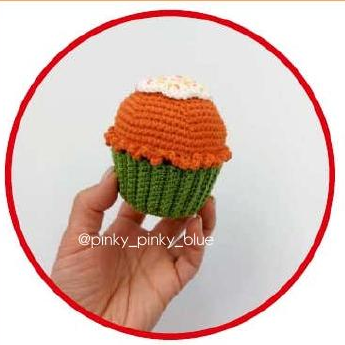
The iced cupcake has a rounded terracotta top, a small white icing flower and colourful sprinkles. A green ribbed liner frames the base and ties it into the pumpkin palette.
The liner is made separately, using short rows worked from a round base. A little looped border sits where the cupcake top meets the lower section. The finished liner can be left removable or fixed in place after checking its fit.
Two textures in one project
The smooth dome and vertical liner ribs give this cupcake its appeal. Try the liner around the filled cupcake before closing its side seam; the fit depends on your yarn and tension.
6. Pumpkin-Topped Cupcake
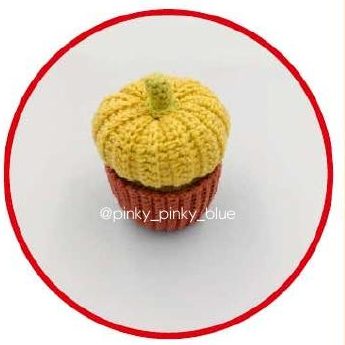
This cupcake swaps the icing flower for a whole ribbed pumpkin top. The yellow pumpkin, green stem and brown liner make it one of the clearest fall designs in the set.
The pumpkin topping starts as a shaped strip with taller stitches through the middle. After the strip is joined, both ends are gathered and the filling is adjusted to sit neatly on the cupcake.
Keep the topping lightly filled
The pumpkin needs to settle on the cupcake rather than sit like a firm ball. The guide includes the shared cupcake base and the adjusted liner, so this project can be made from its own PDF.
7. Caramel Apple
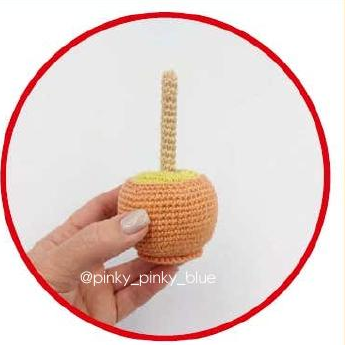
A green apple peeking above a caramel-coloured shell finishes the collection. The covered stick gives it height, and the separate lower circle tidies the bottom.
The apple and caramel coating use different yarns in the reference, so the coating is fitted over the actual apple as you work. That fitting step is part of the construction, rather than a detail to leave until the end.
Check the shell as you go
Make the apple first and try the caramel layer on it before committing to the side height. This decorative version contains a concealed wooden support; it is not intended for chewing or mouthing.
Choose a project for your fall display
Start with the cookies if you want fewer separate components. Pick the pumpkin pie for a clear geometric shape, or the lattice apple pie if you like detailed assembly. The mug makes a strong centrepiece, while the two cupcakes let you practise ribbed liners in different sizes.
The orange, mustard and caramel colours work for autumn beyond Halloween. A shelf with a few crochet treats does not need spooky faces or extra holiday props to feel seasonal.
Materials and making notes
The reference uses YarnArt Jeans, Alize Cotton Baby and Gazzal Baby Cotton with 2 mm and 2.25 mm hooks. Small differences in yarn and tension matter when fitting the cream, liners and caramel shell. Each PDF lists the relevant colours and components.
These are decorative crochet food designs. Some include glue, foam, plastic, wire or concealed wooden supports. Keep the finished pieces out of reach of pets and anyone likely to mouth small parts. No pet-toy or child-toy safety is implied.
No finished dimensions or numerical gauge are supplied. The guides explain how to measure your sample and identify proposed clarifications to stitch counts and assembly. They are prototype-ready drafts, with no new physical or wash testing completed.
Questions before you choose your yarn
Are there seven or eight patterns?
There are seven designs: one latte mug, two different pies, one cookie pattern, two different cupcakes and one caramel apple. The two cookie colours are variations of the same pattern.
Does every PDF include the complete instructions?
Yes. Shared parts, including the pie triangle, cupcake base and icing, are written into the individual guide that needs them. You do not need to download another project just to find a component.
Are these beginner crochet patterns?
The full set includes shaping, loop-specific stitches, sewing, fitting and small supported details. The cookies have fewer parts, but the collection as a whole is better suited to a crocheter comfortable with amigurumi construction.
Can I wash the finished pieces?
Follow the labels for every material, including adhesive, supports and optional colouring. Test cleaning on scraps first. No whole-project wash test supports a machine-wash claim.