

Silver-grey hair and a green vest, or long black hair and a red-cloud cloak? These two Naruto crochet patterns have very different finishes. Kakashi gets his shape from a joined body, a raised blue mask and brushed yarn hair. Itachi has a separate head, a shaped black cloak and a ponytail at the back.
Each character has its own free pattern PDF with the complete written making route. The photos also give you a useful way to compare the clothing, hair and small details before picking a project. These are two character dolls from the Naruto series, rather than two versions of Naruto Uzumaki himself.
1. Kakashi Hatake with a Green Vest and Brushed Hair

The vest is the detail that invites a closer look. It has little pockets, shoulder straps and a raised collar over the indigo body. White leg bands, beige toes and a small black thigh pouch add detail without changing the doll’s compact proportions.
Under the clothes, the two legs join across a short chain bridge. The body narrows into the neck, then the head grows from that opening. The mask is worked separately into reserved neck loops and shaped in short rows, so it sits above the body rather than looking like a stripe of blue paint.
Look closely at the vest
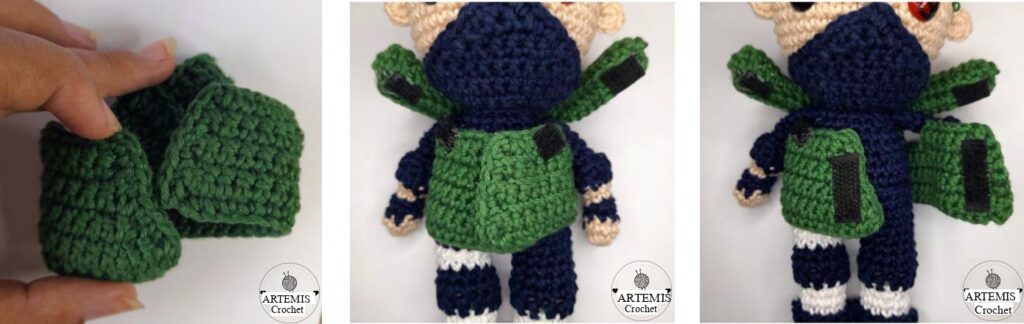
Read the clothing section before sewing on the pockets. It is easier to check the overlap and shoulder straps while the vest can still lie flat. The guide uses an indexed draft route for the upper panels so the attachment points are explicit.
The hair is a separate finishing job
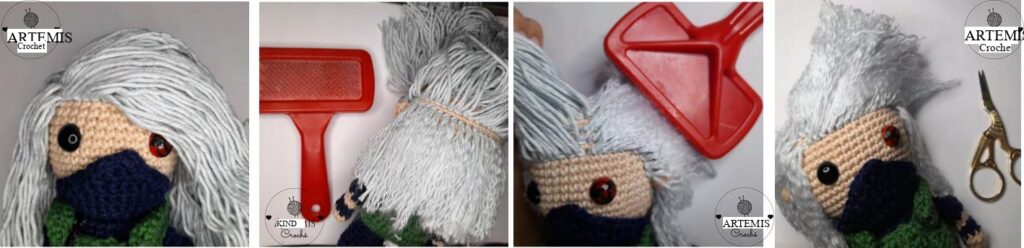
This version uses lengths of grey yarn attached to the head, then brushed and trimmed. That gives it a different surface from a cap covered in crocheted spikes. Test the actual yarn on a scrap first: fibres do not all separate or hold a swept shape in the same way.
The supplied reference height is about 18 cm, using a 2.5 mm hook. Treat that as a starting reference for the materials, rather than a promised size for every yarn and tension. The PDF separates those reference details from measurements of a new sample.
What the free PDF includes
The legs, joined body and head, mask collar, arms, sleeves, ears, vest, pockets, forehead band, thigh pouch and hair finish. It also includes the construction reference panels and clearly marked draft interpretations for the count and placement details.
2. Itachi Uchiha with a Cloud Cloak and Ponytail
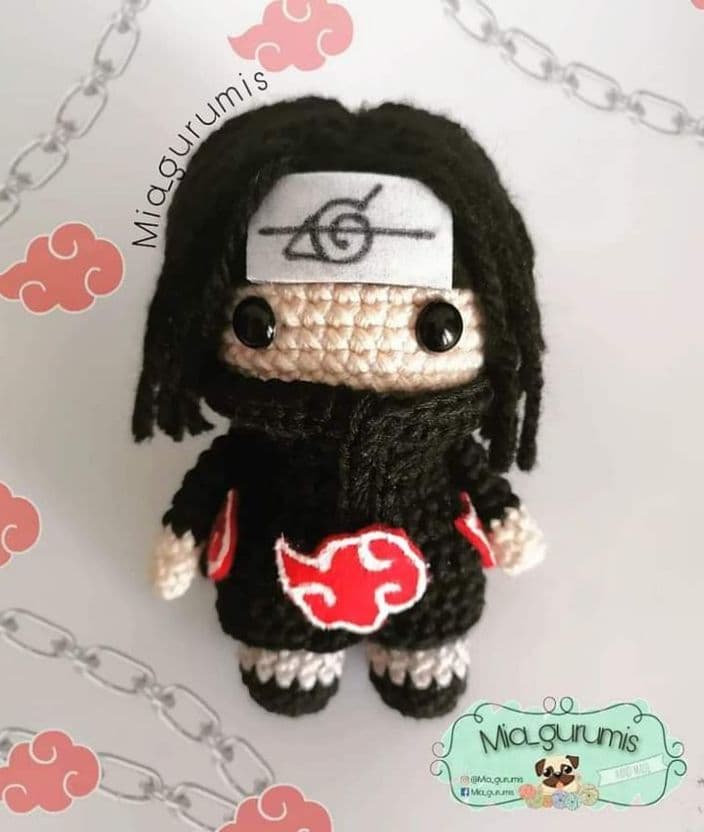
Itachi has a simpler colour palette, but the contrast does a lot of work. The light face and hands stand out against the black hair and cloak, while the red-and-white cloud gives the front a clear focal point.
The legs and body form one piece. The head starts separately at the black crown, changes to skin tone and finishes with an open lower edge. Both the head and body end with 21 stitches, giving you matching neck openings to sew together.
Shape the cloak before adding the clouds
The cloak starts as a flat black panel. It narrows through the middle, then widens again at the top to form the high collar. The arms attach outside it, so you do not need to invent sleeve openings in the coat panel.
Check the cloak around the actual stuffed body before closing its seam. Put the front cloud where you want it, then compare the side motifs and hand positions. A paper template is useful for getting the felt shapes to suit the doll you have made.
Remember the back view

The long hair at the back changes the silhouette. Shorter strands frame the face, while longer rear strands gather into the ponytail. Keep the forehead band visible and check the back before giving the hair its final trim.
This reference does not give a hook size, finished height or yarn quantity. The guide offers a clearly labelled sampling starting point and measurement notes, so those missing details are not mistaken for tested specifications.
What the free PDF includes
The joined legs and body, separate head, arms, ears, shaped cloak, neck seam, hair placement, forehead-band finish and cloud details. The three supplied finished and hair-placement reference panels are included with the written route.
Which Naruto crochet pattern should you choose?
| Detail | Kakashi | Itachi |
|---|---|---|
| Core construction | Legs join into a body and continuing head | Joined legs/body, with a separate head |
| Main clothing feature | Green vest with pockets and shoulder straps | Black cloak with a flared collar |
| Hair finish | Attached yarn, brushed and trimmed | Attached yarn with longer rear strands |
| Reference detail | More construction photographs | Finished front, hair placement and rear view |
Choose Kakashi if the vest and brushed hair are the parts you want to explore. Choose Itachi if you prefer working around a separate head and a shaped cloak. Both involve sewn details and careful finishing; neither is a no-sew doll.
Yarn, tension and finishing notes
Use a hook that makes dense fabric with your actual yarn, then check a stuffed sample before committing to the whole doll. A loose fabric can show the filling, while a very stiff fabric can make the small clothes and neck seams awkward.
Keep a note of the hook, yarn labels and actual amount used by colour. Check the paired limbs side by side, and fit the clothes before attaching every felt detail. The PDFs are prototype-ready drafts with no independent physical crochet, wash or seam-strength test.
These character dolls are decorative projects. Keep them and their loose hair, felt pieces, eyes and accessories out of pet access. Follow the labels for the materials you use and test cleaning on scraps before cleaning a finished doll.
Questions before starting
Are these patterns in English?
The individual guides use US-English crochet terms and full written making routes. They explain the source count ambiguities and the added draft placement notes beside the relevant steps.
Are the two dolls the same size?
No shared size is established. Kakashi has an 18 cm reference height; Itachi has no numerical height in the supplied notes. Compare the actual finished measurements if you want to display them together.
Do both guides have step-by-step photos?
Kakashi has genuine component and finishing photographs. Itachi has a finished front view, a hair-placement reference and a rear view. Its other construction stages are explained in writing.
Can I use the same hair method for both?
Both use attached yarn strands, but the finish differs. Kakashi’s yarn is brushed and shaped into a swept style. Itachi’s longer rear strands form a ponytail. Test yarn behaviour and compare the appropriate reference before trimming.