A cream face, little brown ears and a nose made with a few embroidery stitches: Charlie has the familiar panda markings in a softer palette. This tiny panda crochet pattern by Kristi Tullus makes one small bear, shown in dark brown and warm sandstone colourways.
Its round head is wider than the body, with a raised muzzle between the eyes and short arms at the sides. The small pieces make facial placement and sewing worth a little extra attention.
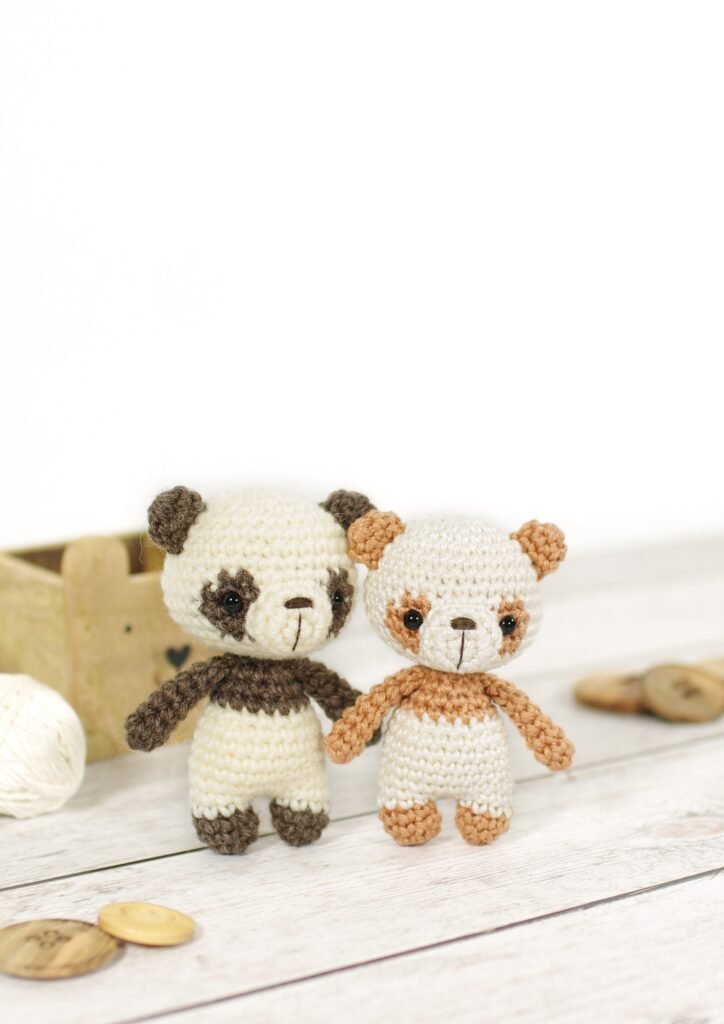
Project at a glance: One design, approximately 10 cm / 4 in from head to toe in the source sample. Intermediate crochet, US terms, small colour changes and sewn assembly. The PetsCrochet guide is a credited adaptation of the supplied PDF and has not been physically tested.
1. Charlie the Tiny Panda: choose your brown
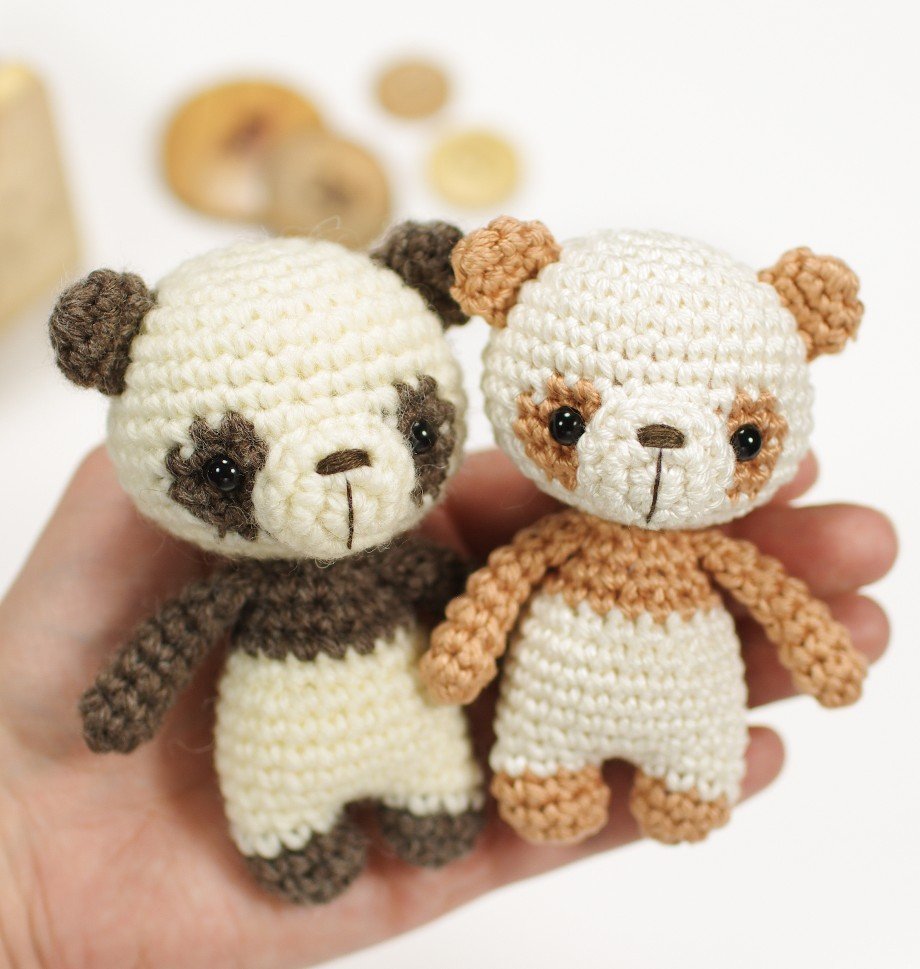
The dark version has a wool-blend texture, with the brown ears, eye patches and upper body standing out against the cream. The lighter version is cotton and shows the stitches more crisply. Both use the same panda construction.
Choose by the effect you like, then check the actual yarn rather than relying on colour alone. Fibre and tension change how firmly the head holds its shape and how the stitches look around the eyes. The source gives one approximate finished height, not a separate size for each colourway.
What makes this little bear distinctive
The eye markings are worked into the head with colour changes. The muzzle is a separate piece, and a little shaping around the eyes gives the face depth. The legs join into a single body, so you do not sew two finished legs onto the bottom afterwards.
The guide includes the complete stitch schedule, assembly instructions and 97 original tutorial photographs. The photo atlas also covers the general amigurumi techniques used in the project, from a magic ring to sewing the neck seam.
Charlie · one complete editorial guide · source design and photography credited to Kristi Tullus.
Yarn, tools and the size to expect
The source lists DK, light worsted or sport yarn and a 2.50–3.00 mm hook. Its 10 cm sample was made with DK yarn and a 2.50 mm hook. Those yarn labels cover different thicknesses, so a dense fabric test matters more than assuming any ball with a similar label will behave identically.
| Detail | Source information |
|---|---|
| Dark colourway | Alize Wooltime: cream and mushroom; 75% wool, 25% polyamide |
| Light colourway | Cascade Yarns Ultra Pima: natural and sandstone; 100% cotton |
| Yarn amount | About 11 g white and 6 g brown for either example |
| Finishing supplies | Filling, eyes, dark brown embroidery floss, yarn needle and stitch marker |
These are the designer’s reported materials and amounts, not new measurements from a PetsCrochet sample. Leave spare yarn for sewing. There is no numerical crochet gauge in the PDF; work the first five head rounds and check the fabric against a little filling before continuing.
Three details worth slowing down for
The face before the washers go on
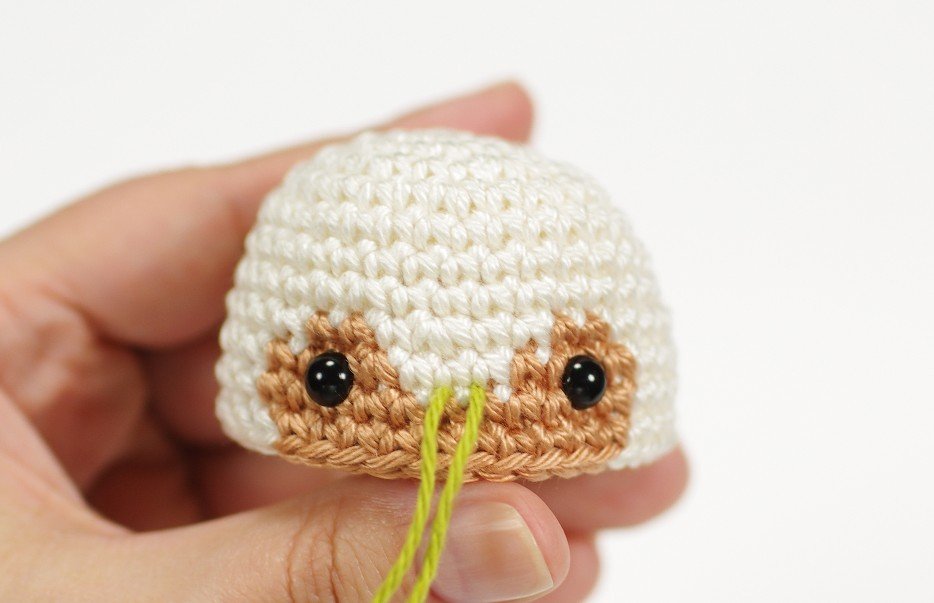
The pattern places the eyes while the head is still open. Look at the face straight on and compare both sides before fixing the backs. Once the muzzle is pinned in place, check again that it sits centrally between the eyes. A small change here can alter the whole expression.
The bridge between the legs
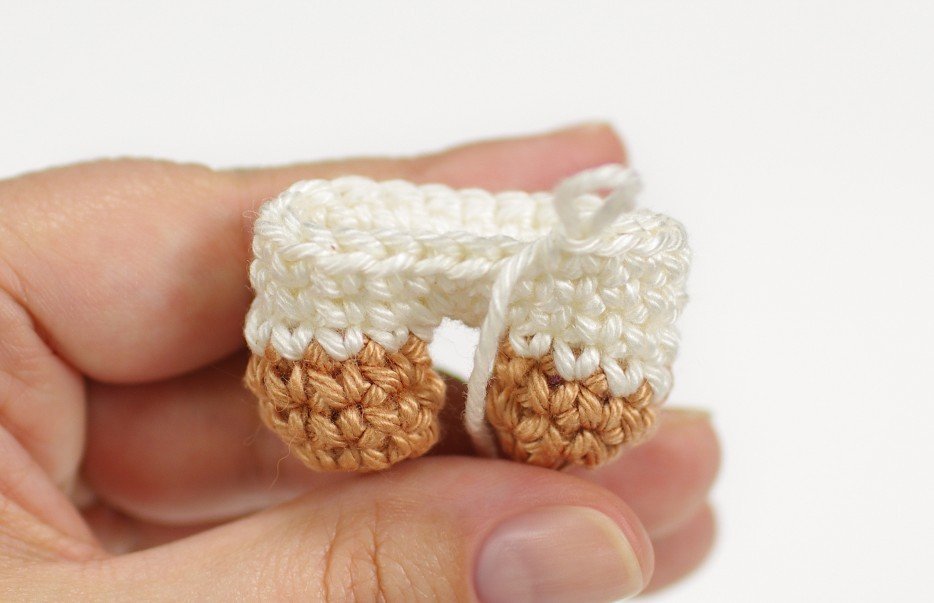
A short chain connects the legs, and the body is worked around the two leg openings and that bridge. Count the joining round carefully. The guide explains which chain belongs in the total and when to move the round marker, two details that are easy to miss if you read too quickly.
The flat tops of the arms
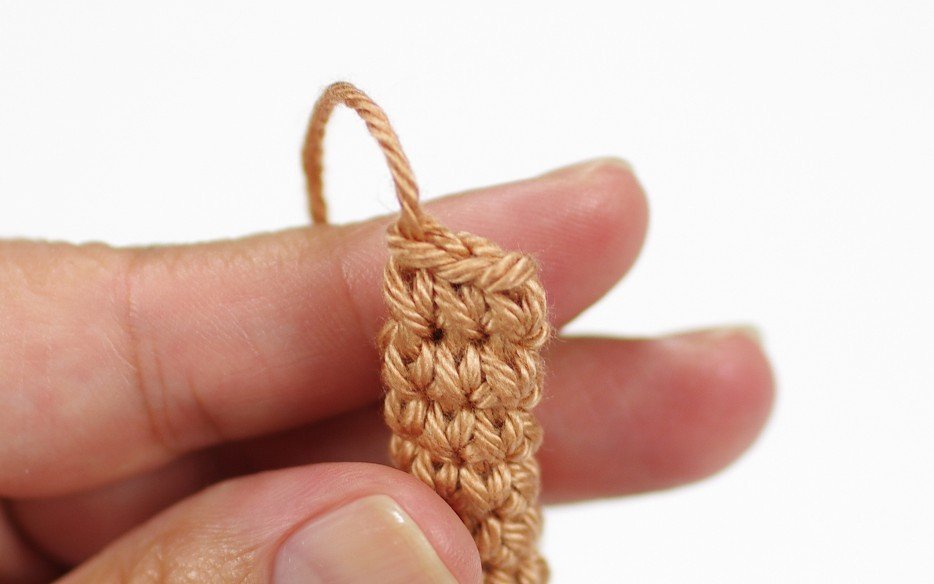
The arms are filled more lightly than the hands, then flattened at the top and crocheted closed. That gives you a small edge to sew below the neck. Pin both arms before attaching either one, and compare how they sit beside the body.
A panda project for an animal-loving home
This fits PetsCrochet as a collectible for someone who enjoys animals and handmade things. It could sit beside a framed pet photo on a desk, join a small bear collection or become a handmade gift for an adult animal lover. A closed display cabinet is a useful option in a home with curious pets.
Keep this bear out of your pet’s reach. The small eyes, sewn parts and filling belong to a decorative amigurumi construction, and this edition has not been tested as a pet toy. Keep loose yarn and your needle put away as you work, too: swallowed yarn can cause serious intestinal injury. VCA Animal Hospitals explains the risk from string and yarn.
Before you start
Is this a beginner panda pattern?
The designer rates it intermediate. Much of the fabric is single crochet, but the face includes short colour changes and the body needs a careful leg join. Small size does not necessarily mean simple construction. Keep the photo atlas open beside the written guide if these techniques are new to you.
Do the brown patches need sewing on?
The eye markings are colour changes within the head. The white muzzle and brown ears are separate pieces that you sew on. Facial embroidery comes before the head is attached to the body, while the yarn ends are easier to reach.
Can I change the yarn to make a bigger panda?
You can experiment, but the listed 10 cm size applies to the source sample. Changing yarn and hook changes scale, fabric and filling requirements. Make and measure a test rather than promising a particular finished height. The guide explains the limits of using a sample-width ratio as a rough estimate.
Can I replace the hard eyes?
The source lists several eye options. A change to felt or embroidery would also change the appearance and needs its own placement check. It would not, by itself, make the finished bear a tested toy. This package presents Charlie as an adult display piece.
How should I clean it?
Follow the care instructions for both your yarn and your filling. Test colourfastness and try spot-cleaning first. The wool-blend and cotton examples should not be assumed to need the same care, and this assembled edition has not been wash-tested.
Pick the brown you keep coming back to. Dark mushroom gives the face a clear outline; sandstone keeps the palette light. Save the colourway photo, gather your yarn and keep the guide nearby when you reach the face and leg join.
Original design and PDF photographs: Kristi Tullus, © 2025, TÜ Spire. PetsCrochet article and editorial adaptation. The designer also provides an online pattern and the original printable edition. This branded guide does not claim a new original design.