
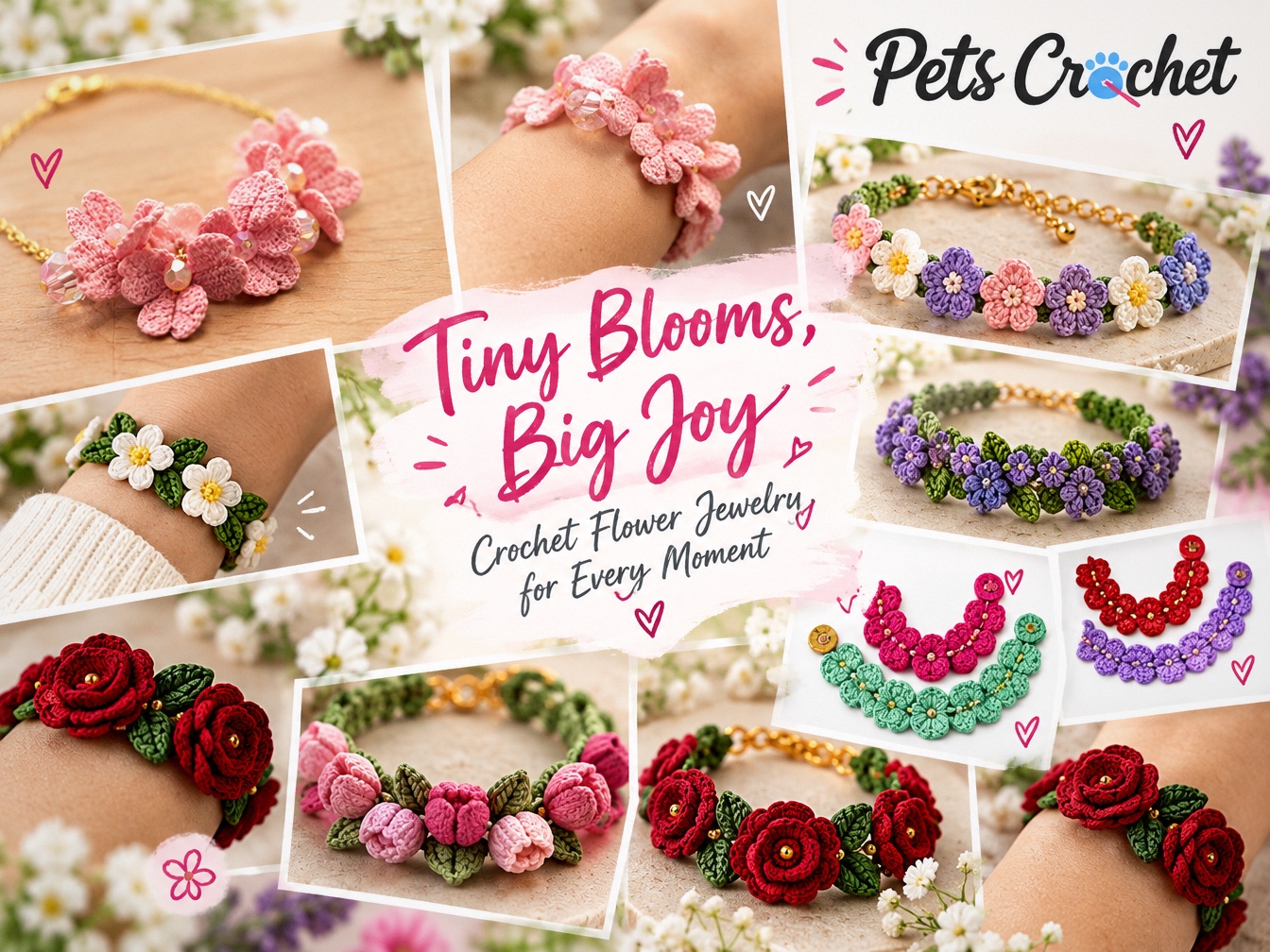
A crochet bracelet can be a row of tiny lace flowers, a cluster of red roses, or a fine-thread piece finished with beads and a metal clasp. These seven ideas explore those different shapes, with a separate free PDF download for each bracelet.
Choose the outline first, then look at the yarn and fastening. The pink micro-crochet design uses a much smaller hook than the cotton-thread lace band. The flower clusters also need some sewing and placement. Each download includes making notes; where the illustrated instructions need clarification, the proposed additions are marked as untested drafts.
| If you like… | Start with… | Check first |
|---|---|---|
| Raised flowers | Roses, lavender or tulips | Flower height and band flexibility |
| Open petals and colour | Jasmine or six flowers | Motif width and spacing |
| Fine-thread jewellery | Pink micro-crochet flowers | Small hook, charts and metal fittings |
| A continuous lace band | Six-petal lace flowers | Motif gauge and button-loop fit |
1. Layered Rose Bracelet
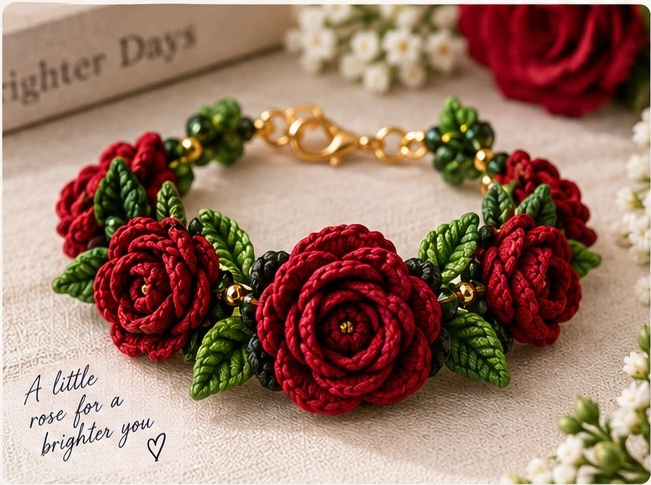
Red roses sit above a bed of green leaves, giving this bracelet more depth than a flat flower band. The black-rose option changes the mood without becoming a separate idea. A metal clasp and extension chain finish the back.
One detail to plan before starting
Make one rose before the whole set. Petal size, layering and the space between flowers determine how bulky the bracelet feels on your wrist.
Yarn and hook: 2.0-2.5 mm reference hook; smooth sport or DK cotton suggested in the illustrated pages. Red or black for roses, green for leaves and band; optional 3-4 mm beads. No verified yarn consumption.
2. Lavender Cluster Bracelet
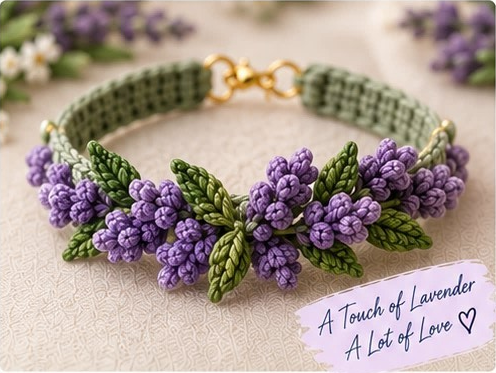
Small purple flowers gather into lavender-like clusters along a green band. The leaves give the purple a clear outline, while the plain back keeps the bracelet from becoming a continuous ring of flowers. It is a good option if you enjoy arranging tiny pieces.
One detail to plan before starting
Lay out the clusters on the finished band before sewing. Keep the middle fuller and leave the clasp ends clear so the bracelet can still bend.
Yarn and hook: 2.0-3.0 mm reference hook; smooth cotton. Purple flowers, optional pale-purple accents, sage leaves and a green band. Illustrated allowances: 5-10 g for each motif colour and 10-15 g for the band; not measured consumption.
3. Tulip Bracelet
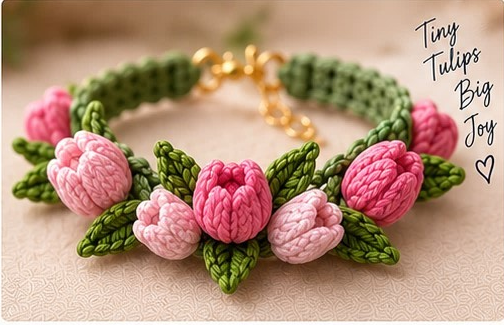
Rounded pink tulips stand above pointed green leaves. Light and darker pink flowers make the row look varied, and the small cups give this bracelet a different silhouette from the open-petal designs. Purple and white examples are colour options in the same guide.
One detail to plan before starting
The tulips need room to stand up. Check the arrangement with the band curved around your wrist, not only while it lies flat on a table.
Yarn and hook: 2.0-2.5 mm reference hook; lightweight cotton in pink shades and green. Needle, marker and clasp; no verified gram or metre total.
4. Jasmine Flower Bracelet
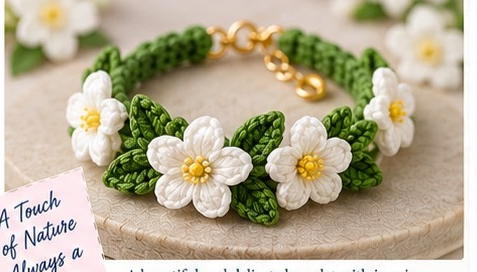
White jasmine-inspired flowers and yellow centres make a crisp contrast with the green leaves. The blooms sit across the front of the bracelet, with a simpler band behind them. This is the lightest-looking palette in the collection.
One detail to plan before starting
Keep the flower centres aligned before attaching the leaves. A small shift in the leaves is useful, but tilted centres can make the row look uneven.
Yarn and hook: Thin smooth cotton in white, yellow and green. The reference says a small hook without a fixed number; proposed first trial is 2.0 mm with sport cotton. Clasp and jump rings; no verified yardage.
5. Six-Flower Bracelet

Six open flowers alternate pink, white and purple around this bracelet. Yellow centres tie the colours together, and the green details sit between or below the flowers. It is an appealing choice when choosing the colours is half the fun.
One detail to plan before starting
Measure a finished flower before deciding the spacing. Six large motifs plus long connectors will not fit the same wrist as six smaller motifs with closely placed edges.
Yarn and hook: Reference cotton yarn, with pink, white, purple, yellow and green. Proposed smooth sport cotton and 2.5 mm hook as a starting trial; adjust for smaller motifs. Clasp and extension chain; no verified yarn total.
6. Pink Micro-Crochet Flower Bracelet

This pink bracelet uses much finer thread than the yarn-flower designs. Three-petal flowers sit among smaller blooms and reflective bead details on a metal chain. The close views show just how small the motifs are.
One detail to plan before starting
Start with one motif and good light. A 0.5 mm hook and size 80 thread make this a fine-detail project, even though the bracelet itself is small.
Yarn and hook: DMC Dentelles size 80, colour 761, with a 0.5 mm hook; smaller flowers use one strand of DMC embroidery thread, colour 23, and a 0.4-0.5 mm hook. The reference also lists chain, clasp, 4 mm jump rings, headpins, crystals, seed beads and fabric stiffener.
7. Continuous Lace Flower Bracelet

This bracelet is a continuous strip of lace flowers, rather than flowers sewn onto a separate band. The open centres and little petals keep the outline simple. A bead or button at one end slips through the loop at the other.
One detail to plan before starting
Test the loop with the actual button before fastening off. It should close comfortably without stretching the flowers out of shape.
Yarn and hook: Cotton crochet thread size 10, a 3 mm reference hook, tapestry needle and a 10 mm wooden bead or button. Small amount of thread; no measured length or weight.
How to choose a crochet bracelet pattern
If you prefer to crochet one continuous piece, start with the lace flower band. It uses chains, double crochet and slip stitches, followed by a button or bead closure. If you enjoy arranging separate motifs, the roses, lavender and tulips give you more freedom over the front of the bracelet.
The pink micro-crochet project asks for fine thread, a small hook and careful reading of symbol charts. Its delicate look comes with a different working scale. Try one flower before buying all the metal fittings, so you know whether you enjoy that scale of crochet.
Measure the wrist and the fastening together
Wrap a flexible tape around the wrist where the bracelet will sit. Add the amount of looseness you like, then include the actual clasp or button arrangement in that finished circumference. An extension chain gives you options, but its entire length does not count if you fasten the clasp partway along it.
For a band with sewn flowers, measure the band after a trial wash or blocking that suits the yarn. For a continuous motif strip, make a few flowers and measure their combined length. A thick yarn changes both the size and the height of the petals, so swapping yarn is more than a colour decision.
Before sewing everything down, curve the bracelet around your wrist and check the flower spacing. Raised petals can crowd each other when the band bends. Leave the closure clear and move the leaves while you can still adjust them.
Finishing and caring for crochet jewellery
Secure each flower through its base, keeping bulky knots away from the inside of the band. Run a finger over the underside and around the fastening to find rough joins or exposed ends. If you use metal fittings, choose ones that suit the wearer and check that rings close fully.
Follow the yarn label when cleaning. A bracelet with stiffener, crystals or a metal chain needs different care from a plain cotton-thread band. Test care on a spare motif first, reshape gently and avoid pulling the bracelet longer while it dries. Remove it before activities that could snag the petals or soak the fittings.
A few questions before you pick your bracelet
Are the patterns available as free PDFs?
Yes. Each of the seven ideas has its own download button above, so you can open only the bracelet you want to explore.
Which bracelet uses beads?
The fine pink-flower bracelet includes bead and crystal details with a metal chain. Beads also appear as optional accents in some flower-cluster references. The continuous lace band uses a bead or button as its closure, rather than a beaded rope construction.
Can I change the number of flowers?
For a sewn-motif bracelet, you can change the arrangement after measuring your band and a finished flower. The lace band changes length by adding or removing complete centre-space repeats. Keep the fastening allowance in the calculation.
Is the black rose bracelet another pattern?
It is included as a rose variation in the first download. Colour and construction options stay together so you can compare them without treating another view or palette as another bracelet idea.
Do I need jewellery tools for every idea?
No. The lace flower band has a bead or button closure that you can sew on. Designs with metal clasps and jump rings need suitable tools for opening and closing those fittings. Check the chosen guide before starting.
Save the bracelet whose shape catches your eye, then open its PDF and make one motif. That small trial tells you far more about the yarn, petal size and finish than the photograph alone.