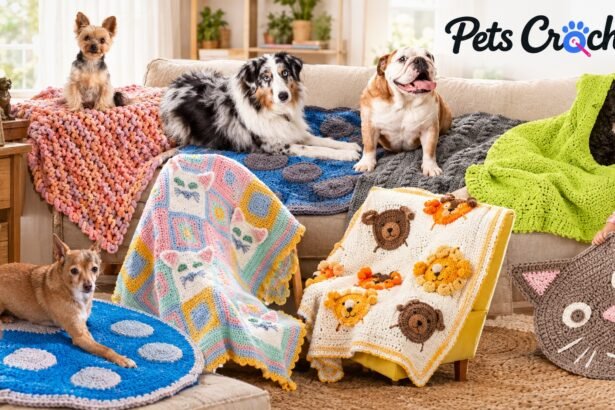

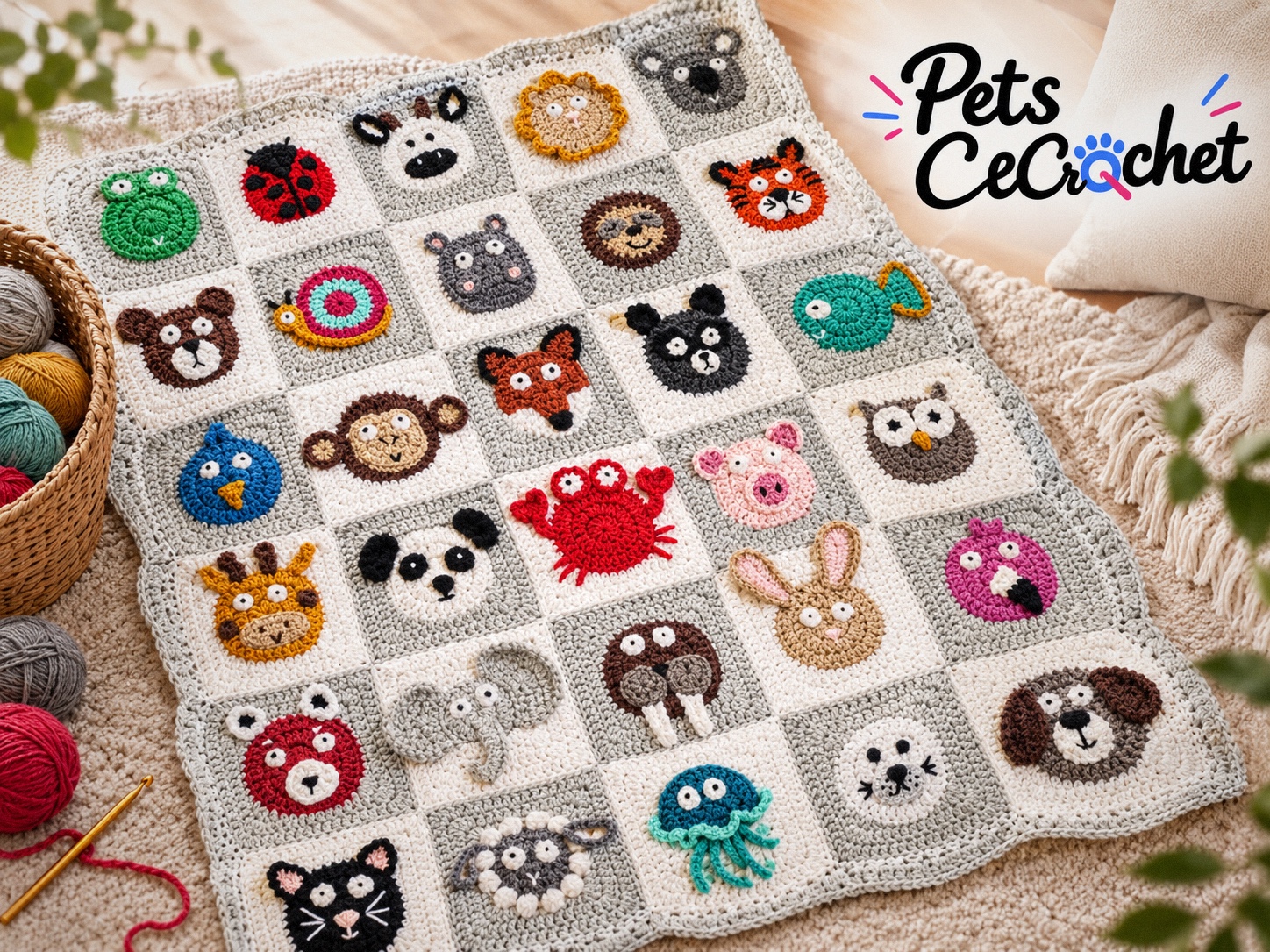
A black cat with white whiskers, a floppy-eared dog and a rabbit with long pink-lined ears: this animal-square blanket has plenty for a pet lover to enjoy. If you are collecting crochet pet blankets and mats ideas, it offers a colourful place to start, with one repeated square and 30 different animal faces.
The photographed blanket is a decorative applique design. Its ears, tufts, tentacles and other raised pieces are part of the look. The free PDF keeps all 30 motifs together and adds a proposed plain-square option for pet bedding, without those attachments. That flat option has not been photographed or physically tested.
1. One Animal-Square Blanket with 30 Motifs
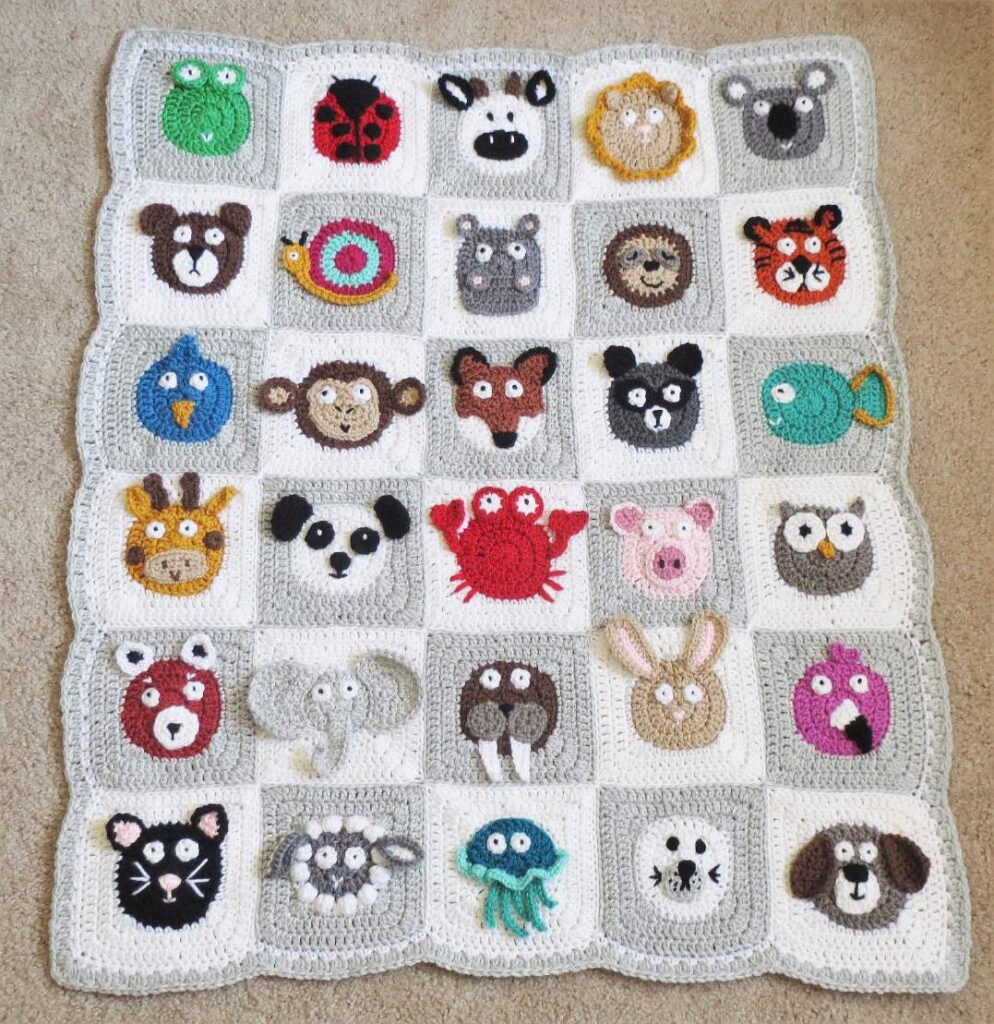
The white and light-grey backgrounds give all the colours a little space. Some faces are mostly a coloured circle with embroidered features. Others add separate muzzles, layered ears or a shaped beak. The result has a consistent grid even though each animal brings something different to it.
You can make the complete zoo, repeat a favourite animal for a decorative throw, or use the same base for the proposed plain version. Changing the grid changes the amount of work and the planned size; it does not turn each layout into a separately tested pattern.
Start with the cat and dog squares
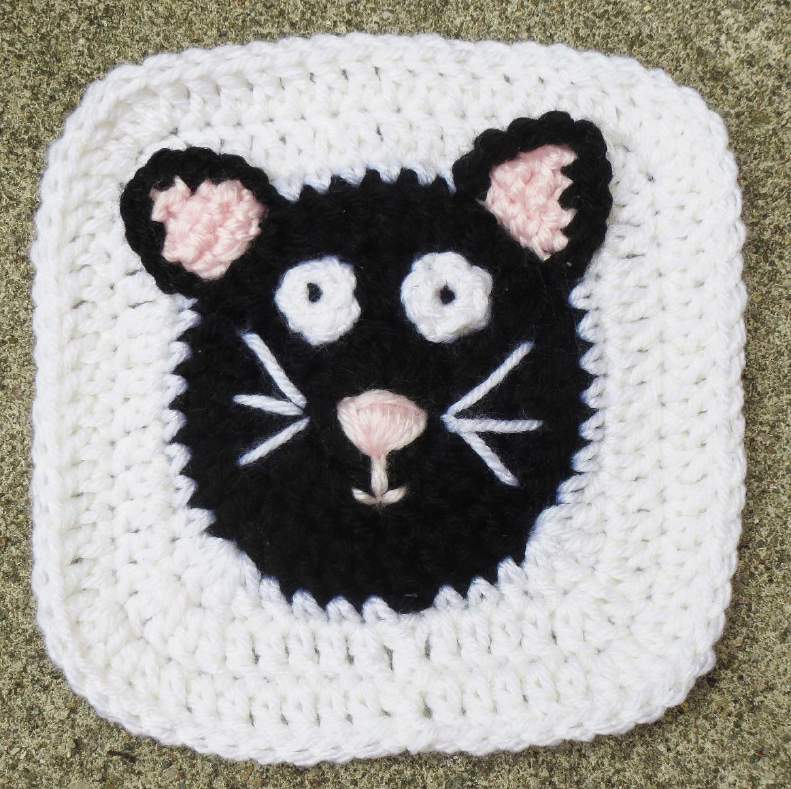
The cat is an easy one to spot in the finished blanket. Its black centre makes the white eyes and whiskers stand out, while a thin black border gives the pink ear triangles a clear outline.
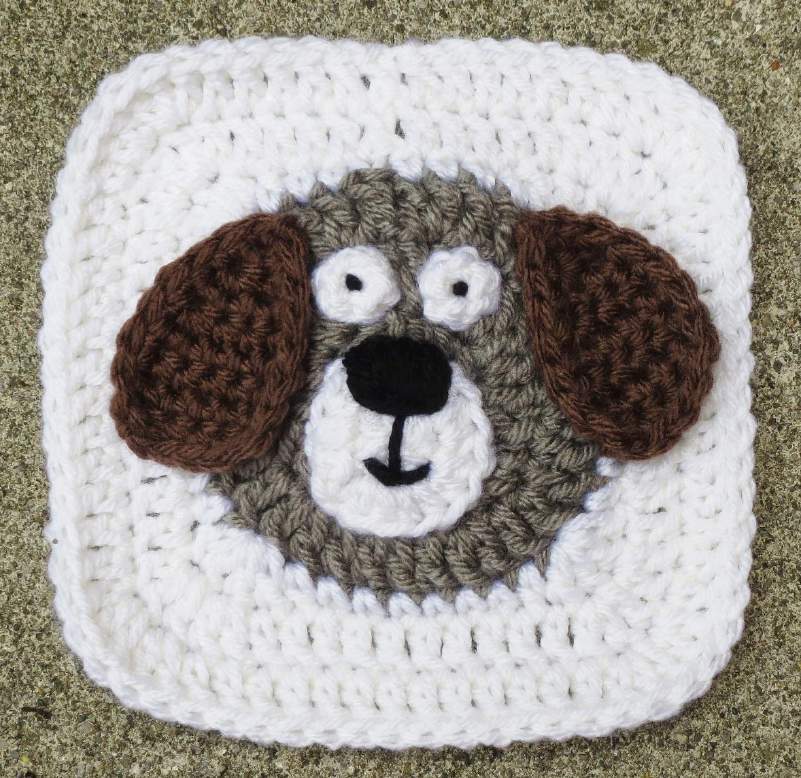
The dog takes a different approach. A broad white muzzle sits low on the brown face, and the dark ears frame it from the sides. Comparing these two blocks gives you a good sense of how much character comes from the shape and placement of a few small pieces.
For a decorative pet-themed throw, those faces are the point of the project. For a resting surface that a pet will actually use, the guide’s plain profile omits the face pieces entirely. Sewing an ear down does not establish that an embellished block is suitable for every animal.
There is a whole zoo beyond the familiar pets
The guide includes bear, bird, cat, cow, crab, dog, elephant, fish, flamingo, fox, frog, giraffe, hippo, jellyfish, koala, ladybug, lion, monkey, owl, panda, pig, rabbit, raccoon, red panda, seal, sheep, sloth, snail, tiger and walrus motifs.
Look for the gold lion mane, the sheep’s white bobbles and the jellyfish’s teal dome. They show how varied the finishes can be. The owl has oversized eyes, the panda uses dark patches and the seal relies on embroidery around a small grey muzzle.
The repeated square keeps the project organised
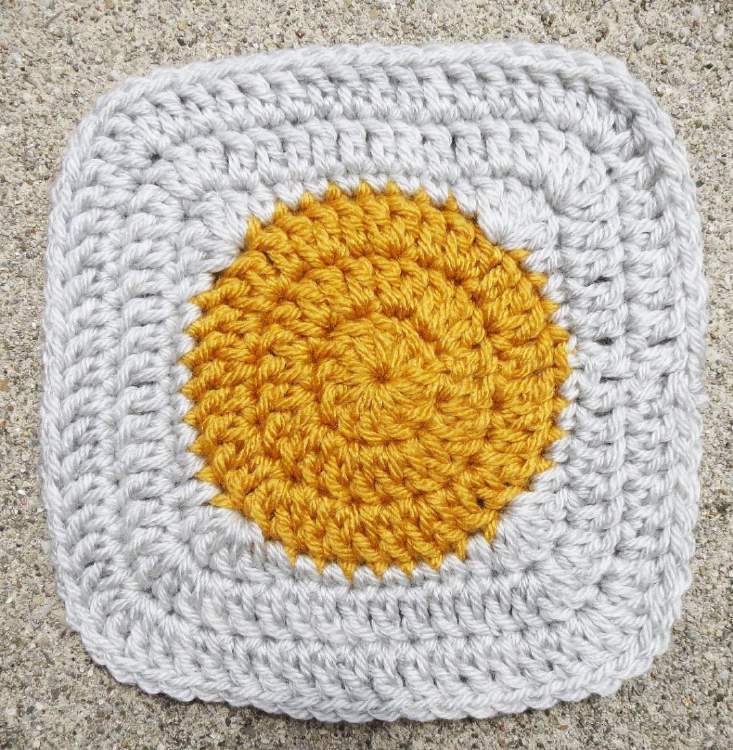
Most blocks begin with three joined rounds for the face, followed by three rounds that form the square around it. The elephant changes background colour earlier, the sheep has a bobble round and the lion reserves front loops for its mane.
Finish and measure a plain base before making the whole batch. It is much easier to adjust the hook at that stage than to persuade 30 different-sized blocks to sit neatly together. Keep a small note beside each finished block with its colours and relaxed measurements.
Some faces need a little shaping before sewing
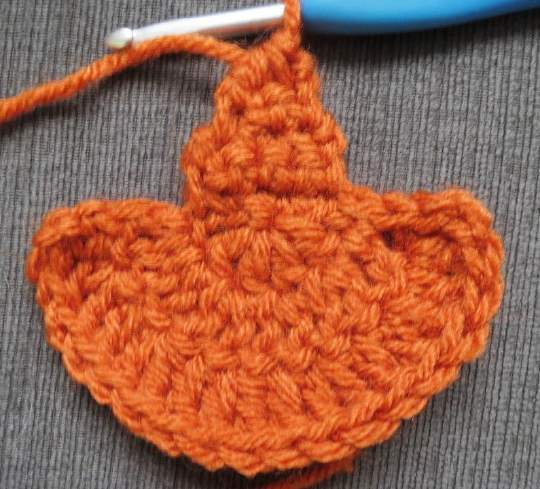
The fox starts as an orange half-circle, then gains its pointed muzzle through a short set of decreasing rows. That orange piece sits over the white centre, leaving the pale cheek areas visible. It is a useful reminder to make and compare the pieces before sewing the eyes in place.
The full PDF includes the separate ears, noses, patches, beaks and other details for all 30 animals. It also marks count clarifications, including the rabbit’s outer-ear tally and the snail strip, beside the steps they affect.
Joining gives the blanket its final rhythm
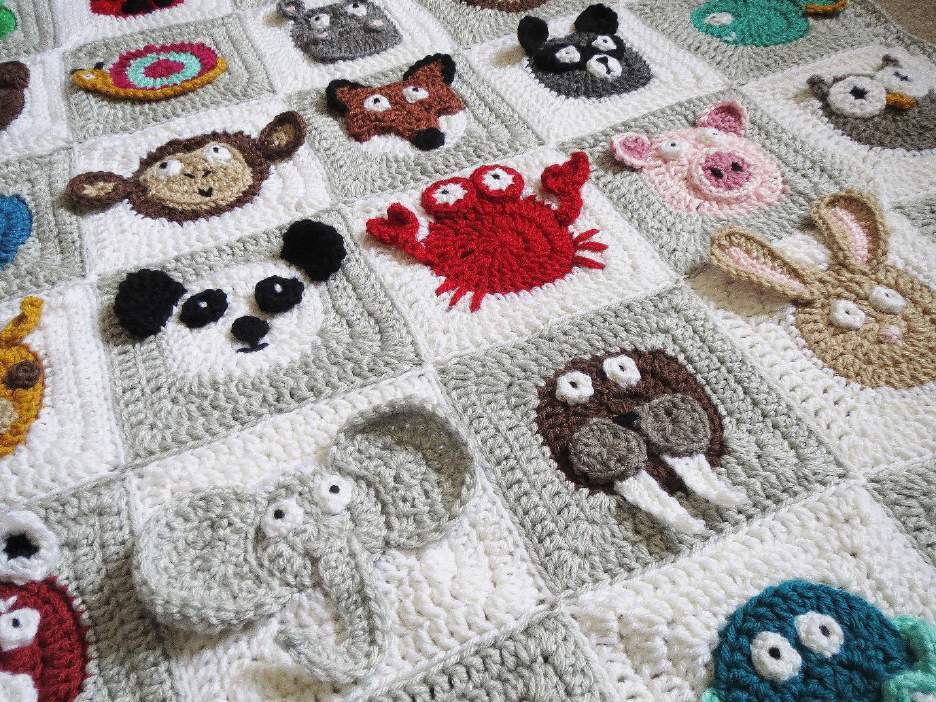
Lay the blocks out before joining. The pictured arrangement alternates light backgrounds and scatters the brighter faces across the five-by-six grid. A quick photograph of your own layout helps keep the order straight once you start sewing rows together.
The guide explains the whip-stitched joins, a corner registration map and the decorative cluster edging. It also gives a simpler two-round single-crochet edge for the proposed plain pet profile. Neither surface has a tested non-slip backing.
What the free PDF covers
One complete blanket guide: the common square, all 30 animal motifs, the pictured layout, assembly, decorative edging, reference photographs and a proposed plain-square pet option. Measurement formulas and a sample record help you plan a smaller mat or a larger blanket without relying on an unverified size promise.
Plan crochet pet blankets and mats around the space
Measure the actual resting area before choosing a grid. A two-by-three group uses six squares; three by four uses twelve; five by six uses thirty. The width of a washed square, the join and the border all affect the finished result.
| Grid idea | Squares | Planning use |
|---|---|---|
| 2 × 3 | 6 | A smaller rectangle to compare with your measured space |
| 3 × 4 | 12 | A medium rectangle, resized from your own sample |
| 5 × 6 | 30 | The pictured full-blanket arrangement |
These are planning grids, not tested pet sizes. The reference calls the squares about 6 inches across, but its overall blanket dimensions do not reconcile with a simple five-by-six calculation. Use your own joined sample and the guide’s measurement method to choose a result you can check.
Choose the surface and yarn for the intended use
The reference blanket uses worsted-weight yarn and a 5 mm starting hook. Its full decorative version has an approximate allowance of 1,300–1,400 yards across the background and animal colours. A smaller plain version needs a separate allowance based on actual samples.
For the proposed pet profile, work only the flat six-round squares, omit all animal appliques and special raised rounds, close the joins and use the simple edge. Keep loose trim, buttons and attached decorations out of that version. Even a plain crocheted surface has stitch openings, so inspect the actual fabric and observe how the pet uses it.
Follow the labels for the yarn you actually buy. Wash and dry a joined sample first, then check its dimensions, seams and surface. Remove bedding if a pet pulls it apart, catches on it or chews and swallows the material. The pattern and flat adaptation have no independent crochet, wash, pet-use or slip test.
Questions before starting
Is this 30 different blanket patterns?
No. It is one modular blanket with 30 animal motifs. The free PDF keeps the base, every motif and the joining instructions together.
Can I make just cats or dogs?
For a decorative throw, you can repeat either motif with your chosen backgrounds. Measure the finished blocks before joining. Repetition changes the layout and yarn needs, not the testing status.
Is the pictured blanket ready to use as a pet mat?
The pictured version has decorative raised pieces and loops. The separate plain profile removes those features, but it is an unphotographed proposal that still needs sampling and checks for the individual pet and resting area.
Are there genuine construction photos?
Yes. The fox face and jellyfish body/frill have real working views. The other animal images show finished squares, and the blanket photos show the completed joins and edging.
Is it a beginner project?
The decorative reference is intermediate and includes joined rounds, shaping, sewing and embroidery. The plain profile uses the shared base, but you still need to count carefully and check the joins and edge.